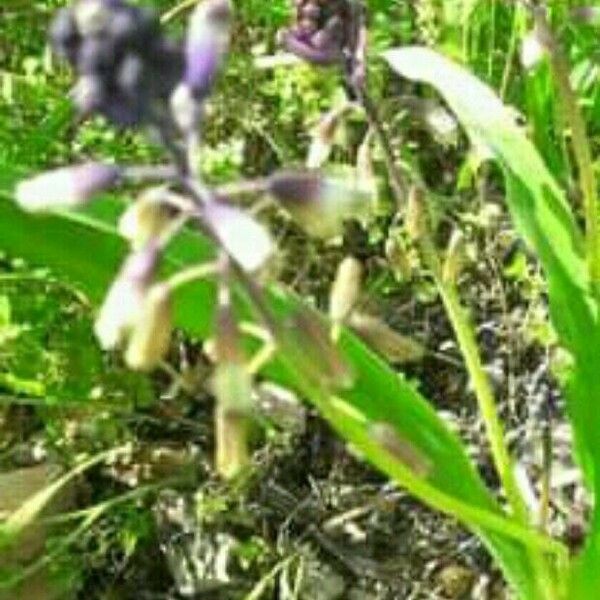
Plant Overview
Often referred to as the "Three-leaved Bellevalia," this Mediterranean native is a sophisticated relative of the common Grape Hyacinth (Muscari). It is a master of subtle transformation, beginning its bloom with deep, moody violets and slowly fading into an "antique" palette of olive-green and dusty brown. It is the perfect choice for gardeners who appreciate plants that tell a story through their changing colors rather than just bright, static hues.
🔍 How to Identify
- 🌿 The Foliage: True to its name (trifoliata), it typically produces three long, narrow, strap-shaped leaves that sprawl along the ground before the flower spike emerges.
- 🔔 Flower Shape: The blooms are tubular or bell-shaped, tightly packed in a vertical spike (raceme), resembling a miniature, elongated bunch of grapes.
- 🎨 Color Gradient: The flowers exhibit a unique "ombre" effect; the young buds at the top are dark purple or navy, while the older, open flowers at the base transition into a subtle greenish-bronze.
🏡 In Your Garden
- 🏜️ Soil Preference: This plant is a "drainage devotee." It originates from rocky hillsides and fallow fields, meaning it will likely rot if kept in heavy, water-logged clay. Use a gritty, sandy mix to mimic its Mediterranean home.
- ⏳ Life Cycle: As a spring geophyte, it does its work early. It will pop up in late winter or early spring, bloom beautifully, and then disappear completely by mid-summer as it goes dormant to survive the heat. Don't dig it up thinking it has died—it’s just sleeping!
⚠️ Safety & Toxicity
- 🐾 Mildly Toxic: Like many members of the Asparagus family (Asparagaceae), the bulbs contain compounds that can cause stomach upset if ingested.
- 🚫 Keep Away: While not considered "deadly," it is best to keep the bulbs out of reach of curious pets (cats and dogs) and toddlers, as ingestion can lead to vomiting or drooling.
✨ Fun Fact
The genus Bellevalia was named in honor of the 16th-century French botanist Pierre Richer de Belleval, who founded one of the oldest botanical gardens in the world, the Jardin des plantes de Montpellier.

Detailed Care Instructions
Bellevalia trifoliata, also known as three-leaved squill, is a small bulb plant that produces beautiful blue flowers in spring. Here are some tips on how to grow Bellevalia trifoliata:
- Plant in well-drained soil: Bellevalia trifoliata prefers well-drained soil that is rich in organic matter. Make sure the soil is not too compacted, as this can cause the bulbs to rot.
- Plant in a sunny location: Bellevalia trifoliata prefers full sun or partial shade. Choose a spot in your garden that receives at least 6 hours of sunlight per day.
- Plant the bulbs in the fall: Bellevalia trifoliata bulbs should be planted in the fall, before the first frost. Plant the bulbs about 2-3 inches deep and space them about 4-6 inches apart.
- Water regularly: Keep the soil evenly moist but not waterlogged. Water the plants regularly, especially during dry periods.
- Fertilize: You can fertilize Bellevalia trifoliata with a balanced fertilizer in the spring when the plants start to emerge.
- Mulch: Mulching around the plants can help retain moisture in the soil and suppress weeds.
- Deadhead: After the flowers have finished blooming, you can deadhead them to encourage more blooms the following year.
- Divide the bulbs: Every few years, you may need to divide the Bellevalia trifoliata bulbs to prevent overcrowding and improve flowering.
By following these tips, you can successfully grow Bellevalia trifoliata in your garden and enjoy its beautiful blue flowers year after year.

Place in a bright room that is sun drenched almost all day. Or directly in a south-facing window.

To water this plant, wait until the topsoil feels dry to the touch and then saturate the soil evenly. Allow the soil to drain completely before placing it back in its pot or container. Avoid over-watering, as this can lead to root rot and other problems. It is also important to ensure that the plant has adequate drainage, as Bellevalia Trifoliata plants do not tolerate standing water. To facilitate proper drainage, consider using a well-draining soil mix, a pot with drainage holes, or placing a layer of gravel at the bottom of the pot.
To fertilize Bellevalia Trifoliata plant, mix a balanced, water-soluble fertilizer at half strength and apply it to the soil around the base of the plant once a month during the growing season. Water the plant thoroughly after fertilizing to ensure proper absorption. Avoid over-fertilizing as it can harm the plant.
Bellevalia Trifoliata plant requires a well-draining soil that is fertile and rich in organic matter. The soil should be slightly acidic to neutral with a pH level between 6.0 and 7.0. Sandy loam or loamy soil is ideal for this plant as it allows for good drainage while retaining moisture. Adding a layer of mulch around the base of the plant can help to retain moisture and nutrients in the soil. It is important to avoid using heavy clay soil or compacted soil as it can hinder root growth and lead to root rot. Additionally, the plant prefers to be grown in a location that receives full to partial sunlight.
Bellevalia Trifoliata plants can be easily propagated through division or seed sowing.
To propagate through division, carefully dig up the plant, making sure to disturb the root system as little as possible. Gently separate the plant into smaller sections, each with its own roots and foliage. Replant these divisions in well-draining soil and water thoroughly.
To propagate through seed sowing, collect ripe seed pods from the plant and carefully remove the seeds. Sow the seeds in a seed starting mix, making sure to keep the soil consistently moist but not waterlogged. Place the seeds in a warm, sunny location and germination should occur within a few weeks. Transplant the seedlings into individual pots once they have developed a few true leaves.
Both division and seed sowing are effective methods for propagating Bellevalia Trifoliata plants and can help you expand your garden or share the beauty of this plant with others.








