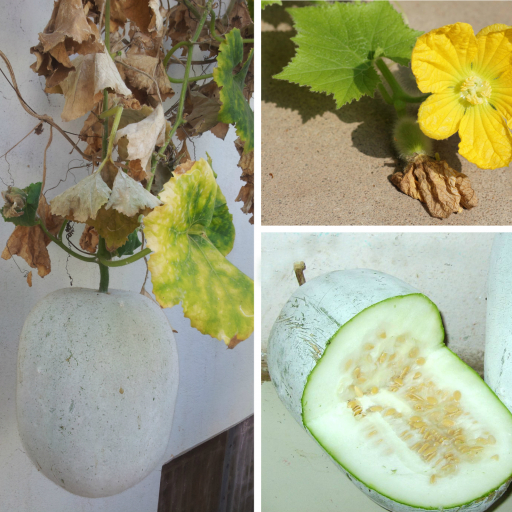
Plant Overview
Known as the "Winter Melon" or "Wax Gourd," Benincasa hispida is a giant of the garden that looks like it has been dusted with powdered sugar. Despite its name, it thrives in the heat of summer, but it earned its "winter" title because of its incredible shelf life. Thanks to a thick, protective waxy coating, the fruit can be stored for months after harvest, providing fresh food deep into the cold season.
🔍 How to Identify
- 🍈 The Waxy Fruit: Mature gourds are large and oblong, starting bright green and developing a thick, white, chalky wax that looks like a layer of ash or frost.
- 🌿 Hairy Vines: The plant is a vigorous climber with thick, sturdy stems covered in stiff, prickly hairs that help it grip surfaces and deter some pests.
- 🌼 Golden Blooms: It produces large, five-petaled yellow flowers that are highly attractive to bees; both male and female flowers appear on the same vine.
🏡 In Your Garden
- 🏗️ Space Seekers: This is an aggressive grower that needs a heavy-duty trellis or a massive patch of ground to roam. A single vine can easily reach 10–20 feet in a single season, so give it plenty of elbow room.
- 🌞 Heat Lovers: Originating in Southeast Asia, this plant craves full sun and warm nights. It has a long growing season, so it’s best to get it started as soon as the danger of frost has passed to ensure the fruits have time to develop their protective wax.
⚠️ Safety & Toxicity
- ✅ Safe for All: Benincasa hispida is non-toxic to humans, cats, and dogs. It is a staple ingredient in Asian soups, stews, and even candies.
- 🧤 Skin Sensitivity: While the fruit is safe, the prickly hairs on the stems and leaves can cause mild skin irritation or "itchiness" for some gardeners. It’s a good idea to wear gloves when pruning or harvesting.
✨ Fun Fact
In many Southeast Asian cultures, the Winter Melon is considered a "cooling" food in traditional medicine. In India, a famous translucent candy called Petha is made by boiling the melon in sugar syrup—a delicacy that has been enjoyed since the days of the Mughal Empire!

Detailed Care Instructions
| Humidity | Normal |
| Lighting | Part Sun |
| Difficulty | Easy |
| Temperature | 14°C - 18°C |
| Hardiness Zones | 2 - 11 |
To grow Benincasa Hispida, also known as winter melon or ash gourd, follow these steps:
- Climate: Determine if the climate in your region is suitable for growing winter melon. It thrives in warm, subtropical or tropical climates with temperatures between 25-35°C (77-95°F).
- Soil: Winter melon prefers well-draining soil with a pH range of 6-7. Prepare the soil by adding organic matter like compost or well-rotted manure to improve its fertility and moisture-holding capacity.
- Seeds: Obtain Benincasa Hispida seeds from a reliable seed supplier or collect them from a ripe fruit. Soak the seeds in warm water for 24 hours prior to planting to enhance germination.
- Planting: Sow the seeds directly into the ground or start them in containers indoors if your region has a short growing season. Plant the seeds about 1 inch deep and 2-3 feet apart, allowing sufficient space for the vines to spread.
- Watering: Maintaining adequate moisture is crucial for the growth of winter melon. Regularly water the plants, keeping the soil evenly moist but not waterlogged. Avoid overhead watering, as it can promote fungal diseases.
- Sunlight: Winter melon requires full sun exposure for at least 6-8 hours per day. Choose a sunny location in your garden for planting.
- Support: As the vines of winter melon can be vigorous and spread over a large area, providing support like trellises or stakes can help keep the plants upright and save space.
- Fertilization: Apply a balanced, organic fertilizer every 2-3 weeks during the growing season to provide necessary nutrients for plant growth. Follow the package instructions for the correct amount of fertilizer to use.
- Pest and disease management: Monitor the plants regularly for pests like aphids, cucumber beetles, or snails, and take appropriate measures such as using insecticidal soap or introducing beneficial insects. Prevent fungal diseases by avoiding excessive watering and providing good air circulation.
- Harvesting: Winter melons can take 70-100 days to mature. Harvest the fruits when they reach maturity and the skin changes from green to a pale yellow or cream color. Cut the fruits carefully from the vine, leaving a small portion of the stem intact. Handle them gently, as winter melons can have a delicate skin.
By following these steps, you can successfully grow Benincasa Hispida in your garden. Happy gardening!
Benincasa Hispida plant should be watered thoroughly once a week. Before watering, make sure the topsoil is completely dry. When watering, pour the water slowly and directly to the soil. Avoid watering on the leaves as it may cause damage to the plant. Be careful not to overwater the plant as it may lead to root rot. In case of any doubt, always test the soil moisture with your finger before watering the plant.
To fertilize this plant, use a balanced fertilizer with equal amounts of nitrogen, phosphorous, and potassium. Apply the fertilizer every two weeks during the growing season. Dilute the fertilizer according to the manufacturer's instructions and pour directly onto the soil around the base of the plant. Avoid getting the fertilizer on the foliage or stem of the plant. Water the plant deeply after fertilizing to ensure that the nutrients are absorbed by the roots.
The suitable soil for the plant you mentioned is a well-draining type that is rich in nutrients. It should have a pH ranging from slightly acidic to neutral. The soil should be a mixture of organic matter, sand, perlite, and compost. Organic matter will provide nutrients and retain moisture, while sand and perlite will improve drainage. The compost will also enrich the soil and provide beneficial microorganisms. The soil should be loose, not compacted, to allow air circulation and root development. It is also important to ensure that the soil remains moist but not waterlogged, as this can cause root rot. Additionally, adding a layer of mulch on top of the soil can help retain moisture and suppress weeds.
Benincasa Hispida plant can be propagated through the use of seeds. The first step in propagating this plant is to collect the seeds from mature fruits. Once the seeds are collected, they should be washed thoroughly and left to dry for a few hours.
The next step is to prepare the soil for planting the seeds. A good potting mix can be used and the soil should be moistened before planting the seeds. The seeds can be planted about 2-3 cm deep in the soil and covered lightly with soil.
After planting the seeds, it is important to keep the soil moist but not overly wet. The pot can be covered with a plastic sheet to keep the moisture in and increase the chances of germination.
The seeds should start to germinate within two weeks and once they have sprouted, the plastic sheet can be removed. The seedlings should be kept in a warm, well-lit area and watered regularly. They should also be fertilized with a balanced fertilizer every 2-3 weeks.
As the seedlings grow, they will need to be transplanted into larger pots or into the ground. When transplanting, it is important to handle the seedlings carefully and to keep the soil moist.
With proper care, the Benincasa Hispida plant can be propagated successfully from seeds and will produce fruits in about 4-5 months.








