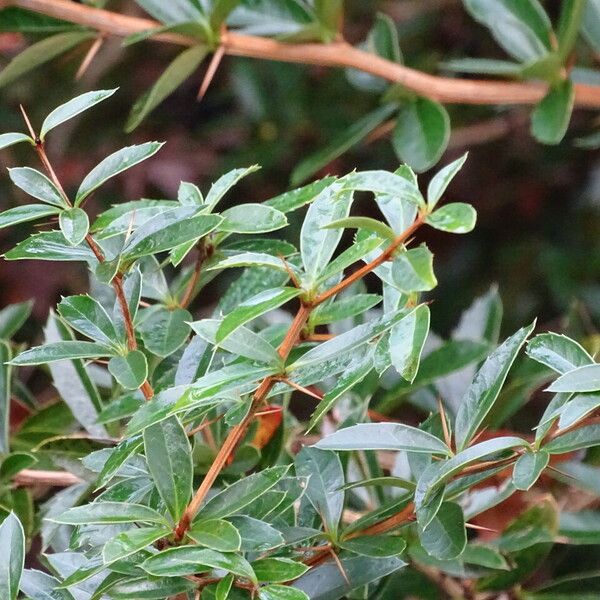
Plant Overview
Often called the Taiwan Barberry, this resilient evergreen is a botanical gem from the high-altitude forests of East Asia. Known for its "fierce" beauty, it acts as a natural guardian in the landscape, combining delicate golden blooms with formidable armor. It’s a favorite for gardeners looking for a plant that offers year-round structural interest and a bit of wild, mountain character.
🔍 How to Identify
- 🍃 Jagged Foliage: The leaves are thick, leathery, and lance-shaped, featuring sharp, needle-like teeth along the margins that look like miniature saw blades.
- 🌼 Golden Clusters: In spring, the plant is adorned with small, cup-shaped yellow flowers that hang in dense clusters (fascicles), attracting early-season pollinators.
- 🫐 Dusky Berries: Following the blooms, it produces small, oblong berries that ripen into a deep purple or dark red, often covered in a waxy, "frosted" coating.
🏡 In Your Garden
- ⛰️ Mountain Heritage: Hailing from the mountains of Taiwan, this barberry is exceptionally hardy. It prefers well-draining, slightly acidic soil and thrives in cooler temperate climates where other shrubs might struggle.
- 🛡️ Natural Security: Because of its dense growth habit and sharp spines, it is frequently used as a "living fence." It provides an excellent deterrent for unwanted foot traffic while offering a safe nesting site for small birds.
⚠️ Safety & Toxicity
- 🌵 Physical Hazard: The primary safety concern is the sharp spines found on both the stems and the leaf edges. Use heavy-duty gloves when pruning to avoid painful punctures.
- 🐾 Mild Toxicity: Like many barberries, the plant contains berberine. While not usually fatal, ingesting large amounts of the leaves or bark can cause digestive upset in curious pets or small children.
✨ Fun Fact
🧪 The Yellow Secret: If you were to scratch the bark or look at the roots of Berberis kawakamii, you would find a vibrant, neon-yellow interior. This is due to high concentrations of berberine, which has been used for centuries as both a traditional medicine and a powerful natural dye for silks and wool.

Detailed Care Instructions
Berberis kawakamii, also known as Kawakami Barberry, is an evergreen shrub that adds a touch of beauty to any garden with its glossy leaves and small yellow flowers. Here's a guide to help you successfully grow this plant:
Site Selection
- Climate: Ensure you are in a suitable climate for this plant. Berberis kawakamii typically prefers temperate to cool climates.
- Sunlight: Choose a location that gets full sun to partial shade. Full sun will encourage healthy growth and better flowering, but partial shade is acceptable if full sun isn’t available.
- Soil: The plant prefers well-drained soil with a neutral to slightly acidic pH. Avoid areas where the soil tends to remain waterlogged as this can lead to root rot.
Planting
- Timing: The best time to plant Berberis kawakamii is in the early spring or fall when the weather is cool but not freezing.
- Preparation: Before planting, prepare the soil by digging it up and mixing in organic matter such as compost or well-rotted manure. This will improve soil fertility and drainage.
- Planting the Shrub:
- Dig a hole that is twice the width and the same depth as the root ball.
- Place the plant in the hole, ensuring that the top of the root ball is level with the surrounding soil.
- Backfill the hole with soil, pressing it down gently to eliminate air pockets.
- Water the plant thoroughly after planting.
Care and Maintenance
- Dig a hole that is twice the width and the same depth as the root ball.
- Watering: Keep the soil consistently moist but not waterlogged, especially during the first growing season. Once established, Berberis kawakamii is relatively drought-tolerant but will benefit from occasional deep watering.
- Mulching: Apply a layer of mulch around the base of the plant to retain moisture, regulate soil temperature, and suppress weed growth.
- Fertilizing: Feed the plant with a balanced, slow-release fertilizer in the spring. Follow the manufacturer's instructions for application rates.
- Pruning: Prune Berberis kawakamii in the late winter or early spring before new growth begins. Remove any dead or damaged branches and shape the plant as desired. Pruning helps maintain the plant’s size and encourages bushier growth.
- Pest and Disease Management: Monitor the plant for common pests such as aphids and scale insects. Treat infestations with insecticidal soap or neem oil. Ensure good air circulation around the plant to prevent fungal diseases.
General Tips
- Spacing: When planting multiple Berberis kawakamii shrubs, space them about 3-5 feet apart to allow for their mature size and ensure proper air circulation.
- Winter Care: In areas with harsh winters, consider providing a protective mulch layer around the base of the plant to insulate the roots from extreme cold.
By following these guidelines, you can enjoy a healthy and attractive Berberis kawakamii shrub in your garden. Remember to pay attention to the specific conditions of your growing area to make necessary adjustments for optimal plant health.

Place in a bright room that is sun drenched almost all day. Or directly in a south-facing window.

Watering Berberis kawakamii requires some care to ensure the plant thrives. Below are detailed guidelines for watering this particular shrub:
1. **Initial Planting Watering**:
- **First Week**: Water the plant deeply every day after planting. This helps to establish the root system.
- **Second to Fourth Week**: Reduce watering to every other day, ensuring the soil stays consistently moist but not waterlogged.
2. **Established Plants**:
- **Soil Check**: Once established, usually after the first growing season, you should check the moisture level of the soil before watering. Insert your finger about 2-3 inches into the soil; if it feels dry, it's time to water.
- **Frequency**: Generally, water once a week, providing enough to thoroughly moisten the root zone. In hotter climates or during dry spells, you might need to increase the frequency to twice a week or more.
3. **Seasonal Considerations**:
- **Spring and Summer**: These are the growing seasons when the plant will require regular watering. Be particularly vigilant during heat waves.
- **Autumn and Winter**: Reduce watering frequency as the plant goes into dormancy. Over-watering during this period can lead to root rot.
4. **Watering Method**:
- **Slow and Deep**: Use a soaker hose or a slow trickle from a regular garden hose to ensure the water penetrates deep into the root zone. This encourages deeper root growth and makes the plant more drought-tolerant.
- **Avoid Overhead Watering**: Water at the base of the plant to keep the foliage dry, which helps to prevent fungal diseases.
5. **Mulching**:
- **Apply Mulch**: A layer of mulch around the base, typically 2-3 inches thick, helps retain soil moisture, reduce temperature fluctuations, and suppress weeds. Keep the mulch a few inches away from the stem to prevent rot.
6. **Soil Drainage**:
- **Well-drained Soil**: Ensure the plant is in well-drained soil to prevent waterlogging. Proper drainage can be achieved by amending the soil with organic matter or, in the case of heavy soils, creating raised beds.
By following these guidelines, you can provide the optimal watering conditions for your Berberis kawakamii, helping it to grow strong and healthy.
For optimal growth and health of Berberis Kawakamii, follow these fertilizing instructions:
- Timing: The best time to fertilize this plant is in early spring, just before new growth begins. You can also do a light feeding in late summer if needed.
- Fertilizer Type: Use a balanced, slow-release fertilizer with a nutrient ratio such as 10-10-10 (Nitrogen-Phosphorus-Potassium) or 14-14-14. Alternatively, you could use an organic compost or well-rotted manure if you prefer natural options.
- Application Rate: Follow the manufacturer’s instructions on the fertilizer package for the correct application rate. Generally, for granular fertilizers, apply about 1 to 2 pounds per 100 square feet.
- Method:
- For granular fertilizers: Evenly spread the recommended amount around the base of the plant, extending out to the drip line (the area under the outermost branches).
- For liquid fertilizers: Dilute according to the instructions and water the plant with the solution.
- For granular fertilizers: Evenly spread the recommended amount around the base of the plant, extending out to the drip line (the area under the outermost branches).
- Incorporation: Lightly rake the granular fertilizer into the top layer of soil to ensure it penetrates the root zone. For liquid applications, ensure the soil is already moist before applying to avoid burning the roots.
- Watering: After applying any fertilizer, water the plant thoroughly to help the nutrients reach the root zone and to prevent root burn from concentrated fertilizers.
- Monitoring: Observe the plant for signs of nutrient deficiency or excess (such as yellowing leaves or poor growth). Adjust the fertilizing schedule as necessary to address any issues.
Remember that less is often more when it comes to fertilizing shrubs. Over-fertilization can harm the plant and the surrounding environment. Always follow recommended dosages.
Berberis kawakamii thrives best in a well-draining soil with good fertility. Here are some key details on the ideal soil conditions:
- Soil Texture: Sandy loam or loamy soils are preferred due to their balance of drainage and nutrient-holding capacity. Clay soils may require amendments to improve drainage.
- pH Level: Slightly acidic to neutral pH range between 6.0 to 7.0 is optimal. Soils that are too alkaline or too acidic can hinder nutrient uptake.
- Organic Matter: Incorporate organic matter such as compost or well-rotted manure to enhance soil structure, fertility, and moisture retention.
- Drainage: Good drainage is crucial to prevent root rot. If the natural soil is heavy or poorly draining, consider creating raised beds or amending with perlite or coarse sand to improve aeration.
- Moisture: The soil should retain some moisture but not be waterlogged. Consistent moisture levels are important, particularly when the plant is establishing its root system.
- Fertility: Regular feeding with a balanced fertilizer, particularly during the growing season, can support robust growth and good foliage coloration. An initial application of a slow-release fertilizer mixed into the soil can also be beneficial.
By meeting these soil requirements, you can create a conducive growing environment for your Berberis kawakamii that supports its growth and health.
Propagating Berberis kawakamii can be effectively done through several methods including seed propagation, cuttings, and layering. Below are the detailed steps for each method:
Seed Propagation
- Collection and Cleaning:
- Collect ripe berries from the plant during late summer or early autumn.
- Remove the pulp by soaking the berries in water, then rub them to extract the seeds. Wash the seeds thoroughly.
- Collect ripe berries from the plant during late summer or early autumn.
- Stratification:
- Seeds generally require a period of cold stratification to break dormancy.
- Place the cleaned seeds in a plastic bag with a moistened medium like peat moss or sand.
- Store the bag in the refrigerator at 2-5°C (35-41°F) for about 2-3 months.
- Seeds generally require a period of cold stratification to break dormancy.
- Sowing:
- After stratification, sow the seeds in a well-draining seed-starting mix.
- Cover the seeds lightly with soil and keep the soil consistently moist.
- Place the seed trays in a bright location but out of direct sunlight. Germination can take several weeks to a few months.
- After stratification, sow the seeds in a well-draining seed-starting mix.
- Transplanting:
- Once the seedlings have developed a few sets of true leaves, they can be transplanted into individual pots or directly into the garden.
Cutting
- Once the seedlings have developed a few sets of true leaves, they can be transplanted into individual pots or directly into the garden.
- Selecting Cuttings:
- Take semi-hardwood cuttings from the plant during late summer.
- Choose healthy, non-flowering shoots about 4-6 inches long.
- Take semi-hardwood cuttings from the plant during late summer.
- Preparing Cuttings:
- Remove the lower leaves, leaving a few at the top.
- Optional: Dip the cut end into a rooting hormone to increase the chances of successful rooting.
- Remove the lower leaves, leaving a few at the top.
- Planting Cuttings:
- Plant the cuttings in a well-draining potting mix, burying about half of the cutting.
- Water the cuttings and cover them with a plastic bag or place them in a propagator to maintain high humidity.
- Plant the cuttings in a well-draining potting mix, burying about half of the cutting.
- Rooting:
- Place the cuttings in a bright, indirect light.
- Keep the soil moist but not waterlogged.
- Roots should develop in about 8-10 weeks. Once rooted, gradually acclimate the new plants to outdoor conditions before transplanting them to the garden.
Layering
- Place the cuttings in a bright, indirect light.
- Selecting a Branch:
- Choose a low-growing branch that can be bent down to the ground.
- Choose a low-growing branch that can be bent down to the ground.
- Wounding the Branch:
- Create a wound by making a small cut or scraping away a thin layer of bark on the underside of the branch where it will touch the soil.
- Create a wound by making a small cut or scraping away a thin layer of bark on the underside of the branch where it will touch the soil.
- Bending and Securing:
- Bend the branch down to the ground and bury the wounded section in the soil. Secure it with a stake or a stone to keep it in place.
- Bend the branch down to the ground and bury the wounded section in the soil. Secure it with a stake or a stone to keep it in place.
- Rooting:
- Water the area regularly to keep the soil moist.
- It may take several months for roots to develop at the wounded section.
- Water the area regularly to keep the soil moist.
- Severing and Transplanting:
- Once the branch has rooted, it can be severed from the parent plant and transplanted into its new location.
All methods of propagation require patience and care. By following these steps, you can successfully propagate Berberis kawakamii and enhance your garden with new plants. Happy gardening!
- Once the branch has rooted, it can be severed from the parent plant and transplanted into its new location.








