Plant Overview
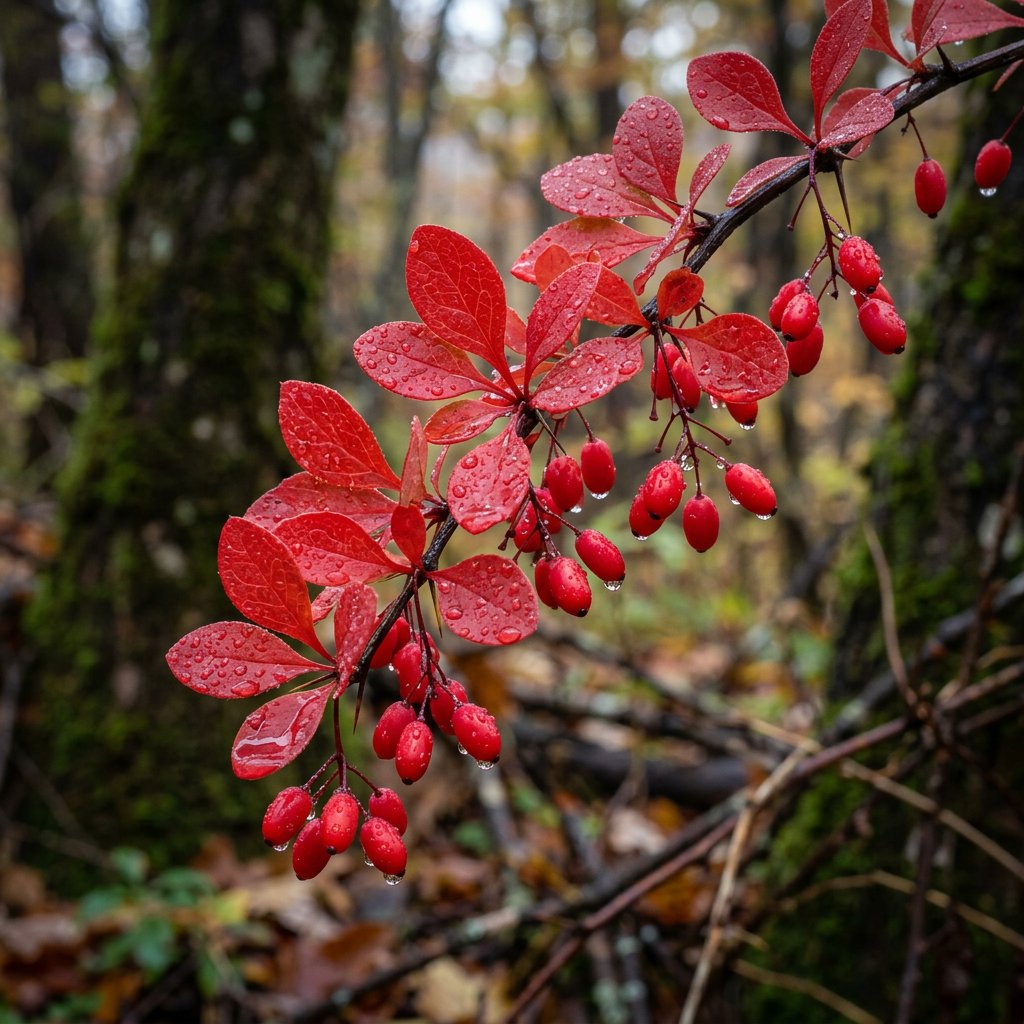
Known as the Japanese Barberry, this shrub is a vibrant chameleon of the garden, shifting from lime greens to deep purples or fiery reds depending on the cultivar. Originally brought from East Asia as an ornamental hedge, it has earned a reputation for being nearly indestructible. With its dense, "living-barbed-wire" structure, it is the ultimate choice for gardeners who want beauty that also serves as a natural security fence.
🔍 How to Identify
- 🍃 The Leaves: Small, paddle-shaped (spatula-like) leaves that grow in tight clusters. They have smooth edges and lack the serration found on some other barberry species.
- 🗡️ Single Spines: Look closely at the base of the leaf clusters; you will find a single, very sharp thorn. Unlike the common barberry, which has three-pronged thorns, this variety keeps it simple but effective.
- 🍒 Winter Berries: In late summer and fall, it produces bright, glossy red berries that are egg-shaped. These often stay on the branches long after the leaves have fallen, providing winter color.
🏡 In Your Garden
- 🧱 Natural Barriers: Because of its formidable thorns, it is excellent for planting under windows or along property lines to deter intruders or roaming animals.
- 🏜️ Tough as Nails: This plant is incredibly drought-tolerant and isn't picky about soil. It can handle road salt and urban pollution, making it a "survivor" plant for tough landscapes.
- 🌳 Ecological Note: In some regions, this plant is considered invasive because birds spread the seeds into local forests. If you live near a woodland, consider "sterile" cultivars that won't spread to the wild.
⚠️ Safety & Toxicity
- 🩹 Physical Hazard: The most immediate danger is the thorns. They are thin and can easily snap off under the skin, leading to irritation or infection. Always wear heavy-duty gloves when pruning.
- 🐾 Mild Toxicity: The plant contains berberine, an alkaloid. While it has been used in traditional medicine, ingesting large amounts of the berries or foliage can cause stomach upset, vomiting, or diarrhea in pets and small children.
✨ Fun Fact
Beware the "Tick Thicket"! Research has shown that dense stands of Japanese Barberry create a humid microclimate that is the perfect nursery for black-legged ticks. Areas infested with this plant often have significantly higher populations of the ticks that carry Lyme disease. Keeping your barberry neatly trimmed is more than just an aesthetic choice—it's a health one!

Detailed Care Instructions
Barberry shrubs are often used for hedges or as barrier plantings, as their sharp thorns help to create a "living fence." Keep them well away from pathways to avoid injury to passers-by. Barberry shrubs are also effective for erosion control and are among the most deer-resistant shrubs.
How do I get rid of a Japanese barberry plant?
If you grow nervous about this plant's invasive tendencies, the best strategy is to dig up as much of the plant as possible, then monitor the area for new shoots emerging from remaining roots, or volunteers that spring up from fallen seeds. Systematically dig up or kill the volunteer plants using a brush-killing herbicide. It may take a few months to kill all remnants of the plant.
How long does a Japanese barberry live?
These plants spread gradually through underground roots, and a single plant will gradually expand into a thicket that may thrive for many decades. Individual stems, however, may become woody and overgrown and cease to produce flowers and fruit. Periodically removing these old stems will keep the plant vibrant.
Does Japanese barberry attract wildlife?
A major appeal of this plant are the berries that attract birds during the winter. At the same time, the thorny stems make the plant relatively safe from damage from deer and other grazing creatures.
| Color | Yellow |
| Soil Ph | Can Tolerate A Wide Range |
| Humidity | Normal |
| Lighting | Full Sun |
| Soil Type | Any Soil Type |
| Bloom Time | Late April To Early May |
| Difficulty | Medium |
| Plant Type | Deciduous Shrub |
| Hibernation | Cold Period |
| Mature Size | Up To 120 Cm |
| Native Area | China And Japan |
| Temperature | 10°C - 30°C |
| Sun Exposure | Full Sun Or Partial Shade |
| Hardiness Zones | Fully Hardy |
To grow Berberis Thunbergii (also known as Japanese Barberry), follow these steps:
- Choose a suitable location: Berberis Thunbergii thrives in full sun to partial shade. Select a spot in your garden that receives at least 6 hours of sunlight per day.
- Soil preparation: Prepare the soil by mixing compost or well-rotted manure into it. This helps improve drainage and provides nutrients for the plant.
- Planting: Dig a hole twice the size of the root ball of the plant. Place the Berberis Thunbergii in the hole at the same depth it was in its pot. Backfill with soil, firming it gently around the roots. Water thoroughly after planting.
- Watering: Water regularly during the first growing season to establish the plant. Berberis Thunbergii prefers slightly moist soil but is drought tolerant once established. Water deeply but infrequently, allowing the top few inches of soil to dry out between watering.
- Mulching: Apply a layer of organic mulch around the base of the plant to help conserve moisture, suppress weeds, and protect the roots from extreme temperatures. Keep the mulch a few inches away from the stem of the plant to avoid rot.
- Pruning: Berberis Thunbergii can be pruned to maintain its shape and remove any dead or overgrown branches. Pruning should be done in late winter or early spring before new growth begins.
- Fertilizing: Apply a slow-release fertilizer in spring to promote healthy growth. Follow the instructions on the fertilizer label for application rates.
- Pest and disease control: Berberis Thunbergii is generally resistant to most pests and diseases. However, it can occasionally face issues such as aphids or powdery mildew. Monitor the plant regularly and take appropriate measures if any problems arise.
- Propagation: Berberis Thunbergii can be propagated through seeds, stem cuttings, or division. Seeds can be collected from the plant in autumn and sowed in a well-draining soil mix. Stem cuttings can be taken in late spring or early summer and rooted in a propagating medium. Division can be done in early spring by separating the plant into smaller sections with their own roots.
With proper care and maintenance, your Berberis Thunbergii plant should grow and thrive in your garden.

Place in a bright room that is sun drenched almost all day. Or directly in a south-facing window.

Berberis Thunbergii plant is a hardy, deciduous shrub that can tolerate a variety of growing conditions, including dry soils and drought. When it comes to watering this plant, it's important to keep a few key principles in mind.
First, Berberis Thunbergii prefers well-drained soils that are not waterlogged. If the soil is heavy or clay-based, it can be helpful to amend it with organic matter like compost or peat moss to improve drainage.
Second, when watering Berberis Thunbergii, it's best to water deeply and thoroughly rather than shallowly and frequently. This encourages the plant's roots to grow deep into the soil and helps the plant to become more resistant to drought stress.
Third, Berberis Thunbergii does not require frequent watering. In fact, it's better to let the soil dry out somewhat between waterings than to keep the soil constantly moist. However, it's important to monitor the plant's soil moisture level regularly to ensure that it doesn't become too dry.
Finally, it's important to water Berberis Thunbergii early in the day rather than at night. This helps to reduce the risk of fungal diseases and allows the plant to take up water more efficiently during the day when it is actively growing.
Overall, watering Berberis Thunbergii is a relatively straightforward process that involves keeping the soil well-drained, watering deeply and infrequently, monitoring soil moisture levels, and watering early in the day. By following these simple guidelines, you can help your Berberis Thunbergii plant to thrive and stay healthy.
To fertilize this plant, spread a balanced, slow-release fertilizer evenly around the base of the plant in early spring before new growth appears. Water the area thoroughly after fertilizing. Avoid over-fertilizing, as this can cause excessive growth at the expense of overall plant health.
The ideal soil for Berberis Thunbergii plants should be well-draining with plenty of organic matter. The pH level of the soil should be slightly acidic to neutral, around 6.0-7.0. Avoid using heavy, clay-based soils as they can lead to poor drainage and root rot. A sandy loam or a soil mix that is light and porous will work well for this plant. Additionally, the soil should be able to retain moisture without becoming waterlogged. Adding compost or aged manure to the soil can improve its fertility and provide the plant with necessary nutrients.
Berberis Thunbergii plant can be propagated through various methods such as seed propagation, cutting, and layering.
Seed Propagation: Collect seeds from a mature plant and plant them in soil. Keep the soil moist and maintain a temperature of 68-77°F (20-25°C) until germination occurs. Once the plant has grown enough, transplant it into a larger container with well-draining soil or into the ground.
Cutting Propagation: Take a cutting from a healthy plant using a sharp, clean scissors or knife. The cutting should be about 4-6 inches long and have at least two nodes. Dip the cut end into rooting hormone and place in a pot filled with moist potting soil. Keep the soil moist and in a location with bright but indirect sunlight. Once roots have developed, transplant the new plant into a larger container or into the ground.
Layering Propagation: Select a low branch that is touching the ground and bury it just beneath the surface with soil or compost. After a few weeks, roots should start to form at the point of contact. Once roots have developed, carefully separate the new plant from the parent plant and transplant it into a larger container or into the ground.








