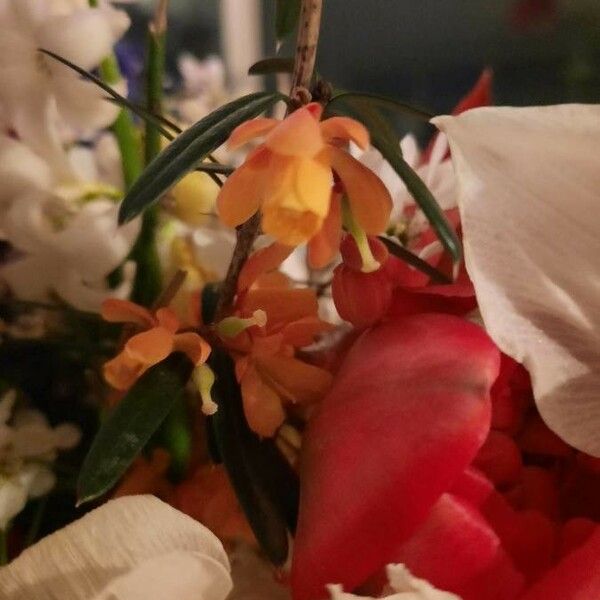
Plant Overview
Often hailed as one of the most ornamental shrubs for cold-hardy landscapes, Berberis trigona (the Chilean Barberry) is a striking evergreen native to the rugged mountain slopes of South America. Known for its fierce defense and explosive spring color, it is a resilient survivor that brings a wild, Andean aesthetic to any space. In its native habitat, it’s a vital source of nectar for high-altitude pollinators.
🔍 How to Identify
- 🌿 The Foliage: Small, leathery, dark green leaves that resemble miniature holly. They are typically glossy on top and arranged in dense clusters along the stems.
- ⚔️ The "Trigona" Spines: True to its name, this species features sharp, three-pronged (tripartite) thorns at the base of each leaf cluster, making it an impenetrable barrier.
- 🔔 Golden Blooms: In mid-to-late spring, the shrub is smothered in drooping racemes of bell-shaped, fiery orange or deep yellow flowers.
- 🍇 Waxy Fruit: Following the floral show, it produces small, globose berries that ripen to a deep purple-black with a dusty, blue-ish waxy coating.
🏡 In Your Garden
- 🛡️ Natural Security: Because of its dense growth habit and formidable thorns, it makes an excellent "living fence" or security hedge that discourages intruders while providing nesting sites for birds.
- 🌬️ Andean Resilience: This plant is exceptionally wind-resistant and can handle salt spray, making it a top choice for coastal gardens or exposed, breezy hillsides.
- 🪴 Soil Logic: It thrives in well-drained, slightly acidic soil. It is notoriously sensitive to "wet feet" during the winter, so ensuring the soil doesn't stay soggy is the key to longevity.
- ✂️ Pruning Strategy: It responds well to shaping, but because it blooms on the previous year's wood, you should only prune it immediately after the flowers fade to avoid cutting off next year's display.
⚠️ Safety & Toxicity
- 🧤 Mechanical Injury: The primary safety concern is the thorns. They are very sharp and can easily puncture skin; thick gardening gloves and eye protection are mandatory when handling this plant.
- 🐾 Pet & Child Safety: While the ripe berries are technically edible (though very tart), the rest of the plant contains the alkaloid berberine. If ingested in large quantities, the leaves or bark can cause nausea or stomach upset in pets and humans.
- 🩹 Skin Irritation: Some individuals may experience mild skin irritation from the sap or from scratches caused by the spines.
✨ Fun Fact
In its native Chile and Argentina, the berries of its close relatives are used to make traditional jams and cordials. There is a local legend that says anyone who eats a "Calafate" (a related barberry) berry is destined to return to the beautiful wilderness of Patagonia!

Detailed Care Instructions
Berberis trigona, commonly known as the African barberry or Triangle Barberry, is a hardy shrub known for its attractive foliage and berries. Here are some guidelines on how to successfully grow Berberis trigona:
1. Choosing the Right Location
- Sunlight: Berberis trigona thrives in full sun to partial shade. Ideally, choose a spot that receives at least 6 hours of direct sunlight each day.
- Soil: Preferably well-drained, sandy or loamy soil. It can tolerate a range of soil types, including slightly acidic to neutral pH levels.
2. Planting
- When to Plant: The best time to plant is in the spring or fall when temperatures are mild.
- Spacing: If planting multiple shrubs, provide adequate spacing of about 3 to 4 feet apart, as the plants can spread.
- Planting Method:
- Dig a hole that is twice the width of the root ball and about the same depth.
- Remove the plant from its container and gently loosen any tightly bound roots.
- Place the plant in the hole, ensuring the top of the root ball is level with the surrounding soil.
- Backfill with soil and water thoroughly.
3. Watering
- Dig a hole that is twice the width of the root ball and about the same depth.
- Initial Watering: Water the plant well after planting to help establish roots.
- Ongoing Care: Water regularly during dry spells, especially in the first year. Mature plants are relatively drought-tolerant.
4. Fertilizing
- Fertilization is generally not necessary, but you can apply a balanced, slow-release fertilizer in early spring to promote healthy growth if the soil is poor.
5. Pruning
- Prune during early spring to maintain shape and remove any dead or damaged wood. This will also help encourage new growth.
6. Pest and Disease Management
- Berberis trigona is generally resistant to pests and diseases. However, keep an eye out for common issues such as aphids, spider mites, or fungal infections. Use appropriate organic or chemical controls if needed.
7. Winter Care
- In colder climates, consider mulching around the base of the plant to protect the roots from freezing temperatures.
8. Propagation
- Berberis trigona can be propagated through seeds or cuttings. For cuttings, take semi-hardwood cuttings in late summer and root them in a suitable potting mix.
By following these guidelines, you should be able to grow and maintain a healthy Berberis trigona plant. Happy gardening!

Place in a bright room that is sun drenched almost all day. Or directly in a south-facing window.

Watering Berberis trigona, or the specific plant you’re referring to, requires careful attention to its needs for optimal growth. Here are some guidelines:
1. Soil Moisture Assessment: Before watering, check the soil moisture level. The plant prefers well-draining soil, and it’s crucial to avoid overwatering. Use your finger or a moisture meter to gauge whether the top inch of soil is dry before applying water.
2. Watering Frequency: Depending on the climate and season, watering frequency can vary. During the growth phase (spring and summer), aim to keep the soil consistently moist but not soggy. Reduce watering in the fall and winter months when the plant enters dormancy.
3. Watering Technique: Water the plant thoroughly until water begins to drain from the bottom of the pot or the ground, if planted in the garden. This deep watering encourages the roots to grow downwards and establishes a stronger root system.
4. Timing: Watering should ideally be done in the early morning or late afternoon to minimize evaporation and allow the plant to absorb moisture effectively.
5. Environmental Considerations: Be mindful of environmental factors such as humidity, temperature, and exposure to sunlight. Higher temperatures may necessitate more frequent watering, while cooler, humid conditions may require less.
6. Monitoring Plant Health: Keep an eye on the plant for signs of under-watering (wilting, dry leaves) or over-watering (yellowing leaves, root rot). Adjust your watering practices based on these observations.
7. Fertilization: While not directly related to watering, applying a balanced fertilizer during the growing season can improve the plant's overall health and resilience to stress.
Maintaining the right balance of moisture is key to ensuring the health and vitality of this particular plant species.
Fertilizing instructions for Berberis trigona:
- Type of Fertilizer: Use a balanced, slow-release fertilizer with an N-P-K ratio of around 10-10-10 or 14-14-14. Organic options, such as compost or well-aged manure, can also be beneficial.
- Timing: Fertilize in early spring, just as new growth begins. A second application can be made in mid-summer to support continued growth, especially if the plant is in a nutrient-poor soil.
- Application Rate: Follow the manufacturer's instructions for the specific fertilizer you are using. Typically, a rate of 1 to 2 pounds per 100 square feet is common, but this can vary based on soil conditions and the size of the plant.
- Method:
- Spread the fertilizer evenly around the base of the plant, extending out to the drip line (the area directly beneath the outer leaves).
- Avoid direct contact with the stem or trunk to prevent burning.
- Lightly work the fertilizer into the top inch of soil if possible, and then water thoroughly to help the nutrients penetrate the root zone.
- Spread the fertilizer evenly around the base of the plant, extending out to the drip line (the area directly beneath the outer leaves).
- Watering: Ensure the plant is well-watered before and after fertilization to facilitate nutrient absorption and reduce the risk of fertilizer burn.
- Soil Testing: Consider conducting a soil test every few years to determine the nutrient levels and adjust fertilization practices accordingly.
- Signs of Nutrient Deficiency: Monitor the plant for signs of deficiency, such as yellowing leaves or stunted growth, which may indicate the need for additional nutrients.
By following these guidelines, you can promote healthy growth and vibrant foliage in Berberis trigona.
Berberis trigona generally prefers a well-draining soil mix that can support its growth and health. Here are some details regarding the soil composition:
- Soil Type: A loamy or sandy soil is ideal, as it allows for adequate drainage while also retaining some moisture and nutrients. Avoid heavy clay soils, which can retain too much water.
- pH Level: The plant prefers slightly acidic to neutral pH levels, ideally between 6.0 and 7.0. Testing the soil pH can help ensure it is within the preferred range.
- Organic Matter: Incorporating organic matter, such as compost or well-rotted leaf mulch, can enhance soil fertility and structure. This will provide essential nutrients while improving moisture retention and drainage.
- Drainage: Ensuring good drainage is crucial. If planting in a container, choose one with drainage holes, and use a potting mix designed for cacti or succulents. For garden planting, consider raised beds or amending the soil with sand or perlite to improve drainage.
- Nutrients: The addition of balanced slow-release fertilizers can assist in promoting healthy growth. However, avoid over-fertilizing, as this can damage the root system.
By following these guidelines, you can create a conducive soil environment for the optimal growth of this plant.
Bear in mind that propagating a specific plant requires certain conditions to ensure successful growth. Here's a detailed guide on propagating Berberis Trigona, focusing on methods typically utilized—namely, cuttings.
Propagation by Cuttings
Timing
The best time to take cuttings is during the late spring to early summer when the plant is actively growing.
Materials Needed
- Sharp, clean pruning shears or a sterilized knife
- Rooting hormone (optional but recommended)
- Small pots or trays with drainage holes
- Fresh, well-draining potting mix (a mixture of peat and perlite is commonly used)
- Clear plastic bag or plastic wrap (optional for humidity)
Steps:
- Select Healthy Cuttings:
- Choose a healthy, non-flowering shoot from the parent plant. Aim for stems that are semi-hardwood, which means they are partially matured but still flexible.
- Choose a healthy, non-flowering shoot from the parent plant. Aim for stems that are semi-hardwood, which means they are partially matured but still flexible.
- Cutting Preparation:
- Use your sharp shears to make a clean cut a few inches long, ideally below a leaf/node where roots can develop. Each cutting should have 2-3 leaves.
- Use your sharp shears to make a clean cut a few inches long, ideally below a leaf/node where roots can develop. Each cutting should have 2-3 leaves.
- Remove Lower Leaves:
- Strip the lower leaves off the cutting, leaving only 1-2 leaves at the top. This reduces moisture loss and encourages rooting.
- Strip the lower leaves off the cutting, leaving only 1-2 leaves at the top. This reduces moisture loss and encourages rooting.
- Apply Rooting Hormone:
- Dip the cut end of the stem into rooting hormone to encourage root development. Tap off any excess.
- Dip the cut end of the stem into rooting hormone to encourage root development. Tap off any excess.
- Plant the Cuttings:
- Make a hole in the potting mix with a pencil or your finger and gently place the cutting in the hole. Press the soil around it to secure the stem and ensure good contact.
- Make a hole in the potting mix with a pencil or your finger and gently place the cutting in the hole. Press the soil around it to secure the stem and ensure good contact.
- Water the Cuttings:
- Water the cuttings gently to settle the soil. Make sure the soil is moist but not waterlogged.
- Water the cuttings gently to settle the soil. Make sure the soil is moist but not waterlogged.
- Create Humidity:
- Optionally, you can cover the pots with clear plastic bags or wrap to create a mini greenhouse effect, promoting humidity. Make sure to ventilate regularly to prevent mold.
- Optionally, you can cover the pots with clear plastic bags or wrap to create a mini greenhouse effect, promoting humidity. Make sure to ventilate regularly to prevent mold.
- Place in Appropriate Environment:
- Place the pots in a warm, bright location with indirect light. Avoid direct sunlight that can overheat and dry out the cuttings.
- Place the pots in a warm, bright location with indirect light. Avoid direct sunlight that can overheat and dry out the cuttings.
- Monitoring and Care:
- Check the cuttings regularly for moisture. Keep the soil consistently moist but not soggy. Remove any dead or moldy leaves.
- Check the cuttings regularly for moisture. Keep the soil consistently moist but not soggy. Remove any dead or moldy leaves.
- Roots Development:
- After a few weeks (typically 4-8 weeks), gently tug on the cuttings; if you feel resistance, they have likely developed roots.
- After a few weeks (typically 4-8 weeks), gently tug on the cuttings; if you feel resistance, they have likely developed roots.
- Transplanting:
- Once rooted, transplant the young plants into larger pots or the garden. Ensure they are acclimatized to outdoor conditions gradually.
Additional Notes:
- Once rooted, transplant the young plants into larger pots or the garden. Ensure they are acclimatized to outdoor conditions gradually.
- This plant prefers well-drained soil and can tolerate dry conditions once established, but maintain adequate moisture during the rooting process.
- Monitor for pests or diseases, and ensure to provide adequate air circulation during the propagation phase.
By following these steps, you should be able to successfully propagate Berberis Trigona through cuttings.








