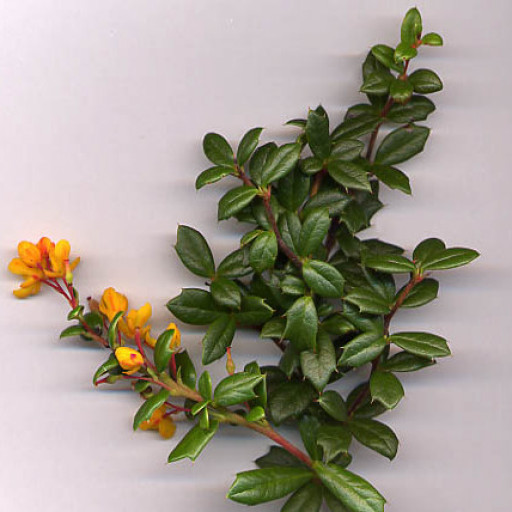
Plant Overview
Known for their fierce thorns and kaleidoscope of foliage colors, the Berberis genus—commonly called Barberry—is the ultimate "living fence" of the gardening world. These hardy shrubs are beloved for their transition from vibrant spring greens and yellows to deep, wine-red autumn hues. While they are resilient enough to survive urban pollution and poor soil, their prickly personality makes them a plant that demands respect from gardeners.
🔍 How to Identify
- 🌿 Foliage Structure: Look for small, oval-shaped leaves that grow in tight clusters or "rosettes" along the woody branches. Many popular garden varieties, like the Japanese Barberry, boast deep burgundy or lime-gold leaves.
- ⚔️ Spiny Armor: One of the most defining traits is the presence of sharp, simple or three-branched spines located at the base of each leaf cluster. These make the plant nearly impenetrable to deer and unwanted visitors.
- 🍒 Jewel-like Fruit: In the fall, the plant produces oblong, drooping berries that range from bright scarlet to deep purple-black. These berries often persist through the winter, providing a pop of color against the snow.
🏡 In Your Garden
- 🧱 The Perfect Barrier: Because of their dense growth and sharp thorns, Berberis is exceptionally effective as a security hedge. It provides excellent nesting sites for small birds who use the thorns as protection against larger predators like cats or hawks.
- ✂️ Pruning Strategy: These shrubs are incredibly "tough as nails," but they grow slowly. If you need to shape them, always wear heavy-duty leather gloves; the tiny thorns can easily puncture standard gardening gloves and break off under the skin.
⚠️ Safety & Toxicity
- 🚫 Physical Hazard: The primary risk is the sharp spines. These can cause skin irritation or localized swelling if a thorn becomes embedded. It is best kept away from high-traffic paths where children or pets play.
- 🐾 Mild Toxicity: Most Berberis species contain berberine. While the berries of some species are used in cooking (like the Persian Zereshk), the leaves and bark are considered mildly toxic to pets and humans if ingested in large quantities, potentially causing stomach upset.
✨ Fun Fact
Historically, the wood and roots of the Barberry plant were highly prized by craftspeople for making yellow dye. The inner bark is a vivid, neon yellow color due to the high concentration of the alkaloid berberine!

Detailed Care Instructions

Place in a bright room that is sun drenched almost all day. Or directly in a south-facing window.

Berberis is a plant that is commonly grown in gardens and landscapes for its attractive foliage and bright, colorful berries. To water this plant, it is important to first consider the soil conditions and weather conditions in your area. Berberis plants prefer well-draining soil that is moist but not soggy, so it is important to water them thoroughly but not too frequently.
When watering Berberis, it is important to water deeply enough to saturate the root zone, but not so much that the soil becomes waterlogged. To determine when to water, you can check the soil moisture level by sticking your finger into the soil to a depth of about three inches. If the soil feels dry at this depth, it is time to water.
Watering Berberis plants in the morning is generally recommended, as this allows any excess moisture on the leaves to dry off before nightfall. Avoid watering during the hottest part of the day, as this can cause water to evaporate before it reaches the roots.
Overall, watering Berberis is a simple task that requires a bit of attention and care. By providing your Berberis plants with the right amount of moisture, you can help ensure their health and longevity while enjoying their colorful and attractive foliage.
The soil suitable for Berberis plants are usually loose, well-draining, and slightly acidic. It should have a pH range between 6.0 to 7.5. The soil should be enriched with organic matter and have good water retention capability. A mixture of garden soil, sand, and peat moss or compost can be used to create an ideal growing environment for the Berberis plant. The soil should also be free of any weed seeds or pathogens that may affect the health of the plant. Proper soil preparation and maintenance are essential for the healthy growth of Berberis plants.







