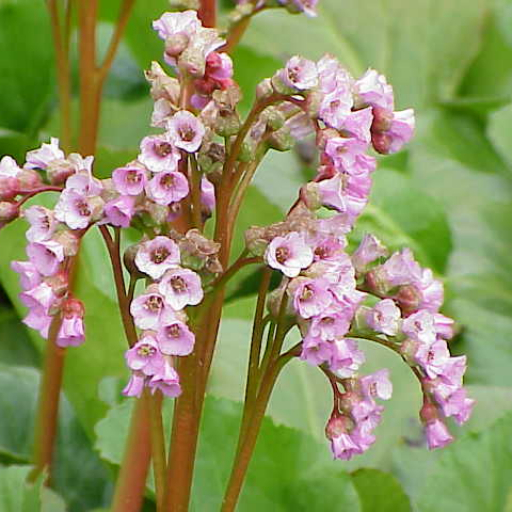
Plant Overview
Often called the Himalayan Bergenia or Strachey’s Elephant Ear, this rugged alpine beauty hails from the high-altitude slopes of the Himalayas. It is a slow-growing evergreen that provides year-round interest, shifting from lush green to deep bronze and reddish tones as the winter chill sets in. Known for its sheer resilience, it is a favorite for rock gardens where its clusters of nodding flowers offer a soft contrast to its tough, leathery foliage.
🔍 How to Identify
- 🍃 Fringed Foliage: Unlike its more common cousins, the leaves of B. stracheyi are smaller and feature distinctively hairy or "fringed" margins that feel slightly velvety to the touch.
- 🌸 Bell-Shaped Blooms: It produces dense, upright clusters of white to pale pink flowers that often blush into a deeper rose color as they age.
- 🪵 Sprawling Rhizomes: The plant grows from thick, woody stems that creep along the soil surface, eventually forming a dense, weed-suppressing mat.
🏡 In Your Garden
- 🏔️ Alpine Origins: Coming from rocky mountain crevices, it thrives in well-drained soil. While it is incredibly hardy against frost, it appreciates a spot protected from harsh, drying winter winds which can "scorch" the edges of its evergreen leaves.
- 🪴 Low Disturbance: This plant is a "homebody." It develops a sturdy root system that doesn't take kindly to being moved frequently. Once planted, it prefers to be left alone to slowly colonize its space.
⚠️ Safety & Toxicity
- ✅ Safe Status: Bergenia stracheyi is generally considered non-toxic to humans and is not listed as a primary concern for common household pets.
- 🐾 Mild Irritation: While not poisonous, the tough, leathery leaves are very high in tannins. If a curious pet or child chews on them, it may lead to a bitter taste or mild stomach upset.
✨ Fun Fact
In its native regions, Bergenia species are often referred to by the name "Pashanbheda," which literally translates from Sanskrit to "Stone Breaker." This refers both to the plant's ability to grow in the narrowest rock cracks and its historical use in ancient herbal medicine.

Detailed Care Instructions
To grow Bergenia Stracheyi, also known as Strachey's bergenia, you can follow these steps:
- Choose a suitable location: Bergenia Stracheyi thrives in full sun to partial shade. Select a spot in your garden that receives at least 4-6 hours of direct sunlight daily.
- Prepare the soil: This plant prefers well-draining, fertile soil. If your soil is heavy or compacted, you can improve its drainage by adding organic matter, such as compost or peat moss, to the soil before planting.
- Planting: Dig a hole that is slightly wider and deeper than the plant's container. Gently remove the plant from its pot, being careful not to damage the roots. Place the Bergenia Stracheyi in the hole, making sure that the crown of the plant (where the roots meet the stems) is level with or slightly above the soil surface. Backfill the hole with soil, firming it gently around the roots.
- Watering: After planting, water the Bergenia Stracheyi thoroughly to settle the soil and ensure good root-to-soil contact. Water regularly, especially during dry spells, but do not overwater as the plant may be susceptible to root rot.
- Mulching: Apply a layer of organic mulch around the base of the plant to help retain moisture, suppress weed growth, and protect the roots from extreme temperatures.
- Fertilization: Bergenia Stracheyi generally doesn't require heavy fertilization. However, you can apply a balanced, slow-release fertilizer in early spring to provide essential nutrients.
- Maintenance: Remove any spent flowers or yellowing leaves to maintain the plant's appearance. In colder climates, the foliage may die back during winter, but it will regrow in spring.
- Propagation: You can propagate Bergenia Stracheyi by dividing mature clumps in early spring or late fall. Dig up the plant and carefully separate the clumps into smaller sections, each with its own set of roots and shoots. Replant these divisions in suitable locations following the same planting steps mentioned above.
By following these guidelines, you can successfully grow and enjoy your Bergenia Stracheyi plant in your garden.

Place in a window with dappled sun or a spot in the middle of a room. Or directly in a window facing west or east.

Bergenia Stracheyi plant requires regular watering to thrive. The frequency of watering depends on several factors such as soil type, temperature, humidity, and sunlight. It is important to ensure that the soil is consistently moist, but not waterlogged, as this can cause root rot. One way to determine whether the plant needs watering is to stick your finger into the soil up to the first knuckle. If it feels dry, then it’s time to water.
When watering Bergenia Stracheyi plant, it is recommended to water deeply, making sure that the water reaches the plant's roots. A good technique is to water until the soil is saturated and wait until it drains before watering again. This ensures that the plant's roots are able to access the water without the risk of overwatering. It is also important not to water the foliage, as this can lead to fungal diseases.
During hot and dry weather, the plant may require more frequent watering, while during colder months, the frequency may need to be reduced. It's essential to keep the plant in well-draining soil to avoid waterlogging, and maintain a consistent watering schedule to allow the plant to establish a healthy root system.
To fertilize this plant, use a balanced fertilizer formulated for flowering plants in the early spring before new growth appears. Apply the fertilizer at the base of the plant and water thoroughly. Repeat the process every 4-6 weeks during the growing season. Avoid overfertilization as it can lead to burning of the plant or damage to the roots.
Bergenia Stracheyi plant prefers a well-draining soil that is slightly acidic to neutral pH. The soil should be rich in organic matter and have good water holding capacity to keep the plant well hydrated. The ideal soil for this plant is a mixture of loamy soil, garden soil, and peat moss or compost. It is important to avoid using heavy or compacted soils, as this can lead to poor drainage and root rot. Additionally, the plant does well in partial or full shade, so it should be planted in a location that receives filtered sunlight or shaded areas.
Bergenia Stracheyi is a perennial plant that can be propagated through division. Here are the steps to propagate Bergenia Stracheyi:
- In early spring, carefully dig up the mature plant with a garden fork, being careful not to damage the roots.
- Use a clean, sharp knife to divide the clump of roots and leaves into smaller pieces. Each piece should have a few healthy leaves and a good section of root.
- Plant the divisions in a well-draining soil mix, with the crown of the plant just at the soil surface. Water thoroughly.
- Place the newly planted divisions in a shaded area for the first few days to help them establish.
- After a few weeks, the divisions should have rooted and begun to grow. Gradually move them to a location with more sunlight.
- Keep the soil moist but not waterlogged, and fertilize with a balanced fertilizer every few weeks during the growing season.
- Bergenia Stracheyi can also be propagated from seed, but this method can take a few years before the new plants reach maturity.








