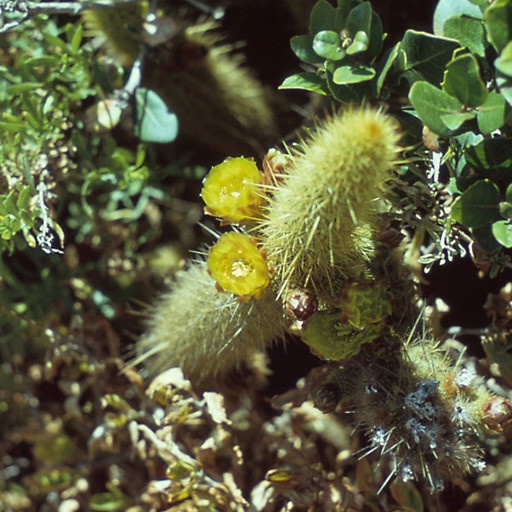
Plant Overview
Known as the Golden Cereus or Velvet Cactus, Bergerocactus emoryi is a rare coastal treasure native to a very narrow strip of the California and Baja coastline. It often forms dense, shimmering thickets that look soft and glowing from a distance, earning it a reputation as one of the most beautiful "monsters" of the seaside bluffs. This plant is a specialist, thriving in the salty mist where other cacti might struggle to survive.
🔍 How to Identify
- 🌵 Stem Structure: It features slender, cylindrical stems that grow upright or sprawl across the ground, typically reaching about 2 feet in height but spreading much wider into golden mats.
- ✨ Dense Spines: The plant is "armored" in a thick coat of short, needle-like spines. These vary from pale yellow to a deep, burnished gold, giving the cactus its signature "velvet" appearance.
- 🌼 Yellow Blooms: In late spring, small, funnel-shaped flowers appear near the tips of the stems. They are a bright, waxy yellow with a slightly greenish tint.
🏡 In Your Garden
- 🌊 Coastal Specialist: This is one of the few cacti that truly loves the ocean. It is highly salt-tolerant and prefers the humid, cool air of the Pacific coast over the blistering, dry heat of the deep desert.
- 🪴 Soil Nuance: Because it naturally grows on crumbling sea bluffs, it demands exceptional drainage. In a pot or garden, it hates "wet feet" and will quickly succumb to root rot if the soil isn't sandy or rocky.
⚠️ Safety & Toxicity
- 🌵 Mechanical Hazard: While the plant is not chemically toxic to humans or pets, its nickname "Velvet Cactus" is deceptive. The spines are numerous and very sharp; they do not brush off easily and can cause significant skin irritation.
- 🐾 Pet Warning: Place this cactus away from high-traffic areas. Curious dogs or cats may try to sniff the "fuzzy" stems, leading to a painful nose full of golden needles.
✨ Fun Fact
Bergerocactus emoryi is a "monotypic" genus. This means it is a botanical loner—it is the only species within the genus Bergerocactus, having no close living relatives in the entire plant kingdom!

Detailed Care Instructions
| Lighting | Full Sun |
| Hardiness Zones | Min 10A |
To grow a Bergerocactus Emoryi plant, also known as the golden-spined cereus or Emory's pitaya, you can follow these steps:
- Obtain a healthy plant: Purchase a Bergerocactus Emoryi plant from a reputable nursery or collect seeds from a mature plant if you have access to one.
- Choose the right pot: Select a pot that is at least a few inches larger in diameter than the plant's root ball. Ensure the pot has good drainage holes to prevent waterlogging.
- Prepare the potting mix: Bergerocactus Emoryi prefers a well-draining soil mix. You can create a suitable mix by combining cactus potting soil with perlite or coarse sand in a ratio of 3:1.
- Planting the cactus: Fill the pot with the prepared potting mix, leaving enough space for the plant's root ball. Place the plant carefully in the pot, making sure it's planted at the same depth it was growing previously.
- Watering: Initially, water the cactus thoroughly to settle the soil and initiate root growth. Afterward, water sparingly, allowing the soil to dry out between waterings. Overwatering can lead to root rot and other issues.
- Position and light: Place the Bergerocactus Emoryi plant in a location where it receives plenty of full sun or bright, indirect light. Cacti generally thrive in bright light conditions.
- Temperature and humidity: The Bergerocactus Emoryi plant is adapted to desert conditions and prefers a warm and dry environment. It can tolerate temperatures ranging between 50-90°F (10-32°C). Maintain a humidity level of around 30-50%.
- Fertilizing: Feed the cactus with a balanced cactus fertilizer once in early spring and once in mid-summer. Follow the instructions on the fertilizer packaging to ensure proper dosage.
- Pruning: Prune only dead or damaged growth as necessary. Avoid excessive pruning as it may impede the plant's ability to produce flowers.
- Repotting: Eventually, as the plant outgrows its pot, you may need to repot it into a larger container. This is typically done every 2-3 years or if the roots become tightly packed.
Remember, cacti are well-suited to survive in challenging conditions, so avoid overwatering or providing excessive care. Regular monitoring for pests and diseases is essential to maintain a healthy Bergerocactus Emoryi plant.

Place in a bright room that is sun drenched almost all day. Or directly in a south-facing window.

To water this type of cactus plant, you should first determine whether it is in a pot or planted directly in the ground. If it is in a pot, make sure the soil is completely dry before watering. You can test the soil by inserting a finger about an inch into the soil - if it feels dry, it's time to water. If it still feels moist, wait a few more days before checking again.
When watering, use a watering can or a gentle stream of water from a hose to avoid disturbing the roots or causing the soil to become waterlogged. Water thoroughly until water starts to drain from the bottom of the pot or until the soil in the ground is wet to a depth of at least a few inches.
In general, this type of cactus does not need to be watered frequently - once every few weeks during the growing season (typically spring and summer) is usually enough. During the winter, you can reduce watering or even stop altogether if the plant is dormant. It is important not to overwater the cactus, as this can lead to root rot and other problems.
To fertilize your succulent plant, it is recommended to use a balanced fertilizer with an N-P-K ratio of 10-10-10 or similar. Mix the fertilizer with water according to the instructions on the label, and apply it to the soil around the base of the plant. It is important not to apply too much fertilizer, as this can cause damage to the plant. Fertilize your plant once a month during the growing season, which typically runs from spring through summer. Reduce or stop fertilizing during the winter months when the plant is dormant.
This plant requires well-draining soil that is slightly acidic and provides good aeration. A recommended soil mixture consists of 50% coarse sand and 50% organic matter such as peat moss or a mix of peat and perlite. The soil should not contain too much clay or be too heavy as this can cause water retention and root rot. It is important to make sure the soil is not too moist, as the plant is drought tolerant and can rot if over-watered. Adding small amounts of limestone to the soil can help adjust the pH level to an appropriate range for the plant's growth.
To propagate this particular species of cactus plant, you will first need to obtain a healthy and mature plant. From the main stem, cut a section of the plant using a sharp and sterile knife. It is recommended that the cutting is at least 4 inches in length and has several segments. It is important that the cutting is allowed to dry for a few days before attempting to plant it. Once the cutting has dried, callus formation will occur at the base of the stem.
The next step is to prepare a well-draining soil mixture that is sufficient for cactus plants. This can be done by mixing sand, perlite and cactus soil. Once the soil is ready, make a small hole in the center and insert the cutting carefully. Water the cutting liberally to encourage root growth and keep it in a shaded and warm area for a few weeks. During this period, make sure to keep the soil moist but not too wet.
After a few weeks, the cutting should start showing signs of growth. The roots will start to emerge and small buds may appear on the stem. At this point, you can gradually introduce the newly propagated plant to more sunlight and less water. Over time, it will grow stronger and establish itself as a new plant.
Common pests of the golden snake cactus include Scale insect, mealybugs, spider mites. Make a habit of checking your golden snake cactus frequently for pests so that any infestations can be caught and managed early.








