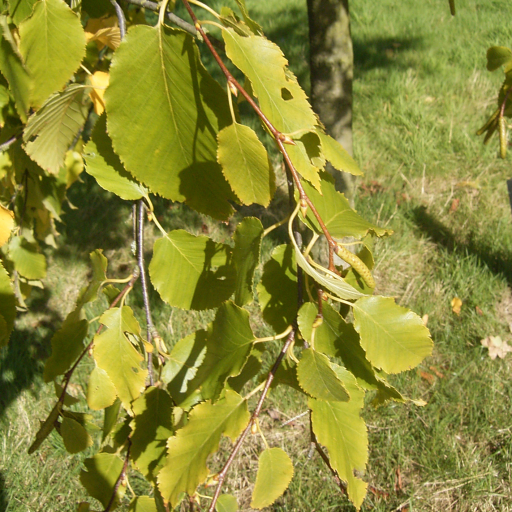
Plant Overview
Often called the "Sweet Birch" or "Cherry Birch," this North American native is the secret ingredient behind old-fashioned birch beer. While it looks remarkably like a cherry tree when young, its hidden superpower is its scent—a sharp, refreshing burst of wintergreen that lingers on your fingers after touching the bark. It is a slow-growing, elegant tree that provides some of the most brilliant gold foliage you can find in the autumn.
🔍 How to Identify
- 🌳 Bark Texture: Deep reddish-brown to almost black bark that is smooth and shiny on young trees (mimicking a cherry tree), maturing into thick, irregular, scaly plates as it ages.
- 🍃 Golden Leaves: Heart-shaped or ovate leaves with finely "double-toothed" edges. They are a deep green during summer but transform into a translucent, glowing yellow in the fall.
- 🍭 The Scratch Test: Slender, reddish-brown twigs that, when scraped or broken, release an unmistakable and potent aroma of wintergreen.
🏡 In Your Garden
- 💧 Cool Footing: Unlike many other birch species, the Sweet Birch thrives best in cool, moist, well-drained soils. It is often found on north-facing slopes in the wild and doesn't tolerate extreme heat or drought well.
- 🛡️ Pest Resistance: This species is notably more resistant to the Bronze Birch Borer—a common killer of white-barked birches—making it a much sturdier choice for a long-term landscape feature.
⚠️ Safety & Toxicity
- 🌿 Touch Safe: The tree is completely safe to handle and is not known to cause skin irritation.
- 💊 Aspirin Sensitivity: The inner bark and twigs contain methyl salicylate, which is chemically nearly identical to aspirin. While it has been used traditionally for teas, individuals with aspirin allergies or those on blood thinners should avoid ingesting any homemade birch products.
✨ Fun Fact
🥤 The Original Soda: Before synthetic flavorings were invented, the sap of the Betula lenta was tapped and fermented to create authentic birch beer, and its essential oil was the primary source of "wintergreen" flavoring for chewing gum and toothpaste!

Detailed Care Instructions
To grow Betula lenta, commonly known as black birch or sweet birch, you can follow these steps:
- Climate and soil: Black birch prefers a temperate climate with cool winters and mild summers. It grows best in well-draining soil that is slightly acidic with a pH between 5.0 and 6.5. Ensure that the planting location receives full to partial sunlight.
- Propagation: This plant can be grown from seeds or cuttings. If you choose to propagate from seeds, collect fresh seeds in late summer or autumn. Stratify the seeds by storing them in a cool, moist environment for 60 to 90 days to mimic winter conditions. After stratification, plant the seeds in a seed tray or small pots with a good quality seed-starting mix. Keep the soil consistently moist and provide bottom heat between 60-70°F (15-21°C).
- Transplanting: When the seedlings reach a height of 2-3 inches (5-8 cm) and develop a few leaves, they can be transplanted to a larger pot or directly into the ground. Transplant carefully to avoid damaging the delicate roots.
- Planting in the ground: Choose a suitable planting location with well-prepared, fertile soil. Dig a hole slightly larger than the root ball of the seedling. If you are planting multiple trees, space them about 10-20 feet (3-6 meters) apart to allow room for growth. Gently place the seedling in the hole, making sure the top of the root ball is level with or slightly above the ground surface. Backfill the hole with soil, firm it gently, and water thoroughly.
- Watering and maintenance: Keep the soil consistently moist but not waterlogged, especially during the first year. Regularly check the moisture level and water accordingly. Mulching around the base of the tree can help retain moisture and suppress weed growth. Prune any dead, diseased, or crossing branches to maintain a healthy structure.
- Fertilization: Apply a balanced slow-release fertilizer in early spring to provide essential nutrients for growth. Follow the manufacturer's instructions for the recommended dosage.
- Protection from pests and diseases: Black birch is generally resistant to pests and diseases. However, monitor for common issues such as aphids, caterpillars, or fungal diseases. Use appropriate organic or chemical controls if necessary.
- Patience: Black birch is generally a slow-growing tree, so be patient with its growth and development. It may take several years for the tree to reach its full height.
Remember to research and comply with any local regulations or guidelines for growing or planting plants in your specific area.

Place in a window with dappled sun or a spot in the middle of a room. Or directly in a window facing west or east.

One way to water this particular plant is to make sure the soil is consistently moist but not waterlogged. This can be achieved by watering deeply once a week and allowing excess water to drain out of the bottom of the pot or planting area. It's important to avoid letting the soil dry out completely, as this can cause stress to the plant and negatively impact its growth and health. Additionally, placing the plant in a location with adequate drainage and avoiding over-fertilization can help ensure proper watering and overall health of the plant.
To fertilize this plant, you should apply a slow-release fertilizer in early spring before new growth appears. Make sure the fertilizer is evenly distributed around the base of the plant and water immediately after application. Avoid fertilizing during periods of drought or extreme heat, as this may cause stress to the plant. Monitor the plant's growth and adjust fertilization as needed based on its performance.
Betula Lenta, a deciduous tree widely known for its ornamental value, requires a specific type of soil to thrive in. The plant grows best in well-draining acidic soil that is rich in organic matter. The soil should be moist, but not waterlogged, as the roots of Betula Lenta are susceptible to rot. It is also important to ensure that the soil is not compacted, as this can limit the tree's ability to absorb nutrients and water. A soil pH between 4.5 and 6.0 is ideal for Betula Lenta, although it can tolerate a slightly wider range. The addition of organic matter, such as compost or leaf mold, can improve the soil's fertility and texture, creating a healthy environment for the tree to grow.
To propagate this plant, you will need to collect its seeds during the fall when they are mature. Once you have collected the seeds, you will want to stratify them in a cool, dry place for a few weeks. This will help them break dormancy and begin to grow.
After stratification, you will want to sow the seeds in a seed tray filled with moist soil. Keep the soil lightly moist and in a cool, bright location until the seedlings have germinated.
Once the seedlings have emerged, you can transplant them into individual containers or small pots. Continue to provide them with adequate moisture and light until they are large enough to be transplanted into their permanent location.
Additionally, you can propagate this plant by taking softwood or hardwood cuttings. Softwood cuttings can be taken in early summer and hardwood cuttings can be taken in the fall. Simply cut a section of the stem and remove the lower leaves. Dip the stem in rooting hormone and plant it into a potting mix. Keep the soil moist and in a cool, bright location until roots have formed.








