Plant Overview
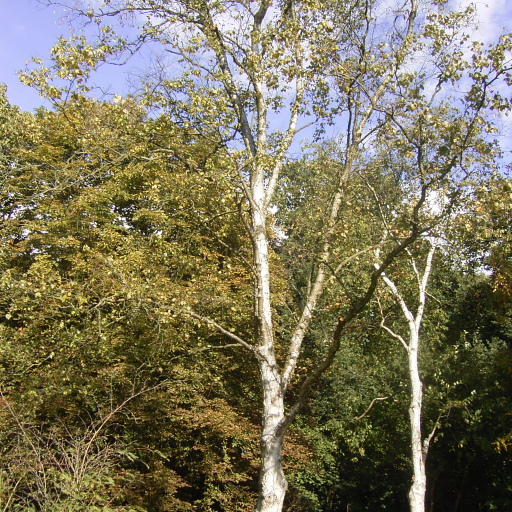
Known as the "Shirakaba" in Japan, the Asian White Birch is often called the ghost of the forest due to its startlingly white, luminous bark. This elegant tree is a staple of East Asian landscapes, symbolizing purity and renewal. It is celebrated for its graceful, slender silhouette and its ability to transform a garden into a serene, woodland sanctuary.
🔍 How to Identify
- ⚪ The Bark: The most striking feature is its chalky-white bark that peels in thin, horizontal papery strips, revealing shades of cream and tan underneath as the tree matures.
- 🍃 Leaf Shape: Its leaves are broadly triangular or heart-shaped with sharply pointed tips and "toothed" (serrated) edges, creating a delicate, flickering texture in the wind.
- 🍂 Autumn Transformation: While lush green during the summer, the foliage turns a brilliant, uniform golden-yellow in the fall, providing a high-contrast display against the white trunk.
🏡 In Your Garden
- 💧 Thirst for Coolness: This birch thrives in "cool and moist" conditions. It has a shallow root system, meaning it can struggle in heavy foot traffic or during intense summer heatwaves if the soil dries out completely.
- 🏔️ Natural Hardiness: Because it originates from the cold regions of Siberia and Northern Japan, it is incredibly frost-tolerant. However, it is sensitive to the Bronze Birch Borer insect if planted in climates that are too hot or humid for its liking.
⚠️ Safety & Toxicity
- ✅ Non-Toxic Status: The Japanese White Birch is generally considered non-toxic to dogs, cats, and horses.
- 🤧 Allergy Note: Like many birch species, it produces a significant amount of wind-borne pollen in the spring, which may trigger hay fever or "birch-fruit syndrome" in sensitive individuals.
✨ Fun Fact
In Japan, the sap of the Betula platyphylla is sometimes harvested in early spring, much like maple syrup. It is used to create refreshing drinks and skincare products, prized for its high mineral and amino acid content.

Detailed Care Instructions
- Observe the soil moisture: Before watering the plant, check the soil moisture level by inserting your finger about an inch into the soil. If it feels dry to the touch, it's time to water the plant.
- Water deeply: When watering the plant, make sure to water deeply so that the water reaches the roots. A good rule of thumb is to water the plant until the water begins to seep out from the drainage holes at the bottom of the pot.
- Use room temperature water: Use room temperature water to avoid shocking the plant with cold water. Avoid using hard water or water with high levels of chemicals.
- Water on a schedule: Develop a watering schedule for your plant based on its growing conditions and needs. Watering too often or too little can cause stress to the plant.
- Consider environmental factors: Take into consideration the environmental factors that may impact the plant's water needs. For example, if the plant is exposed to high temperatures or direct sunlight, it may require more water than usual.
- Avoid overwatering: Overwatering can lead to root rot, a condition where the plant's root system becomes damaged and unable to absorb water and nutrients. Ensure that the soil has adequate drainage to avoid waterlogging.
The ideal soil for this plant would be well-draining, loamy soil that is rich in nutrients. The pH level of the soil should be slightly acidic to neutral, around 5.5 to 7.0. The soil should also have good water retention capabilities, but not be too wet or waterlogged. To improve soil quality, you can add organic matter such as compost or peat moss. Avoid using soil that is clay-heavy or compacted, as this can prevent the roots from growing properly and lead to poor plant health.








