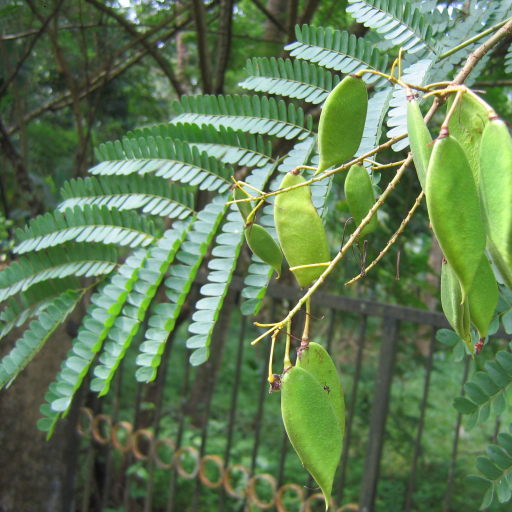
Plant Overview
Known as the Sappanwood or Indian Redwood, Biancaea sappan has been a botanical treasure of the ancient world for centuries. Prized by dyers and healers alike, this thorny beauty produces a brilliant red pigment—brazilin—that was once so valuable it sparked international trade routes. It is a resilient, fast-growing tree that bridges the gap between a rugged survivor and a source of regal color.
🔍 How to Identify
- 🌿 Feathery Foliage: The leaves are "bipinnate," meaning they branch twice to create a delicate, fern-like appearance that filters sunlight beautifully.
- ⚔️ Prickly Armor: The trunk and branches are dotted with small, sharp, recurved thorns. Even the leaf stalks often have tiny prickles hiding underneath.
- 🌼 Golden Blooms: It produces upright clusters (racemes) of bright yellow flowers. If you look closely, one petal in each flower usually features a distinct splash of red at its base.
- 🪵 Beaked Pods: The seed pods are hard, woody, and flattened. They are uniquely shaped with a prominent, curved "beak" at the tip.
🏡 In Your Garden
- ☀️ Tropical Temperament: This tree is a sun-lover. It thrives in hot, humid environments and is surprisingly drought-tolerant once its root system is established.
- 🌱 Soil & Drainage: While it isn't picky about soil nutrients, it hates "wet feet." Ensure it is planted in a spot where water drains away quickly to prevent root rot.
- ✂️ Managing Growth: Because it has a somewhat "scraggly" and spreading growth habit, regular pruning is necessary to keep it looking tidy and to prevent the thorny branches from overhanging walkways.
⚠️ Safety & Toxicity
- 🩹 Physical Hazard: The most immediate danger is the thorns. They are sharp and can easily snag skin or clothing; always wear heavy-duty gardening gloves when pruning.
- 🐾 Pet & Child Safety: While the heartwood is used in traditional medicinal teas (often called "Sappan water"), the raw seeds and pods should not be consumed. They can cause minor gastrointestinal distress in curious pets or toddlers.
- 🎨 Staining Warning: If the wood gets wet or the bark is stripped, it can release a reddish-pink dye that may stain patio stones, clothing, or skin.
✨ Fun Fact
The country Brazil actually owes its name to this plant's cousins! European explorers were searching for Sappanwood (then called "bresel" wood) in the New World. When they found similar red-dye trees there, they named the region "Terra do Brasil"—the Land of the Red Dye Wood.

Detailed Care Instructions
Growing Biancaea sappan, commonly known as Sappanwood or East Indian redwood, involves several steps to ensure a healthy and thriving plant. Here’s a guide to help you get started:
1. Seed Selection and Preparation
- Seeds: Obtain fresh seeds from a reliable source. Sappanwood seeds have a hard coat that makes germination challenging.
- Scarification: To facilitate germination, scarify the seeds. This can be done by gently nicking the seed coat with a file or soaking the seeds in hot (not boiling) water for about 12-24 hours until they swell.
2. Germination
- Soil Preparation: Use a well-draining potting mix. A mix of garden soil, sand, and compost works well.
- Planting: Sow seeds about 1.5 to 2 inches deep in the soil.
- Watering: Keep the soil moist but not waterlogged. Ensure good drainage to prevent waterlogging which can rot the seeds.
- Temperature and Light: Place the pot in a warm area with indirect sunlight. Ideal germination temperature is between 20-25°C (68-77°F).
3. Transplanting Seedlings
- Timing: Once seedlings have 2-3 sets of true leaves and are strong enough to handle, they can be transplanted.
- Choosing the Location: Pick a location with full sun to partial shade. Sappanwood prefers well-drained soil but can tolerate various soil types.
- Spacing: Space plants at least 6-8 feet apart to accommodate their potential size, as they can grow into medium-sized trees.
4. Caring for the Plant
- Watering: Water the plant regularly, especially during dry seasons. The soil should remain moist but not soggy.
- Mulching: Apply mulch around the base of the plant to conserve moisture and suppress weeds.
- Fertilizing: Apply a balanced fertilizer during the growing season to promote healthy growth. Organic compost or well-rotted manure can also be beneficial.
5. Pruning and Maintenance
- Pruning: Prune the plant to maintain its shape and remove any dead or diseased branches. Pruning also promotes better air circulation and reduces pest infestations.
- Pest and Disease Control: Monitor for pests like aphids or scale insects. Use organic or chemical treatments as necessary. Ensure good air circulation to prevent fungal diseases.
6. Harvesting
- Heartwood: The heartwood of Biancaea sappan is often harvested for its valuable dye. Harvesting is generally done from mature plants that are a few years old.
7. Propagation
- Seeds: The most common method is through seeds, as mentioned. However, it can also be propagated from cuttings or young saplings.
Key Points to Remember
- Climate: Biancaea sappan thrives in tropical and subtropical climates. It requires a warm climate with moderate to high humidity.
- Growth Rate: It has a moderate to fast growth rate under optimal conditions.
- Uses: Apart from its use as a dye, Sappanwood is also known for its medicinal properties and hardwood.
By following these steps, you can successfully grow Biancaea sappan and enjoy its many benefits.
Watering Biancaea sappan requires some attention to its natural environment and growth habits. Here’s a detailed guide for watering this plant:
- Establishing the Plant: When you first plant Biancaea sappan, keep the soil consistently moist but not waterlogged. This helps the roots establish. Water deeply and regularly during the first growing season.
- Soil Type: Ensure the soil drains well. It prefers slightly acidic to neutral pH levels. Sandy or loamy soils suit it best.
- Frequency: Once established, Biancaea sappan is relatively drought-tolerant. However, during dry periods, especially in the growing season, it will benefit from regular watering. Aim to water it every 1-2 weeks, allowing the top few inches of soil to dry out between watering sessions.
- Amount: Deep and infrequent watering encourages roots to grow deeper, enhancing drought resistance. Water until the soil is moist to a depth of at least 6 inches.
- Seasonal Adjustments: Water more frequently during hot, dry spells or in extremely windy conditions as these can dry out the soil faster. Reduce watering in the fall and winter when the plant's growth slows.
- Mulching: Apply a layer of mulch around the base of the plant. This helps retain soil moisture, reduces the frequency of watering, and keeps roots cool.
- Container Plants: If growing Biancaea sappan in a container, it will need more frequent watering compared to ground-planted specimens. Check soil moisture regularly and water when the top inch of soil feels dry.
- Monitoring Plant Health: Watch for signs of over- or under-watering. Wilting, yellowing leaves may indicate insufficient watering, while root rot symptoms and soggy soil suggest too much water.
By following these guidelines, you can ensure healthy growth and development for your Biancaea sappan plant.
Here are fertilizing instructions for the Biancaea sappan plant:
- Soil Testing: Before applying any fertilizers, it's a good idea to conduct a soil test to understand the nutrient makeup of your soil. This will help you make informed decisions about what type of fertilizer to use.
- Nutritional Needs:
- N-P-K Ratio: Use a balanced fertilizer with a N-P-K (Nitrogen-Phosphorus-Potassium) ratio like 10-10-10 or 20-20-20.
- Micronutrients: Ensure the fertilizer contains essential micronutrients like iron, zinc, copper, and manganese.
- N-P-K Ratio: Use a balanced fertilizer with a N-P-K (Nitrogen-Phosphorus-Potassium) ratio like 10-10-10 or 20-20-20.
- Application Timing:
- Growing Season: Apply fertilizer during the plant’s active growing season, typically in the spring and summer months.
- Frequency: Apply fertilizer every 4-6 weeks during the growing season.
- Growing Season: Apply fertilizer during the plant’s active growing season, typically in the spring and summer months.
- Application Method:
- Granular Fertilizer: For slow-release granular fertilizers, spread it around the base of the plant according to the package instructions.
- Liquid Fertilizer: For liquid fertilizers, dilute it as recommended and apply it directly to the soil around the base of the plant, avoiding contact with the leaves to prevent burning.
- Granular Fertilizer: For slow-release granular fertilizers, spread it around the base of the plant according to the package instructions.
- Watering:
- Pre-Watering: Water the plant thoroughly before applying fertilizer to prevent root burn.
- Post-Watering: Water again after fertilizing to help distribute the nutrients evenly into the soil and to the roots.
- Pre-Watering: Water the plant thoroughly before applying fertilizer to prevent root burn.
- Organic Options: Consider using organic fertilizers such as compost, well-rotted manure, or fish emulsion as an alternative to synthetic fertilizers.
- Mulching: Apply a layer of organic mulch around the plant to retain moisture and provide a slow release of nutrients as it decomposes.
- Monitoring:
- Plant Health: Keep an eye on the plant’s growth and overall health. Yellowing leaves can indicate a nitrogen deficiency, while poor flowering might suggest a lack of phosphorous.
- Soil pH: Maintain a slightly acidic to neutral pH (around 6.0 to 7.0) for optimal nutrient uptake.
Consistent and appropriate fertilizing, tailored to the plant's specific needs, will help ensure your Biancaea sappan thrives.
- Plant Health: Keep an eye on the plant’s growth and overall health. Yellowing leaves can indicate a nitrogen deficiency, while poor flowering might suggest a lack of phosphorous.
When cultivating Biancaea sappan, an optimal soil composition is crucial for healthy growth. This plant thrives best in well-drained, loamy soils that are rich in organic matter. Here are some detailed considerations:
- Soil Texture: Loamy soil, which is a balanced mixture of sand, silt, and clay, is ideal. It should be capable of retaining sufficient moisture while providing adequate drainage to prevent waterlogging.
- Drainage: Well-drained soil is essential to prevent root rot and other issues associated with excessive moisture. Incorporating coarse sand or fine gravel can enhance drainage properties.
- Organic Matter: Adding organic compost or well-decomposed manure enriches the soil with essential nutrients and improves its structure. Organic matter boosts microbial activity, which helps with nutrient availability and overall soil health.
- pH Level: The soil should ideally be slightly acidic to neutral, with a pH range of 6.0 to 7.0. Soil testing kits can help determine the pH level, and amendments like lime or sulfur can adjust it if necessary.
- Nutrient Content: Ensuring the soil is rich in essential nutrients like nitrogen, phosphorus, and potassium is important. Balanced fertilizers can be used to supplement these nutrients, particularly during the growing season.
- Soil Aeration: Good aeration ensures that roots get enough oxygen. Regularly loosening the soil around the plant can aid in maintaining healthy root systems.
By tailoring the soil conditions to meet these criteria, you'll create an environment conducive to the robust growth of Biancaea sappan. Proper soil management will support the plant’s overall health and optimize its development.
To propagate Biancaea sappan, a plant known for its medicinal and dye-producing properties, follow these guidelines:
Propagation Method
This plant can be propagated either by seeds or by cuttings. Each method has its own considerations.
Seed Propagation
- Seed Collection:
- Collect mature seeds from pods that have dried on the plant.
- Ensure that the seeds are fully developed and not damaged.
- Collect mature seeds from pods that have dried on the plant.
- Seed Treatment:
- Seeds have a hard coat and may benefit from scarification.
- Scarify the seeds by lightly sanding them with sandpaper or soaking them in hot water (not boiling) for 24 hours.
- Seeds have a hard coat and may benefit from scarification.
- Sowing:
- Use a well-draining seed-starting mix.
- Plant the seeds about 1 to 2 cm deep.
- Place the container in a warm environment with temperatures ideally between 20-30°C (68-86°F).
- Use a well-draining seed-starting mix.
- Watering:
- Keep the soil consistently moist but not waterlogged.
- Ensure good drainage to avoid root rot.
- Keep the soil consistently moist but not waterlogged.
- Germination:
- Germination usually takes 2 to 4 weeks.
- Once seedlings are large enough to handle, transplant them into individual pots.
Cutting Propagation
- Germination usually takes 2 to 4 weeks.
- Choosing Cuttings:
- Select healthy, semi-hardwood stems that are about 10 to 15 cm long.
- Make sure each cutting has at least 2-3 nodes.
- Select healthy, semi-hardwood stems that are about 10 to 15 cm long.
- Preparation:
- Remove the leaves from the lower half of the cutting.
- Optionally, dip the cut end in rooting hormone to encourage root development.
- Remove the leaves from the lower half of the cutting.
- Planting:
- Insert the cuttings into a well-draining rooting medium (such as a mix of sand and peat).
- Plant cuttings to a depth where at least one node is buried underground.
- Insert the cuttings into a well-draining rooting medium (such as a mix of sand and peat).
- Environment:
- Place the cuttings in a humid environment (or cover them with a plastic bag to maintain humidity).
- Keep them in an area with indirect sunlight and temperatures around 20-25°C (68-77°F).
- Place the cuttings in a humid environment (or cover them with a plastic bag to maintain humidity).
- Watering:
- Keep the soil evenly moist.
- Ensure good air circulation to prevent fungal infections.
- Keep the soil evenly moist.
- Root Development:
- Roots typically develop in 4 to 8 weeks.
- Once rooted, transplant the cuttings into larger pots with a well-draining potting mix.
General Care Post-Propagation
- Roots typically develop in 4 to 8 weeks.
- Light:
- Position the young plants in an area that receives full sun to partial shade.
- Position the young plants in an area that receives full sun to partial shade.
- Watering:
- Water the plants regularly, allowing the soil to dry slightly between waterings.
- Ensure good drainage to prevent waterlogging.
- Water the plants regularly, allowing the soil to dry slightly between waterings.
- Fertilization:
- Apply a balanced fertilizer every 4-6 weeks during the growing season to promote healthy growth.
- Apply a balanced fertilizer every 4-6 weeks during the growing season to promote healthy growth.
- Pests and Diseases:
- Monitor for common pests such as aphids and mealybugs.
- Treat infestations with appropriate insecticides or organic solutions.
By following these steps, you can successfully propagate Biancaea sappan and enjoy its benefits.
- Monitor for common pests such as aphids and mealybugs.








