Plant Overview
Known affectionately as "Apache Beggarticks" or "Goldie," this plant is a burst of captured sunshine for any outdoor space. Native to Mexico and the Southwestern United States, it has earned a reputation as a relentless bloomer that can withstand the heat of summer without fading. Its delicate, fern-like appearance hides a surprisingly rugged constitution, making it a favorite for gardeners who want high impact with low maintenance.
🔍 How to Identify
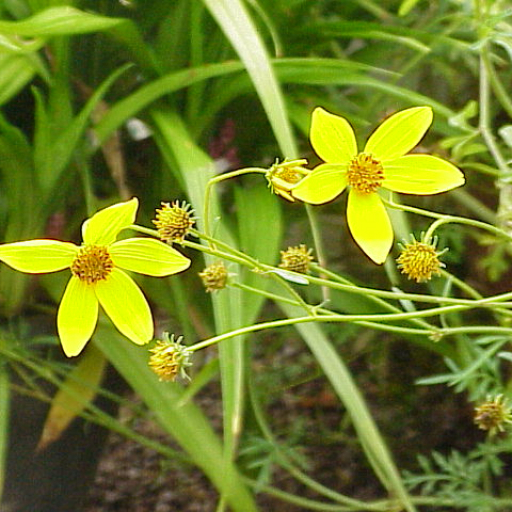
- 🌼 The Flowers: Look for bright golden-yellow, star-shaped blooms with five petals. They resemble miniature daisies and appear in dense clusters at the tips of the stems.
- 🌿 The Foliage: The leaves are deeply divided, fine-textured, and feathery. This "fern-leaved" look creates a soft, airy backdrop that makes the yellow flowers pop.
- 📐 Growth Habit: It typically grows in a low, mounding, or trailing fashion. In a pot, it will gracefully "spill" over the sides, while in the ground, it forms a dense, golden carpet.
🏡 In Your Garden
- ☀️ Sun-Worshipper: To get the best floral display, place this plant in the brightest spot possible. It is exceptionally heat-tolerant and won't "stall" during mid-summer heatwaves like many other bedding plants.
- 🦋 The Pollinator Party: This is one of the best plants for attracting beneficial insects. Its nectar-rich centers are a primary destination for honeybees, hoverflies, and migrating butterflies.
- ✂️ Self-Cleaning Nature: Most modern varieties are "self-cleaning," meaning the old flowers drop off on their own without needing to be deadheaded, though a quick trim in mid-summer can encourage a fresh flush of growth.
⚠️ Safety & Toxicity
- ✅ Safe Profile: Bidens ferulifolia is generally considered non-toxic to humans, dogs, and cats. It is a safe choice for family-friendly gardens and balconies.
- 🧤 Seed Snags: The only "danger" comes from its seeds (the "beggarticks"). They have tiny hooks designed to latch onto clothing or fur. While not harmful, they can be a bit of a nuisance to pick off your socks or your dog’s coat!
✨ Fun Fact
The name "Bidens" comes from the Latin words bis (two) and dens (tooth). This refers to the two sharp, tooth-like barbs found on its seeds, which evolved specifically to hitchhike on the fur of passing animals to find new places to grow!

Detailed Care Instructions
| Color | Yellow, Gold, White, Pink, Orange |
| Soil Ph | Slightly Acidic To Neutral |
| Humidity | Normal |
| Lighting | Full Sun |
| Soil Type | Rich And Well-Drained |
| Bloom Time | Summer |
| Difficulty | Medium |
| Plant Type | Annual Or Perennial |
| Hibernation | Cold Period |
| Mature Size | 6-12 Inches Tall, 1-3 Feet Wide |
| Native Area | Americas, Africa, Polynesia, Europe, Asia |
| Temperature | Min 15°C |
| Sun Exposure | Medium To Full Sun |
| Hardiness Zones | 8 To 11 |
To grow Bidens Ferulifolia plants, you can follow these steps:
- Decide on the location: Bidens Ferulifolia plants prefer full sun but can also tolerate partial shade. Choose a location that receives at least 6 hours of direct sunlight per day.
- Prepare the soil: The plant prefers well-draining, fertile soil. Amend the soil by adding organic matter, such as compost, to improve drainage and fertility.
- Planting: Dig a hole that is slightly larger than the root ball of the plant. Place the plant in the hole, backfill with soil, and gently firm it around the base of the plant.
- Watering: Keep the soil consistently moist but not waterlogged. Provide enough water to keep the soil evenly moist, especially during hot and dry weather.
- Fertilization: Fertilize the plant every 4 to 6 weeks during the growing season with a balanced fertilizer. Follow the package instructions for application rates.
- Mulching: Apply a layer of organic mulch, such as wood chips or straw, around the base of the plant. Mulch helps retain moisture, suppress weeds, and insulate the roots.
- Pruning: Bidens Ferulifolia plants benefit from regular pruning to maintain shape and encourage bushier growth. Trim back any leggy or overgrown branches to promote denser foliage and more flowers.
- Deadheading: Remove faded flowers regularly by pinching or cutting them off. Deadheading encourages continuous blooming throughout the growing season.
- Pest and disease control: Keep an eye out for common pests like aphids or spider mites, and treat them accordingly with organic or chemical methods. Regularly inspect the plants for any signs of disease and take appropriate action if necessary.
- Winter care (in colder climates): If you live in a region with frost or cold winters, Bidens Ferulifolia is usually grown as an annual. However, you can try overwintering it indoors in a cool and bright location.
Remember to regularly monitor the plant's needs, provide proper care, and enjoy the beautiful flowers that Bidens Ferulifolia produces.

Place in a bright room that is sun drenched almost all day. Or directly in a south-facing window.

The Bidens Ferulifolia plant prefers moist soil that is not waterlogged. It is important to avoid letting the soil dry out completely, but also make sure not to overwater the plant as it can lead to root rot. To water the plant, allow the top inch of soil to dry out before watering thoroughly. Be sure to water directly at the base of the plant to avoid wetting the foliage, which can encourage fungal diseases. It is also recommended to water in the morning or evening when temperatures are cooler to reduce water evaporation and stress on the plant.
The Bidens Ferulifolia plant should be fertilized using a water-soluble fertilizer every two weeks during the growing season. Ensure that the fertilizer contains equal parts nitrogen, phosphorus, and potassium. Mix a tablespoon of fertilizer in a gallon of water and pour it over the soil around the plant. Avoid getting the fertilizer on the leaves or stems as it can burn them. Increase the frequency of fertilization if the plant's growth is dwindling or the leaves are turning yellow.
The soil to use with Bidens Ferulifolia should be well-draining and rich in organic matter. It is recommended to use a soil mix that is composed of equal parts of peat moss or coconut coir, perlite, and vermiculite. Additionally, adding some compost to the mix will provide the plant with the necessary nutrients for healthy growth. The pH level of the soil should be between 6.0 and 7.0. It is important to avoid using soils that are heavy in clay or sand, as these can negatively affect the plant's growth and development. Regular watering and proper fertilization will also help to ensure that the Bidens Ferulifolia plant thrives in its soil environment.
Bidens Ferulifolia plant can be propagated asexually through stem cuttings. It is best to take the cuttings in the spring or summer when the plant is actively growing.
To take the cuttings, select a healthy stem that is about 4-6 inches long and has several sets of leaves. Use a sharp and clean pair of garden or pruning scissors to make a cut just below the lowest set of leaves.
Remove the lower leaves from the stem, leaving only a few sets on the upper part of the cutting. This will help the cutting conserve energy and focus on root growth.
Prepare a pot with well-draining soil mix and make a hole in the center large enough to accommodate the stem. Dip the cut end of the stem in rooting hormone powder or gel to encourage root growth.
Insert the stem cutting into the prepared hole and firm the soil around it. Water the cutting well and cover it with a plastic bag or a transparent container to create a humid environment.
Place the pot in a bright, indirect light spot and maintain the soil moist but not waterlogged. After a few weeks, the cutting should have rooted and started to produce new growth. Gradually acclimate it to drier conditions and adjust the light and temperature as needed.








