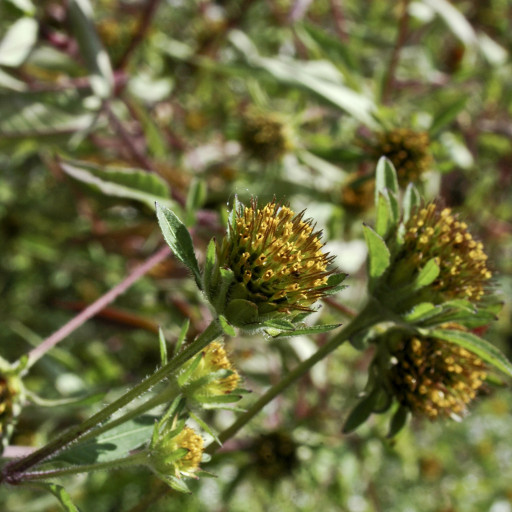
Plant Overview
Known as the "Devil’s Beggartick" or "Pitchfork Weed," Bidens frondosa is nature's most persistent hitchhiker. While it might look like a humble wildflower, its primary mission is to catch a ride on your hiking socks or your dog’s fur. Native to North America, this resilient plant has traveled the globe by clinging to anyone passing by.
🔍 How to Identify
- 🌿 Leaf Structure: Features opposite, compound leaves typically divided into 3 to 5 lance-shaped leaflets with sharply toothed edges and a distinct purplish tint on the stems.
- 🌼 The "Flower": Unlike daisies, these flower heads usually lack showy petals; they look like small, golden-brown fuzzy buttons surrounded by a ring of long, leafy green bracts.
- 🔱 The Hitchhikers: The most recognizable feature is the seed—a flat, dark brown achene equipped with two barbed "horns" that look exactly like tiny pitchforks.
🏡 In Your Garden
- 💧 Moisture Lover: You will likely find this plant in the "soggy" spots of your yard. It thrives in damp soil, drainage ditches, or near garden hoses where water tends to collect.
- 🦋 Wildlife Value: While many gardeners pull it as a weed, it is a fantastic plant for biodiversity. Its late-summer blooms provide a critical nectar source for honeybees, leafcutter bees, and small butterflies.
⚠️ Safety & Toxicity
- ✅ Non-Toxic: Bidens frondosa is generally considered safe and non-toxic for both humans and household pets.
- 🧶 Physical Nuisance: The primary "danger" is to your laundry and your pet’s coat. The barbed seeds are designed to lock into fibers and fur, often requiring a fine-toothed comb or significant patience to remove.
✨ Fun Fact
The genus name Bidens is derived from the Latin bis (two) and dens (tooth). This refers specifically to the two sharp prongs on the seeds that act like biological Velcro, a clever evolutionary trick to ensure their seeds travel miles away from the parent plant.

Detailed Care Instructions
To grow Bidens frondosa, also known as devil's beggarticks or beggar ticks, follow these steps:
- Choose the right location: Bidens frondosa thrives in full sun to partial shade. Select a location in your garden that receives at least 6 hours of direct sunlight each day, preferably in well-draining soil.
- Prepare the soil: Bidens frondosa prefers moist, fertile soil. Before planting, loosen the soil using a garden fork or tiller. Add organic matter such as compost or well-rotted manure to improve the soil's fertility and drainage.
- Sow the seeds: Bidens frondosa can be directly sown outdoors after the last frost date in your area. Scatter the seeds on the prepared soil surface, ideally 12-18 inches apart, and lightly press them into the soil. Alternatively, you can start the seeds indoors 4-6 weeks before the last frost and transplant them once the danger of frost has passed.
- Watering and Maintenance: Keep the soil consistently moist but not waterlogged. Water the plants deeply whenever the top inch of soil feels dry. Mulching around the plants can help retain moisture and suppress weed growth.
- Fertilization: Bidens frondosa typically does not require large amounts of fertilizer. However, applying a balanced, slow-release fertilizer once a month during the growing season can promote healthy growth and abundant flowering.
- Pruning: Bidens frondosa tends to sprawl and may benefit from pruning or pinching back to encourage bushier growth. Pinch off the tips of stems when the plants are around 6 inches tall to promote branching.
- Pest and disease control: Bidens frondosa is generally disease and pest-resistant. However, keep an eye out for common garden pests such as aphids, slugs, or snails. If necessary, apply organic pest control methods or use appropriate insecticides according to the instructions.
- Harvesting: Bidens frondosa produces small, yellow flowers followed by seed heads with barbed seeds that cling to clothing or fur. If you wish to collect seeds for propagation, allow the seed heads to fully dry on the plant, then remove and store them in a cool, dry place.
By following these steps, you can successfully grow Bidens frondosa in your garden and enjoy its bright yellow flowers throughout the growing season.

Place in a bright room that is sun drenched almost all day. Or directly in a south-facing window.

Bidens Frondosa is a type of plant that requires regular watering to stay healthy. To water this plant, you should ensure that the soil is not too dry or too wet. The ideal soil moisture level for Bidens Frondosa is slightly damp to the touch.
To check the soil’s moisture level, you should stick your finger into the soil up to the first knuckle. If the soil feels dry at that depth, it’s time to water the plant. Don’t let the soil completely dry out before watering, as this can cause stress or damage to the plant.
When watering Bidens Frondosa, you should avoid getting water on the leaves or flowers, as this can cause rot and disease. Instead, aim to water directly onto the soil around the base of the plant. You should also use a watering can or gentle hose attachment to water the plant slowly and evenly, allowing the water to soak deeply into the soil.
It’s important not to overwater Bidens Frondosa, as too much water can lead to root rot and other problems. Always allow the soil to drain completely after watering, and avoid watering again until the top layer of soil has begun to dry out.
Overall, providing sensitive care and attention to the watering needs of Bidens Frondosa is essential to maintaining a healthy and thriving plant.
To fertilize this plant, use a balanced, slow-release fertilizer with a ratio of 10-10-10 or 20-20-20. Apply the fertilizer in early spring, just before new growth begins, and again in midsummer. Use a granular fertilizer or a liquid fertilizer mixed at half strength. Water the plant thoroughly after applying the fertilizer to help it absorb the nutrients. Avoid getting fertilizer on the leaves or flowers, as this can burn them and cause damage.
The optimal soil for Bidens Frondosa should be well-draining and rich in organic matter. It should have a pH level between 5.5 and 7.0, which is slightly acidic to neutral. The soil should also retain moisture well and not become waterlogged. A mix of loam, compost, and vermiculite is a good choice, as it provides both nutrients and good drainage. Avoid using heavy soils with clay content, which can lead to root rot and other issues. Consider adding additional nutrients to the soil, such as slow-release fertilizer or bone meal, to promote healthy growth.
Bidens frondosa can be propagated through various techniques such as seed germination, stem cutting, or root division. For seed germination, plant the seeds in well-draining soil and keep the soil moist until the seeds germinate. The plant can also be propagated through stem cuttings by cutting a section of stem with leaves and rooting it in water or soil. Root division involves digging up an established plant and dividing the root ball into smaller sections, which can then be planted separately. It's important to ensure that the new plants are kept in a warm, humid location and given enough time to establish before transplanting.
Common pests of the devil's beggarticks include Spider mites, aphids, larvae. Make a habit of checking your devil's beggarticks frequently for pests so that any infestations can be caught and managed early.








