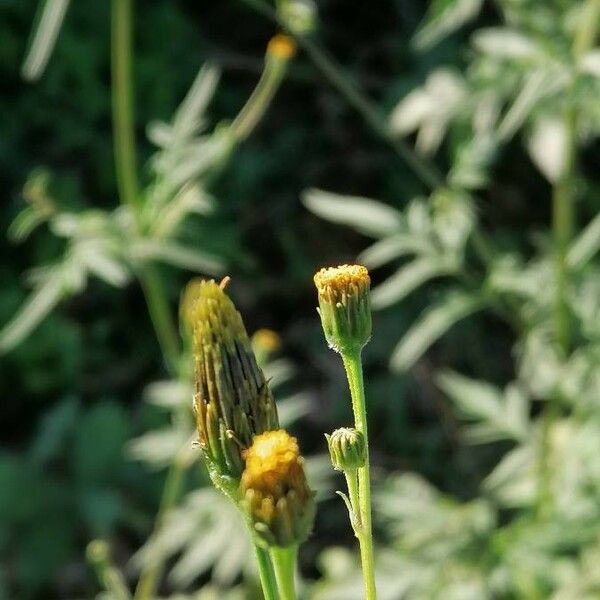
Plant Overview
Often called the Greater Beggarticks or Spanish Needles, Bidens subalternans is the ultimate hitchhiker of the botanical world. Originally hailing from South America, this resilient traveler has spread across the globe by "hooking" a ride on anything that passes by. While it produces cheerful yellow blooms, most people recognize it by the persistent, needle-like seeds that cling stubbornly to socks and pet fur.
🔍 How to Identify
- 🌿 The Foliage: The leaves are deeply divided and fern-like (bipinnate), giving the plant a delicate, lacy appearance despite its hardy nature.
- 🌼 The Flowers: It features small, daisy-like flower heads with bright yellow centers. Depending on the environment, it may or may not have tiny yellow petals (ray florets) around the edge.
- 📌 The "Needles": After blooming, the plant produces long, dark, ribbed seeds equipped with 2 to 4 barbed awns at the tip that act like tiny grappling hooks.
🏡 In Your Garden
- 🌱 The Opportunist: You will likely find this plant in "disturbed" soil—areas where you’ve recently dug, along fence lines, or in neglected corners. It thrives in full sun and isn't picky about soil quality.
- ✂️ Management Nuance: If you wish to remove it, do so before the flowers turn into brown needles. Because it develops a sturdy taproot, it is much easier to pull when the soil is damp. Once those seeds harden, a single plant can distribute hundreds of "hitchhikers" across your yard.
⚠️ Safety & Toxicity
- ✅ Status: Generally non-toxic to humans and pets.
- 🐕 Physical Irritant: While not chemically poisonous, the seeds are a "mechanical" nuisance. They can get tangled deeply in long-haired dog coats or even poke into the skin, causing minor irritation or discomfort for curious pets.
✨ Fun Fact
The genus name Bidens literally translates to "two teeth" in Latin, referring to the pair of sharp barbs on the seeds. These barbs were part of the natural inspiration for the invention of Velcro, mimicking the way hooked seeds latch onto microscopic loops in fabric!

Detailed Care Instructions
To grow Bidens subalternans (also known as the Cuban beggarweed), you can follow these steps:
- Choose an appropriate location: Bidens subalternans prefers full sun to partial shade. Ensure the soil is well-draining and slightly acidic, with a pH range of 5.5 to 6.5.
- Prepare the soil: Clear the planting area of any weeds or debris. Loosen the soil with a garden fork or tiller and amend it with organic matter, such as compost or well-rotted manure, to improve fertility and drainage.
- Planting: Sow the seeds directly into the soil after the danger of frost has passed. Scatter the seeds thinly and cover them with a thin layer of soil, approximately 1/8 inch deep. Space the plants about 6-8 inches apart to allow for their spreading habit.
- Watering: Keep the soil consistently moist, but be careful not to overwater. Ensure the soil remains evenly damp but not waterlogged. Water Bidens subalternans thoroughly whenever the top inch of soil feels dry.
- Fertilization: Apply a balanced, slow-release fertilizer according to the package instructions when planting the seeds. Additionally, you can top-dress the plants with compost or a general-purpose fertilizer throughout the growing season to promote healthy growth.
- Mulching: Apply a layer of organic mulch, such as straw or wood chips, around the plants. Mulching helps retain moisture, suppresses weeds, and protects the shallow root system of Bidens subalternans.
- Pruning: Bidens subalternans has a sprawling growth habit. To keep it tidy and prevent excessive spreading, you can trim back the plants periodically. This will also encourage bushier growth and more abundant flowering.
- Pest and disease control: Monitor the plants regularly for any signs of pests or diseases, such as aphids or powdery mildew. Treat any issues promptly using organic pest control methods or consult with a local garden center for appropriate remedies.
- Harvesting and seed collection: Bidens subalternans produces small, black seeds after flowering. To collect the seeds, let the flowers dry and turn brown on the plant. Then, gently rub or shake the seed heads over a container to release the seeds.
By following these tips, you can successfully grow Bidens subalternans in your garden or landscape. Remember, it is helpful to research and adhere to any specific care requirements based on your location and climate.

Place in a bright room that is sun drenched almost all day. Or directly in a south-facing window.

Bidens Subalternans is a tropical plant that requires regular watering to grow and thrive. When watering this plant, it is important to avoid getting water on the leaves as this can cause fungal diseases. The soil should be kept slightly moist at all times, but not waterlogged. It's important to let the soil dry out a bit in between watering to prevent root rot. Watering should be done during the morning or evening when the weather is cooler to prevent the water from evaporating too quickly. Use a watering can or a hose with a diffuser nozzle to provide a gentle and even watering. Always check the soil moisture level with your finger before watering to avoid overwatering.
To fertilize this plant, use a balanced fertilizer with equal proportions of nitrogen, phosphorus, and potassium. Apply the fertilizer once every two weeks during the growing season. Be sure to water the plant well before and after fertilizing to prevent root burn. Avoid fertilizing during periods of extreme heat or drought.
Bidens subalternans prefers well-draining soil that is rich in organic matter. A pH range of 5.5 to 7.5 is ideal. Sandy loam or loamy soils are recommended, as the plant does not tolerate heavy clay soils. The soil should be kept consistently moist but not waterlogged. Adding compost or other organic matter can help improve soil structure and fertility, promoting healthy growth and flowering. It is important to avoid using soils that are contaminated with herbicides or pesticides, as this can harm the plant's growth and health.
To propagate this plant, start by taking a cutting from a healthy parent plant. Use clean, sharp pruning shears to make a cut just above a leaf node. Remove any leaves from the lower half of the cutting. Dip the cut end into rooting hormone powder to encourage rooting.
Prepare a pot with a well-draining potting mix. Make a hole in the soil with a pencil or stick and insert the cutting into the hole. Firm the soil around the cutting and water lightly.
Place the pot in a bright, warm location, but out of direct sunlight. Keep the soil consistently moist but not waterlogged. It can take several weeks for the cutting to root and start growing new leaves.
Once the cutting has rooted and started growing, it can be transplanted into a larger pot or directly into the ground if the weather is warm enough.
Regularly water and fertilize the new plant until it becomes established. Once it is well-established, it should grow and spread quickly.








