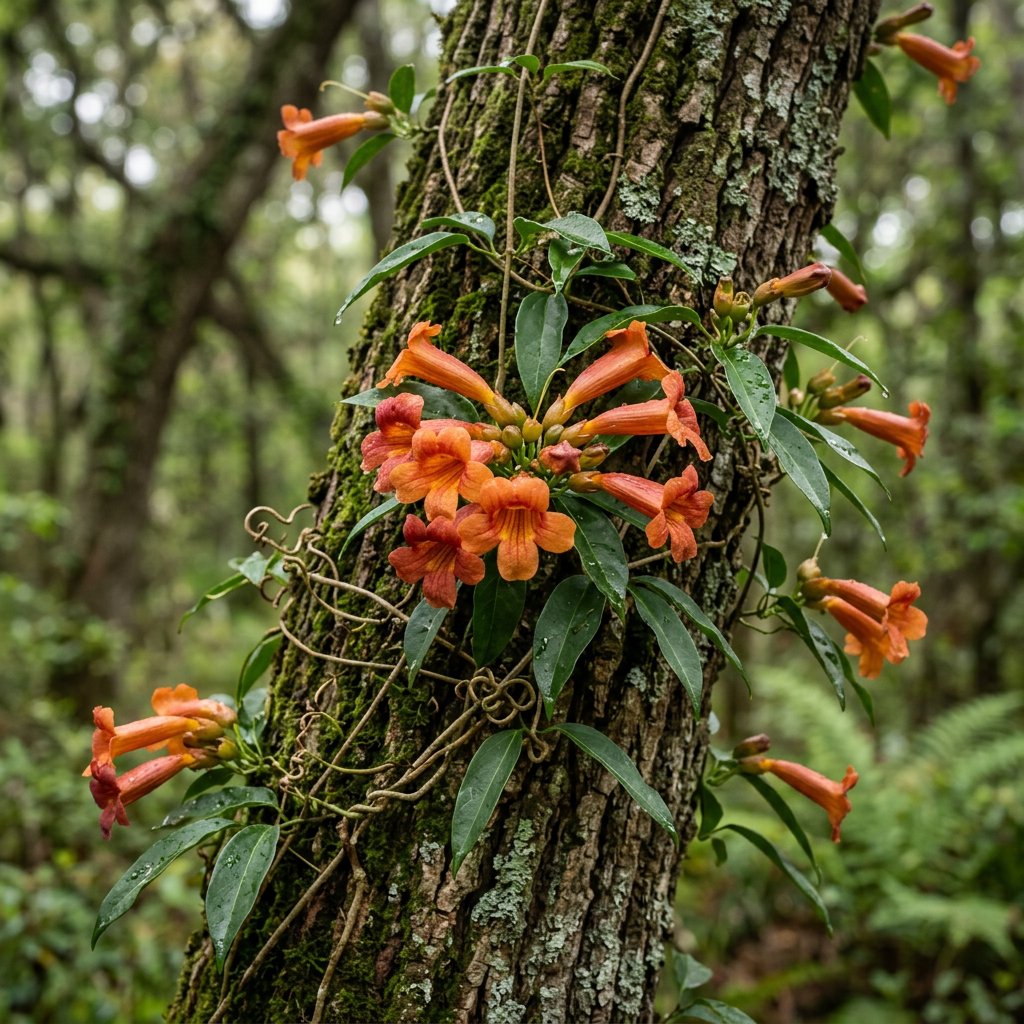
Plant Overview
Often referred to as the Crossvine, this vigorous woody climber is a true showstopper of the American Southeast. Its name comes from the unique cross-shaped pattern revealed when the stem is cut transversely, a feature that long fascinated early naturalists. While it is often mistaken for its cousin, the Trumpet Creeper, the Crossvine is much better behaved in a garden setting, offering a sophisticated "curtain of fire" effect when in full bloom.
🔍 How to Identify
- 🎺 The Flowers: Large, trumpet-shaped blooms that are typically brick-red on the outside and a contrasting bright yellow or orange on the inside. They often have a subtle, mocha-like fragrance.
- 🍃 The Leaves: Glossy, dark green leaves that grow in pairs. In milder winters, the foliage takes on a beautiful reddish-purple hue rather than falling off.
- 🧗 The Tendrils: Look for branched tendrils equipped with tiny adhesive discs (suction cups). This allows the plant to scale flat surfaces like brick or bark without needing extra support.
🏡 In Your Garden
- 🧱 Climbing Mechanics: Unlike many vines that require heavy-duty trellising, the Crossvine’s "suction cup" tendrils allow it to "walk" up walls. However, it is heavy at maturity, so ensure the structure it climbs is sturdy enough to hold its weight.
- 💧 Soil & Adaptability: While it thrives in moist, well-drained soils, it is surprisingly drought-tolerant once established. It is much more polite than the Trumpet Creeper, as it doesn't send out aggressive underground runners that take over the entire lawn.
- ☀️ Sun for Blooms: To get that spectacular "wall of flowers," site it in full sun. While it will grow in deep shade, you’ll mostly see green leaves and very few trumpets.
⚠️ Safety & Toxicity
- 🐾 Pet & Child Safety: Bignonia capreolata is generally considered non-toxic to humans and common household pets like cats and dogs.
- 👄 Mild Caution: While not "poisonous," ingesting any garden plant can cause mild stomach upset or nausea. It is always best to keep toddlers and curious pets from snacking on the foliage.
✨ Fun Fact
The Crossvine is a high-octane fueling station for Ruby-throated Hummingbirds. Because it blooms early in the spring, it provides a critical nectar source for these birds during their northward migration. If you plant one, expect a front-row seat to a hummingbird feeding frenzy!

Detailed Care Instructions
To grow Bignonia Capreolata, also known as crossvine, follow these steps:
- Climate and location: Select a location that receives full to partial sun exposure, as this plant thrives in sunlight. Crossvine prefers USDA hardiness zones 6-9. It can tolerate a wide range of soil types, but well-draining soil is essential.
- Planting: Start by digging a hole that is slightly wider and deeper than the roots of the plant. Gently remove the plant from its container and place it in the hole. Make sure the top of the root ball is level with or slightly higher than the soil surface. Backfill the hole with soil, and tamp it down gently to remove any air pockets.
- Watering: Immediately after planting, water the crossvine thoroughly. For the first few weeks, keep the soil consistently moist to promote root establishment. Once established, crossvine is relatively drought-tolerant but benefits from regular watering. Water deeply whenever the soil starts to dry out.
- Support structure: Bignonia Capreolata is a climbing vine and requires support to grow effectively. Install a trellis, fence, or any other sturdy structure for the vine to climb on. Ensure the support is strong enough to support the weight of the plant as it grows.
- Pruning: Crossvine blooms on old wood, so prune after flowering is finished. In late winter or early spring, remove any dead or damaged branches to maintain the overall health and appearance of the plant. You can also trim back vigorous growth as needed to keep it manageable.
- Fertilizing: Apply a balanced slow-release fertilizer in early spring to provide necessary nutrients for the growing season. Follow the instructions on the fertilizer package for proper application rates.
- Mulching: Apply a layer of organic mulch, such as wood chips or bark, around the base of the plant. Mulching helps retain moisture, suppress weed growth, and provide insulation to the roots during extreme temperatures.
- Pests and diseases: Crossvine is generally resistant to most pests and diseases. However, occasional infestations of scale insects, spider mites, or aphids may occur. Monitor the plant regularly and take appropriate action if necessary, such as using horticultural oils or insecticidal soaps.
With proper care, Bignonia Capreolata can grow vigorously and provide beautiful, trumpet-shaped flowers in the spring, attracting hummingbirds and butterflies to your garden.

Place in a window with dappled sun or a spot in the middle of a room. Or directly in a window facing west or east.

To water this plant, it is important to first thoroughly check the soil moisture level before giving it water. This plant prefers moist, but well-drained soil, so it is important to not over-water or allow the soil to dry out completely. When watering, it is best to water deeply, allowing the water to penetrate the root system. It is important to avoid watering the foliage, as this can lead to fungal growth and disease. Additionally, it is recommended to water this plant in the morning or early afternoon, as watering in the evening can also contribute to fungal growth. Overall, consistent and proper watering will help ensure the health and vitality of this plant.
To fertilize this plant, use a balanced fertilizer with an NPK ratio of 10-10-10 or 20-20-20, applied once every four to six weeks during the growing season (spring and summer). Avoid over-fertilizing, as this can lead to the plant's excessive growth or burn the roots. Water the plant before and after applying the fertilizer, and ensure that the soil is well-draining to prevent waterlogging. Finally, follow the manufacturer's instructions for the specific fertilizer you choose and adjust the dosage according to the plant's age and size.
When selecting the appropriate soil for this particular plant species, it is important to consider its specific requirements. This plant prefers a soil that is well-draining and rich in organic matter. The soil should be moist but not saturated, and should not become waterlogged. In terms of pH, a slightly acidic soil with a pH between 6.0 and 7.0 is ideal for this plant. A good quality potting mix with added perlite or sand for drainage and peat moss for acidity may be suitable for growing this plant in containers. Garden soil should be amended with organic matter such as compost or well-rotted manure to improve the soil structure. Additionally, adding some form of mulch to the soil surface can aid in retaining moisture and limiting weed growth.
To propagate this plant, you will need to start by taking a cutting from a healthy and mature plant. Use a clean and sharp pair of pruning shears to cut a stem that is roughly 6 inches long. Make sure that there are at least two sets of leaves on the stem.
Remove the lower set of leaves from the stem, leaving only the upper set. Dip the cut end of the stem into rooting hormone powder. This will help the stem to develop roots more quickly.
Fill a small container with moist potting soil. Make a small hole in the center of the soil, and insert the stem into the hole. Firm the soil around the stem, making sure that it is secure.
Cover the container with a plastic bag, and place it in a warm, bright location, out of direct sunlight. Check the container daily to make sure that the soil remains moist, but not waterlogged.
After a few weeks, you should begin to see new growth emerging from the stem. This is a sign that roots have formed. Once the plant has developed a strong root system, it can be transplanted into a larger container or planted directly into the garden.
Common pests of the crossvine include Mealybugs, aphids. Make a habit of checking your crossvine frequently for pests so that any infestations can be caught and managed early.








