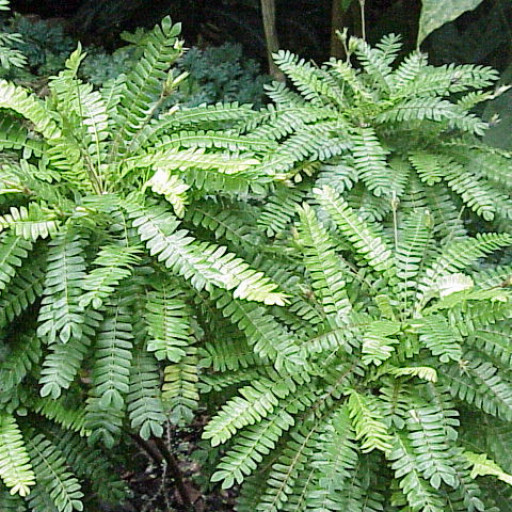
Plant Overview
Often called the "Little Tree Plant" or the "Life Plant," this charming species looks like a miniature, prehistoric palm tree that was shrunk down for a fairy garden. Native to the damp, tropical soils of South Asia and Africa, it is world-famous for its "shy" behavior—it physically reacts to touch by folding its leaves inward. It is a prized specimen for terrarium enthusiasts who want a plant that exhibits a sense of personality and movement.
🔍 How to Identify
- 🌿 Mini-Palm Silhouette: It grows on a single, slender, unbranched stem that is topped with a radiating crown of feathery leaves, mimicking the look of a tropical palm.
- 🍃 Pinnate Foliage: Each leaf is composed of 7 to 15 pairs of small, oblong leaflets that are perfectly symmetrical and sensitive to vibration or contact.
- 🌼 Center Blooms: It produces tiny, five-petaled flowers that are usually bright yellow, white, or pale orange, sprouting directly from the center of the leafy umbrella.
🏡 In Your Garden
- 💧 Humidity is Non-Negotiable: Unlike many common houseplants, this "mini-tree" requires high humidity to prevent its leaf tips from browning; it is much happier inside a glass terrarium than on a dry windowsill.
- 🌬️ Energy Conservation: While it is tempting to touch the leaves to watch them fold, this movement costs the plant significant energy. Frequent "tripping" of its sensitivity can stunt its growth or lead to leaf drop.
- 🌱 Root Fragility: This plant develops a sensitive taproot and dislikes being moved. It is best to choose a permanent home for it early on, as transplanting often leads to a period of "sulk" where the plant appears wilted.
⚠️ Safety & Toxicity
- ✅ Generally Safe: Biophytum sensitivum is considered non-toxic to humans and common household pets like cats and dogs.
- 💊 Medicinal Note: In its native regions, it is used in traditional Ayurvedic medicine. However, home growers should treat it purely as an ornamental plant and avoid ingestion, as concentrated doses can have physiological effects.
✨ Fun Fact
The Biophytum sensitivum doesn't just react to touch; it also has a "circadian rhythm." Every night, the plant undergoes nyctinasty—a process where it folds its leaves downward to "sleep" and conserve moisture, reopening them precisely as the sun rises.

Detailed Care Instructions
| Humidity | Dry |
| Lighting | Shade |
| Difficulty | Medium |
| Hibernation | Cold Period |
| Temperature | 15°C - 26°C |
| Hardiness Zones | 12 - 13 |
To grow Biophytum Sensitivum (also known as the "Life Plant" or "Mimosa Pudica"), you can follow these steps:
- Obtain seeds or a young plant: You can either purchase seeds from a nursery or obtain a small plant from a trusted source.
- Choose a suitable pot: Select a pot that is at least 6 inches in diameter and has drainage holes at the bottom to avoid waterlogging. Make sure the pot is clean before use.
- Prepare the potting mix: Biophytum Sensitivum prefers well-draining soil. You can prepare a mix by combining equal parts of garden soil, compost, and sand or perlite to improve drainage.
- Plant the seeds or young plant: If using seeds, sow them on the soil surface and cover them lightly with a thin layer of the potting mix. If using a young plant, gently transplant it into the prepared pot, making sure the root ball is intact and covered with soil.
- Watering: Keep the soil moist but not waterlogged. Water the plant whenever the top inch of soil feels dry. Avoid overwatering as it can lead to root rot.
- Lighting: Biophytum Sensitivum thrives in bright, indirect light, so place the pot near a window or in a well-lit area. Avoid direct sunlight as it may scorch the leaves.
- Temperature and humidity: Maintain a temperature between 65-85°F (18-29°C). Biophytum Sensitivum prefers high humidity, so misting the leaves with water occasionally or placing a humidifier nearby can help create a favorable environment.
- Fertilization: Use a balanced houseplant fertilizer diluted to half strength every 2-4 weeks during the growing season (spring to fall). Avoid fertilizing during winter when the plant is dormant.
- Pruning: To encourage bushy growth, pinch back the stems periodically. This will also prevent the plant from becoming leggy.
- Protecting from pests: Biophytum Sensitivum is generally resistant to pests. However, if you notice any infestation, use insecticidal soap or neem oil according to the instructions on the product.
With proper care and attention, your Biophytum Sensitivum plant should grow well and display the characteristic leaf-folding response to touch within a few weeks.

Place in a window with dappled sun or a spot in the middle of a room. Or directly in a window facing west or east.

The Biophytum Sensitivum plant requires moist soil to thrive, so it is important to water it consistently. Before watering, you should check the soil moisture level by inserting your finger into the soil up to the second knuckle. If the soil feels slightly dry, it is time to water.
When watering, avoid letting water accumulate in the saucer, as this can lead to root rot. Instead, water the plant until the excess water begins to drain out of the bottom of the pot.
During the growing season, which typically lasts from spring to fall, you should water the Biophytum Sensitivum plant every one to two weeks. During the winter months, when the plant is dormant, you can reduce watering to once every three to four weeks.
It is also important to keep the plant in a location with high humidity, as it is native to tropical climates. You can increase humidity by placing a tray of water near the plant, or by misting the leaves with a spray bottle.
To fertilize this plant, it is recommended to use a balanced, water-soluble fertilizer that is diluted to half strength. Apply the fertilizer once every two weeks during the growing season. Be sure to water the plant thoroughly before and after fertilizing to prevent burning the roots. Avoid over-fertilizing as it can lead to root damage and stunted growth.
The best type of soil to be used with this particular plant is an acidic, well-draining soil with a pH level of 5.0 to 6.5. The soil should be able to retain moisture while also allowing excess water to drain away. It should also be enriched with organic matter and nutrients for the plant to thrive. A mixture of peat moss, perlite, and vermiculite is ideal for this plant. It is important to ensure that the soil is not compacted and has good aeration to promote root growth. Additionally, the plant should be placed in a well-lit area but not in direct sunlight.
To propagate this plant, first choose a healthy mature plant with active growth. Cut a stem or branch that is at least 5-7 cm long, using a clean and sharp pair of scissors or pruning shears. Remove the leaves from the bottom half of the stem, leaving only a few on the top.
Plant the stem cutting in a suitable potting mix, which should be slightly moist but not wet. Make a hole in the soil with a pencil or your finger and insert the stem into it. Firm the soil around the stem to hold it upright and ensure good soil contact.
Cover the pot with a plastic bag or a clear plastic dome if possible to increase humidity around the cutting. Place the pot in a bright but indirect light location, keeping it warm and out of direct sun. Mist the soil and cutting with a spray bottle of water once or twice a day to keep the humidity level high.
After a few weeks, you should see new growth from the cutting, which indicates that it has rooted and established itself in the soil. Once the new plant has grown to a good size, it can be transplanted into a larger pot or into the garden.
Common pests of the lifeplant include Spider mites, aphids. Make a habit of checking your lifeplant frequently for pests so that any infestations can be caught and managed early.








