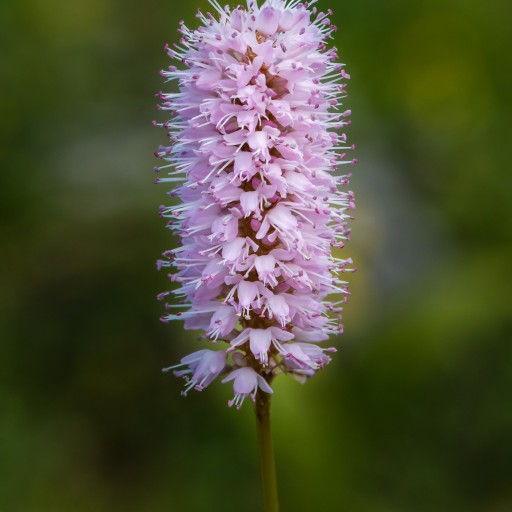
Plant Overview
Known as the "Snakeweed" or "Easter Ledges," the Common Bistort is a charming perennial that paints damp meadows with soft pink brushes. Its name, Bistorta, comes from the Latin for "twice-twisted," referring to the thick, S-shaped root that hides beneath the soil. Historically, it was a staple in Northern English "Ledge Puddings" eaten during Lent, symbolizing the transition from winter to spring.
🔍 How to Identify
- 🌸 The "Bottlebrush" Bloom: It produces dense, cylindrical spikes of tiny, bell-shaped pink flowers that stand tall on leafless stems.
- 🍃 Dock-like Foliage: The base is a lush mound of large, wavy-edged, lance-shaped leaves with a prominent midrib.
- 🐍 The Twisted Root: If unearthed, the rhizome is thick, woody, and distinctly bent twice, resembling a resting snake.
🏡 In Your Garden
- 💧 Thrives in the Damp: Unlike many garden favorites that fear "wet feet," Bistort loves heavy, moisture-retentive soil. It is an ideal candidate for bog gardens, pond edges, or that one soggy corner of the yard where nothing else grows.
- 🦋 Pollinator Magnet: The nectar-rich flower spikes are a high-traffic zone for bees and butterflies in early summer, making it a "must-have" for wildlife-friendly landscapes.
- 🌱 Low Maintenance Spreader: It forms a dense groundcover that naturally suppresses weeds, though it can be quite enthusiastic; give it room to roam rather than cramming it into a small border.
⚠️ Safety & Toxicity
- ✅ Status: Generally non-toxic and historically edible.
- 🍲 Details: The young leaves and roots are technically edible and were once used as a source of starch and vitamin C. While safe for pets and children, the plant is high in tannins, which can cause a very bitter taste or mild stomach upset if consumed in large raw quantities. Always ensure the soil is free from pesticides before considering any historical culinary use.
✨ Fun Fact
In the Middle Ages, because of the "Doctrine of Signatures" (the belief that a plant's appearance hinted at its use), the snake-like root led people to believe it was a powerful antidote for venomous snake bites and even a charm to ward off plagues!

Detailed Care Instructions
To grow Bistorta officinalis, also known as Bistort or Snakeweed, you can follow these steps:
- Select a suitable location: Bistorta officinalis thrives in full sun or partial shade. Choose a spot in your garden that receives at least 4-6 hours of sunlight each day.
- Prepare the soil: Bistorta officinalis prefers moist, well-draining soil. Amend the soil by adding organic matter like compost or well-rotted manure to improve its drainage and fertility.
- Sow seeds or plant divisions: Bistorta officinalis can be propagated from seeds or by dividing existing plants. If starting from seeds, sow them in early spring or fall. If using divisions, wait until late autumn or early spring.
- For seeds: Scatter the seeds on the prepared soil surface and lightly press them into the soil. Keep the soil moist until germination occurs, which usually takes 2-3 weeks.
- For divisions: Dig up an existing Bistorta officinalis plant and carefully divide the root clumps. Replant the divisions at the same depth they were originally growing. Make sure to space them around 12-18 inches apart.
- For seeds: Scatter the seeds on the prepared soil surface and lightly press them into the soil. Keep the soil moist until germination occurs, which usually takes 2-3 weeks.
- Watering: Bistorta officinalis requires regular watering, especially during dry spells. Keep the soil consistently moist, but avoid waterlogging as it can lead to root rot.
- Mulching: Mulching around the plants with organic material like wood chips or straw can help conserve soil moisture, suppress weed growth, and maintain a cool root environment.
- Maintenance: Bistorta officinalis is a low-maintenance plant. Remove any weeds that may compete with the plant for nutrients and water. Additionally, trim back the plant after flowering to maintain its shape and stimulate fresh growth.
- Harvesting: Bistorta officinalis is typically grown for its ornamental value, but its young leaves can be harvested and used in salads or cooked as a leafy green.
By following these steps, you should be able to successfully grow Bistorta officinalis in your garden.

Place in a window with dappled sun or a spot in the middle of a room. Or directly in a window facing west or east.

Bistorta Officinalis plant requires regular watering to maintain its health and vigor. To water this plant, first, determine the moisture level of the soil by inserting your finger an inch into the soil. If the soil feels dry, then it's time to water the plant.
When watering, pour water directly onto the soil around the plant, making sure not to wet the leaves or stem as this can lead to fungal diseases. Be sure to water thoroughly, allowing the water to soak deep into the soil.
It's important not to overwater Bistorta Officinalis plant as this can lead to root rot and other problems. To prevent overwatering, wait until the soil dries out before watering again. The frequency of watering will depend on several factors such as the weather, soil type, and size of the pot.
Overall, providing adequate moisture is crucial for the growth and flowering of Bistorta Officinalis plant, but care must be taken to avoid overwatering.
To fertilize the Bistorta Officinalis plant, follow these instructions:
- Choose a balanced, slow-release fertilizer with an NPK ratio of around 10-10-10 or 20-20-20. This will provide the plant with essential nutrients without overfeeding it.
- Begin fertilizing the Bistorta Officinalis plant in early spring, just as new growth starts to appear. This will help boost its growth and flowering potential.
- Measure out the recommended amount of fertilizer according to the instructions on the package. Ensure you use the right quantity to avoid over-fertilization, which can harm the plant.
- Apply the fertilizer evenly around the base of the plant, keeping it away from direct contact with the stems or leaves. You can either sprinkle the granules or use a liquid fertilizer solution diluted with water.
- Gently work the fertilizer into the soil surface using a garden rake or cultivator, being careful not to damage the plant's roots.
- Water the Bistorta Officinalis plant thoroughly after fertilizing to help the nutrients penetrate the soil and reach the roots effectively.
- Repeat the fertilizing process once every four to six weeks throughout the growing season. However, always check the specific fertilizer's instructions for the recommended frequency.
Remember, Bistorta Officinalis plants have different nutrient requirements, so ensure you use a fertilizer suitable for their needs. Additionally, it's important to monitor the plant for any signs of overfeeding or nutrient deficiencies and adjust your fertilization approach accordingly.
The ideal soil for this particular plant is a moist, rich, and well-draining soil with a pH range of 5.0 to 7.0. It should have a good mix of organic matter, such as compost or peat moss, with sand or perlite to enhance drainage. Avoid using soil that is too heavy and compact. Additionally, this plant prefers a slightly shaded and cool environment, so it is essential to ensure proper air circulation and avoid placing it in direct sunlight or overly hot areas.
Bistorta officinalis, also known as Polygonum bistorta or Bistort, is a herbaceous perennial plant belonging to the family Polygonaceae. It is a native plant commonly found in wet meadows, marshes, and damp woodland areas of Europe and western Asia. This plant has a long history of medicinal use, particularly in traditional European herbal medicine.
In order to propagate Bistorta officinalis, the following methods can be used:
- Division: Propagation through division is the most common and reliable method for Bistorta officinalis. This can be done during the early spring or fall season when the plant is dormant. Carefully dig up the mature plant and use a clean, sharp knife or garden spade to divide the root mass into several sections. Ensure that each division has healthy roots and several shoots. Replant the divisions in prepared soil, ensuring they are at the same depth as the original plant and spaced appropriately.
- Stem Cuttings: Bistorta officinalis can also be propagated through stem cuttings taken during the spring or early summer. Select healthy, non-flowering stems and cut them into 4-6 inch (10-15 cm) long sections. Remove the bottom leaves, leaving only a few at the top. Place the cuttings in a well-draining potting mix, making sure at least two nodes are below the soil. Keep the cuttings slightly moist and in a warm, humid environment. Rooting should occur within 4-6 weeks.
- Seed Propagation: Although Bistorta officinalis readily self-seeds in the wild, germinating the seeds can be quite challenging. Seeds are best sowed during the fall or early spring, allowing for a period of cold stratification to break dormancy. Start by scarifying or soaking the seeds in water for 24 hours to enhance germination. Sow the seeds in a seed tray or small pots filled with a well-draining seed-starting mix, barely covering them with a thin layer of soil. Keep the soil moist and maintain a temperature around 15-20°C (59-68°F). Germination can take several weeks to months, so be patient.
- Layering: Layering is another propagation technique that can be used for Bistorta officinalis. In spring, select a low-lying healthy stem that can be partially buried. Gently remove a small section of the stem's lower leaves and scrape the surface of that section. Bury this section in the soil, leaving the tips exposed. Use a small stake or clip to hold the buried section in place. Keep the soil consistently moist, and within a few months, roots will form. Cut the new plantlet from the parent plant and replant it.
After propagating Bistorta officinalis using any of these methods, ensure proper care by providing adequate water, well-draining soil, and a suitable location that receives partial shade to full sun. Regularly monitor the plant for any signs of disease or pests and maintain a healthy growing environment to ensure successful establishment.
Common pests of the common bistort include Spider mites, larvae. Make a habit of checking your common bistort frequently for pests so that any infestations can be caught and managed early.








