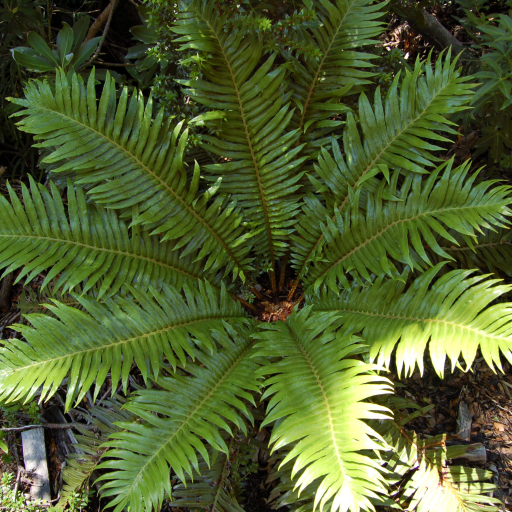
Plant Overview
Known as the Magellanic Hard Fern or the rugged "Costilla de Vaca" (Cow's Rib), this ancient-looking plant is a survivor from the windswept landscapes of Patagonia and the Falkland Islands. It often grows so tall and sturdy that it resembles a miniature palm tree, adding a prehistoric, lush feel to any shaded corner. Its name pays homage to the Strait of Magellan, hinting at its love for cool, misty, and southern environments.
🔍 How to Identify
- 🌿 The "Trunk": Mature specimens develop a thick, dark, woody base (a caudex) that can reach up to 3 feet tall, giving it the appearance of a small tree fern.
- 🍂 Reddish New Growth: In a stunning display of color, fresh fronds often emerge with a striking copper or bronze tint before maturing into a deep, glossy forest green.
- 📏 Stiff Fronds: The leaves are tough, leathery, and divided into narrow leaflets that curve slightly downward, resembling the sturdy ribcage of an animal.
🏡 In Your Garden
- 🌫️ Cool & Damp: This fern is a child of the temperate rainforest; it thrives in high humidity and cool temperatures. If your garden gets too hot and dry, the frond edges will quickly crisp and turn brown.
- ⛰️ Acidic Soil Lover: It naturally grows in peat bogs and moist southern forests, so it prefers acidic, humus-rich soil. It hates "wet feet" (stagnant water), so ensure the soil is well-draining but stays consistently moist.
- 🪵 Mulch is Key: Because it has a slow-growing "trunk" that can be sensitive to temperature swings, a thick layer of leaf mold or bark mulch at the base helps mimic its native forest floor and protects the roots.
⚠️ Safety & Toxicity
- ✅ Non-Toxic: The Magellanic Hard Fern is generally considered safe and non-toxic for both humans and household pets like cats and dogs.
- 🧤 Pruning Care: While it isn't poisonous, the older, dried fronds can become quite stiff and "scratchy." It is best to wear gardening gloves when tidying up the plant to avoid minor skin irritations or small scratches from the woody stems.
✨ Fun Fact
This fern is a true "living fossil." While it looks right at home in a modern backyard, its ancestors have inhabited the sub-Antarctic regions for millions of years, surviving volcanic ash and glacial shifts that wiped out much more sensitive species!

Detailed Care Instructions
To water this plant, it is important to first check the soil for moisture. The top inch of soil should be dry to the touch before watering. When watering, use a watering can or hose with a gentle stream and avoid getting water on the foliage. Water the plant thoroughly, allowing excess water to drain out of the bottom of the pot or container. During hot and dry weather, the plant may require more frequent watering, while in cooler and more humid conditions, less watering may be necessary. It is important not to overwater the plant as this can lead to root rot and other problems.
The recommended soil for this plant is a well-draining soil that is rich in organic matter and slightly acidic. It should be a mix of peat moss, sand, and loam. The pH should ideally be between 5.5 and 6.5. The plant prefers moist soil but cannot tolerate wet feet. It is important to ensure that the soil is always kept lightly moist but well-drained to prevent root rot. Adding a layer of mulch around the plant can help retain moisture and keep the roots cool.








