Plant Overview
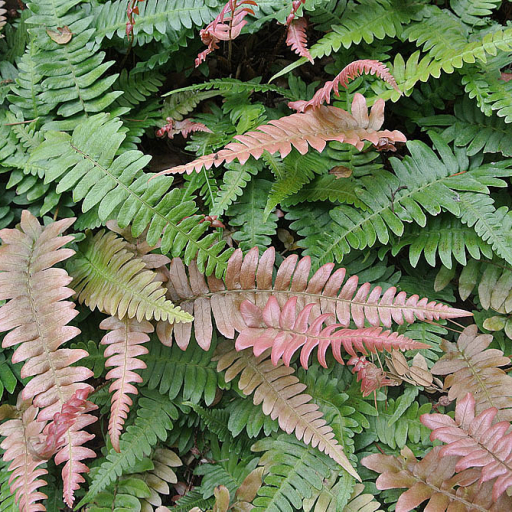
Often called the Hammock Fern or Sinker Fern, Blechnum occidentale is a tropical charmer that breaks the "all ferns are green" rule. Native to the Americas, this fern is famous for its "blushing" new growth, which emerges in shades of rosy pink and bronze before maturing into a deep, glossy emerald. It is a resilient choice for those who love the prehistoric look of ferns but struggle with the finicky nature of more delicate species.
🔍 How to Identify
- 🌿 The "Blush" Factor: The most striking feature is the new fronds, which emerge in a distinct salmon-pink or reddish-bronze hue.
- 🍃 Frond Shape: The leaves are lance-shaped and pinnatifid (deeply lobed), looking like a classic, elegant feather.
- 🧬 Texture: Unlike the soft, papery leaves of a Maidenhair fern, these fronds are leathery, stiff, and slightly waxy to the touch.
🏡 In Your Garden
- 🌱 Rhizome Runner: This fern spreads via underground runners (rhizomes). While it isn't invasive, it will slowly form a lush, dense carpet, making it an excellent groundcover for shaded tropical corners.
- 💧 Drought Tolerance: While it loves humidity, the Hammock Fern is surprisingly more tolerant of "forgotten waterings" than many other ferns due to its thicker, leathery leaf structure.
- ⛰️ Soil Preference: It thrives in slightly acidic, well-draining soil. It mimics its natural "hammock" habitat—high-ground forest islands where leaf litter provides rich, organic nutrients.
⚠️ Safety & Toxicity
- ✅ Status: Non-toxic and generally safe.
- 🐾 Details: This fern is considered safe for cats, dogs, and children. It is an excellent "pet-parent" friendly alternative to more dangerous tropical plants like Sago Palms or lilies.
✨ Fun Fact
The Hammock Fern is known as a "colonizer" in the wild. After a fire or a fallen tree clears a patch of forest, this fern is often one of the first species to creep back in and reclaim the forest floor!

Detailed Care Instructions
To grow a Blechnum Occidentale plant, you can follow these steps:
- Obtain a healthy Blechnum Occidentale plant or spores from a reputable nursery or garden center.
- Choose a suitable location for the plant. Blechnum Occidentale prefers partial shade to full shade, so find an area in your garden that gets limited direct sunlight.
- Prepare the soil by making it rich in organic matter. Blechnum Occidentale prefers moist, well-draining soil with high organic content. If your soil is heavy or clayey, consider adding compost or well-rotted manure to improve its texture and fertility.
- Dig a hole in the prepared soil that is deep and wide enough to accommodate the plant's roots comfortably.
- Place the Blechnum Occidentale plant or spores into the hole, ensuring that the crown of the plant is level with or slightly above the ground.
- Backfill the hole with soil, gently firming it around the roots to eliminate air pockets.
- Water the newly planted Blechnum Occidentale thoroughly to settle the soil and provide adequate moisture. Keep the soil consistently moist but not waterlogged throughout the plant's growth.
- Mulch around the base of the plant with organic material, such as shredded bark or compost, to conserve moisture and suppress weed growth.
- Monitor the plant regularly for pests or diseases. If any issues arise, take appropriate actions to control or treat them.
- Fertilize the Blechnum Occidentale plant annually with a balanced slow-release fertilizer during the growing season to provide necessary nutrients for healthy growth.
- Remove any dead or damaged fronds periodically to promote new growth and maintain the plant's aesthetics.
- Provide the plant with adequate humidity by misting its fronds regularly or placing a humidifier nearby if you live in a dry climate.
By following these steps, you should be able to successfully grow and maintain a Blechnum Occidentale plant in your garden.

Place in a window with dappled sun or a spot in the middle of a room. Or directly in a window facing west or east.

The best way to water this plant is to use a watering can or hose with a gentle stream of water, aiming at the base of the plant. Make sure the soil is moist but not soaking wet, as overwatering can damage the roots. It is important to let the top layer of soil dry out slightly before watering again, as this plant prefers slightly drier conditions. Be careful not to pour water on the foliage, as this can cause damage or mildew. Ensure good drainage to prevent waterlogging and encourage healthy growth.
- Choose a balanced fertilizer with equal amounts of nitrogen, phosphorus, and potassium.
- Dilute the fertilizer to half strength according to package instructions.
- Apply the fertilizer evenly around the base of the plant.
- Water the plant immediately after applying the fertilizer to help it absorb the nutrients.
- Fertilize the plant every two to three months during the growing season.
- Monitor the plant for signs of over-fertilization, such as yellowing leaves or stunted growth, and adjust fertilizer application accordingly.
- Always follow package instructions and avoid over-fertilizing, as this can harm the plant.
The Blechnum Occidentale plant grows best in well-drained soil that is rich in organic matter. The ideal soil pH for this plant is slightly acidic to neutral, ranging from 6.0 to 7.5. It requires soil that is moist and has good water retention capacity. The soil should be fertile and nutrient-rich with high levels of nitrogen, phosphorus, and potassium. Avoid using heavy clay soil as it is too moist and does not drain well. Adding in some sand or perlite to the planting mix can help improve drainage. Fertilization is recommended during the growing season using a balanced fertilizer to maintain good soil health.
To propagate this plant, first locate an established plant and identify a healthy frond. Use clean, sharp scissors or pruners to cut this frond at the base of the stem. Prepare a pot with well-draining soil, such as a mix of perlite and peat moss, and moisten the soil. Dip the end of the frond in rooting hormone and plant it in the soil, burying the stem about 1-2 inches deep. Place the pot in indirect sunlight and keep the soil consistently moist but not waterlogged. After a few weeks, new growth should appear from the base of the frond, indicating successful propagation.








