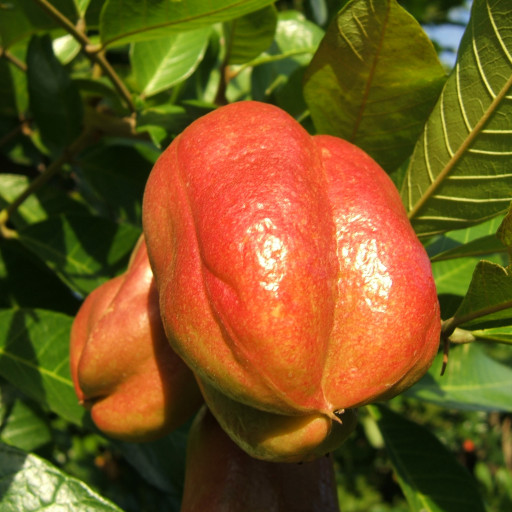
Plant Overview
Known famously as the Ackee, this tropical evergreen is much more than just a shade tree; it is the national fruit of Jamaica. Though it hails originally from West Africa, it was brought to the Caribbean in the 18th century and named after the infamous Captain William Bligh. Often called the "Vegetable Brain" because of the way its inner fruit looks, it is a plant that demands both admiration and extreme caution.
🔍 How to Identify
- 🍎 The Fruit Pods: Look for pear-shaped pods that turn from green to a brilliant scarlet or yellow-orange as they mature.
- 🧠 The Arils: When the fruit "yawns" (naturally splits open), it reveals three cream-colored, fleshy lobes that resemble a brain or scrambled eggs.
- ⚫ The Seeds: Perched atop each creamy lobe is a large, smooth, jet-black seed that shines like a marble.
🏡 In Your Garden
- ☀️ Sun & Space: The Ackee is a sun-worshiper that can reach heights of 30 to 50 feet. It needs a wide berth in the garden to accommodate its spreading canopy and deep root system.
- 🌱 Root Sensitivity: Because it develops a sturdy taproot, the Ackee hates being transplanted. If you are growing one from a seed, move it to its permanent location while it is still a small sapling to avoid "stunting" its growth.
⚠️ Safety & Toxicity
- 🚫 Status: EXTREMELY HAZARDOUS UNTIL RIPE. The unripe fruit contains Hypoglycin A, a potent toxin that causes "Jamaican Vomiting Sickness," which can be fatal.
- 🛑 The "Yawn" Rule: Never force a pod open. The fruit is only safe to harvest and eat once it has opened naturally on the branch, exposing the arils to the air.
- 🐾 Pets & Kids: The black seeds and the red skin are toxic at all times. Ensure fallen, unopened pods are cleared away from areas where dogs or children play.
✨ Fun Fact
Even though it is the star of Jamaica’s national dish (Ackee and Saltfish), the plant’s genus name, Blighia, honors Captain Bligh, the same man associated with the famous "Mutiny on the Bounty." He was the one who first took samples of the plant to scientists in England!

Detailed Care Instructions
To grow Blighia sapida, also known as ackee, you can follow these steps:
- Climate and Location: Ackee plants thrive in tropical and subtropical regions. They require a minimum temperature of 60°F (15°C) and a maximum of 90°F (32°C). Choose a sunny spot in your garden or a large container if you plan to grow it indoors.
- Soil preparation: The soil should be well-draining and rich in organic matter. A pH level between 6 and 6.5 is ideal for ackee plants.
- Seed selection and preparation: Obtain fresh, ripe ackee seeds from a reliable source. Prepare the seeds for planting by removing the outer red aril and soaking them in water for 24-48 hours to remove any remaining toxins.
- Planting: Plant the soaked seeds 1-2 inches (2.5-5 cm) deep in the soil. Space them at least 10 feet (3 meters) apart if you are planting multiple trees. Water the seeds gently after planting.
- Watering and Maintenance: Keep the soil consistently moist but not waterlogged. Water the plants regularly, especially during dry spells. Mulching around the base of the tree can help retain moisture and control weed growth. Prune the tree to remove dead or diseased branches.
- Fertilization: Apply a balanced, slow-release fertilizer every three to four months to provide the necessary nutrients for growth. Follow the instructions on the fertilizer package for the correct application rate.
- Pest and Disease Management: Ackee plants are generally resistant to pests and diseases. However, be vigilant for aphids, scales, mealybugs, or caterpillars. In case of infestation, use organic insecticides or neem oil to mitigate the problem.
- Harvesting: It takes about three to four years for a Blighia sapida tree to produce fruits. Ackee fruits are ready for harvesting when the pods turn bright red and begin to split open naturally. When harvesting, ensure that the yellow flesh is fully exposed and the pink seed is still closed and not visible. Remove the fruit from the tree, being cautious to avoid contact with the arils (the inedible parts containing toxins).
Note: The seeds and arils of ackee are toxic when unripe and improperly prepared. Ensure proper preparation before consumption and handle them carefully to avoid any accidental ingestion of toxins.

Place in a window with dappled sun or a spot in the middle of a room. Or directly in a window facing west or east.

To water this plant, ensure that the soil is slightly moist at all times. Allow the top layer of soil to dry out before watering, but do not allow it to become completely dry. Water the plant from the base, avoiding getting water on the leaves. Use room temperature, filtered water to avoid salt and mineral buildup. Be sure to keep the plant in a well-draining pot and remove any excess water from the saucer after watering to prevent root rot. During the winter months, reduce the frequency of watering, allowing the soil to dry out slightly more between watering sessions.
To fertilize the Blighia Sapida plant, use a balanced fertilizer with equal amounts of nitrogen, phosphorus, and potassium. Apply the fertilizer every two to three months during the growing season, which is typically from spring to summer. Be sure to follow the manufacturer's instructions on the fertilizer package for dosage and application instructions. Avoid over-fertilizing, which can lead to burnt foliage or stunted growth.
Blighia Sapida plant prefers a well-draining soil that is rich in organic matter. It needs a soil that has good water retention, yet also allows excess moisture to drain away. The ideal soil pH for this plant is between 5.5 and 6.5. A sandy loam soil that is amended with compost or well-rotted manure is suitable for Blighia Sapida. The soil needs to be aerated and friable to allow for healthy root growth, so it's essential to avoid compacted soils, which could impede the movement of water and nutrients. It's also critical to ensure the soil is free of pests and diseases. Fertilizers can be added to the soil once the plant has established itself, but it is important not to over-fertilize, as this could damage the plant. Overall, Blighia Sapida plant requires a high-quality, nutrient-rich soil that retains moisture while promoting good drainage and aeration.
Blighia sapida is a tree species that belongs to the family Sapindaceae. It is commonly propagated through seeds, which are processed to remove the fleshy outer layer, soaked in water for 24 hours, and then planted in a well-draining potting mix. The seedling should be watered regularly and kept in a warm, humid environment until it reaches about 2-3 feet in height before it can be transplanted to a permanent location. Stem cuttings can also be taken from the tree, but this method is more challenging and may require the use of rooting hormones and careful attention to humidity and temperature control. The cuttings should be taken from new growth on the tree and planted in a rooting medium, such as perlite or vermiculite, and kept in a humid environment until roots have formed.
Common pests of the akee include Spider mites, fungus gnats, aphids, thrips, whiteflies. Make a habit of checking your akee frequently for pests so that any infestations can be caught and managed early.








