Plant Overview
Meet the "Lilliput Cactus," the undisputed record-holder for the smallest cactus species in the world. Named after the tiny inhabitants of Lilliput from Gulliver’s Travels, this South American gem is a master of minimalism. It survives in the harsh, vertical rock crevices of the Andes, often appearing more like a stray pebble than a living plant.
🔍 How to Identify
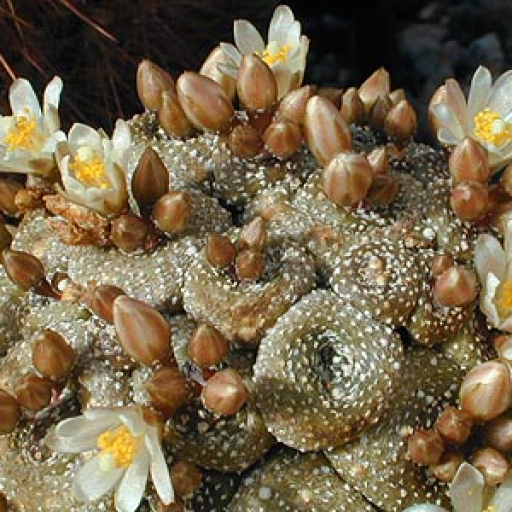
- 🌵 The "Button" Shape: It grows as a tiny, flattened, grayish-green disc. Even a fully mature specimen rarely exceeds 1–1.5 centimeters (about half an inch) in diameter.
- 🧶 Woolly Areoles: This cactus is completely spineless. Instead, its surface is dotted with tiny, white, woolly tufts (areoles) arranged in a neat spiral pattern.
- 🌸 Oversized Blooms: Despite its microscopic body, it produces relatively large, funnel-shaped flowers that are creamy white or pale yellow, often appearing right at the crown.
🏡 In Your Garden
- 🪨 The Rock Dweller: In the wild, it grows in "lithophytic" conditions—tucked into cracks in shale or sandstone. Because of this, it hates standard potting soil. It requires a purely mineral mix (pumice, lava rock, and grit) to prevent the roots from suffocating.
- 🧪 The Grafting Trick: Because it grows incredibly slowly on its own roots and is highly sensitive to overwatering, many hobbyists "graft" it onto a faster-growing cactus base. This elevates the plant and makes it much easier to care for, though it loses some of its natural "button" aesthetic.
⚠️ Safety & Toxicity
- ✅ Safe for All: This plant is non-toxic to humans, cats, and dogs.
- 🤏 Handle with Care: While it won't prick you, its lack of spines makes it very vulnerable to physical damage. It is soft-bodied and can be easily crushed if handled roughly or stepped on.
✨ Fun Fact
- 🌊 The Resurrection Cactus: Blossfeldia liliputana is the only known "poikilohydric" cactus. Like certain mosses and the "Resurrection Plant," it can lose almost all its internal water and shrivel into a dry husk during droughts, only to "re-inflate" and return to life within hours of a rainfall.

Detailed Care Instructions
To grow Blossfeldia Liliputana, also known as the thumb cactus, you can follow these steps:
- Obtaining a plant: Purchase a Blossfeldia Liliputana plant from a reputable nursery or succulent supplier. You may also be able to find seeds or small seedlings to start with.
- Container: Select a small, well-draining container for your plant. As this cactus is tiny, a small pot or even a dish can be suitable.
- Soil: Use a well-draining soil mixture formulated for cacti and succulents. You can also create your own by combining regular potting soil with sand or perlite to improve drainage.
- Planting: Fill the container with the soil mixture, leaving enough space for the plant's roots to spread. Gently place the Blossfeldia Liliputana in the container and cover the roots with more soil. Press lightly around the base of the plant to ensure it is stable.
- Light: Place the plant in a spot with bright, indirect sunlight. Blossfeldia Liliputana thrives in bright light but can get sunburned in direct sunlight. A south or east-facing window is usually ideal. If grown outdoors, provide partial shade during hot summer months.
- Temperature and humidity: Blossfeldia Liliputana prefers warm temperatures, ideally between 70-85°F (21-29°C). Keep the plant away from drafts or extreme temperature fluctuations. It can tolerate low humidity, making it suitable for dry indoor environments.
- Watering: Water the plant sparingly. Allow the soil to dry out completely between waterings, as overwatering can cause root rot. During active growth, typically in spring and summer, you can water every 2-3 weeks. Reduce watering during the dormant period in winter.
- Fertilizer: During the growing season, you can provide a balanced, diluted cactus or succulent fertilizer once a month. Follow the package instructions for proper dilution ratios.
- Maintenance: Keep an eye out for pests such as spider mites or mealybugs. If infested, treat with an appropriate organic pesticide. Remove any dead or decaying parts of the plant to maintain its health and appearance.
With proper care and attention to its specific needs, your Blossfeldia Liliputana should grow and thrive over time.

Place in a bright room that is sun drenched almost all day. Or directly in a south-facing window.

The plant requires a moderate amount of water, but ensure it is not over-watered as it is sensitive to root rot. It is recommended to water the plant when the soil is completely dry to the touch. To avoid over-watering, make sure the pot has proper drainage. When watering, give a thorough soak and allow excess water to drain out before putting the plant back in its location. Water sparingly during the winter months when the plant enters a dormant state.
To provide proper nutrients for this particular plant, it is recommended to use a balanced cactus fertilizer with equal amounts of nitrogen, phosphorus, and potassium. The fertilizer should be applied during the growing season, once a month, and at half the recommended strength. It is important not to over-fertilize, as this can lead to burnt roots and damage to the plant. Additionally, it is recommended to water the plant before fertilizing to ensure the roots are hydrated and better able to absorb the nutrients.
The recommended soil for the Blossfeldia Liliputana plant is a well-draining mix that allows water to flow freely through it. The soil should be composed of small particles such as sand or gravel, which prevent the plant from being waterlogged. It's also important that the soil has low nutritional content, as excess nutrients can harm the plant. Additionally, it's recommended to mix in some organic matter, such as peat moss or coconut coir, to improve soil structure and water retention. Overall, the ideal soil for the Blossfeldia Liliputana plant is one that provides good drainage, low nutrients, and aeration.
In order to propagate this plant, one must first select a healthy and mature specimen. The plant's offsets can then be carefully removed using a sharp, sterilized knife. These offsets should be allowed to dry for a few days in a warm, dry place, away from direct sunlight or moisture.
Once the offsets have sufficiently dried, they can be planted in a well-draining soil mix, either in individual pots or together in a larger container. It is important to keep the soil moist but not waterlogged, and to provide the new plants with bright, indirect light.
New growth should appear in a few weeks, at which point the plants can be gradually acclimated to more direct sunlight and regular watering. With proper care and attention, the new plants will mature and eventually produce their own offsets, perpetuating the species.
Common pests of the bubbling cactus include Scale insect, mealybugs, spider mites. Make a habit of checking your bubbling cactus frequently for pests so that any infestations can be caught and managed early.








