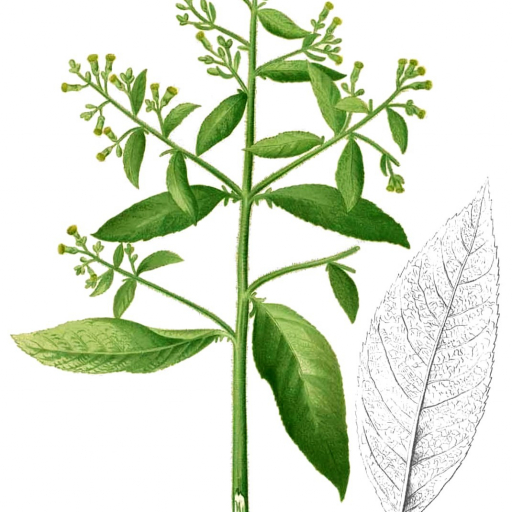
Plant Overview
Known as the "Sambong" in the Philippines or "Ngai Camphor" across Southeast Asia, Blumea balsamifera is a tropical treasure famous for its intense, cooling aroma. Often used in traditional medicine to treat kidney ailments and respiratory issues, it serves as a living pharmacy for many rural communities. This sturdy, shrub-like plant is more than just a healer; its velvety, silvery foliage adds a soft, ethereal texture to sunny gardens.
🔍 How to Identify
- 🌿 Silvery Foliage: The leaves are elongated, serrated at the edges, and covered in fine, soft hairs that give the plant a distinct grayish-green or silvery sheen.
- 👃 Camphor Scent: When the leaves are crushed, they release a powerful, refreshing aroma similar to menthol or camphor.
- 🌼 Yellow Flower Clusters: It produces small, inconspicuous yellow flowers that grow in dense, branched clusters at the ends of its stems.
- 🌳 Growth Habit: It typically grows as a tall, upright shrub or small tree, reaching heights of 1 to 4 meters depending on the climate.
🏡 In Your Garden
- ☀️ Sun Seeker: Sambong thrives in full sunlight. If grown indoors, it needs a very bright spot near a south-facing window to prevent it from becoming "leggy" or losing its aromatic potency.
- 🌱 Well-Draining Soil: This plant is sensitive to "wet feet." It prefers sandy or loamy soil that drains quickly; if the roots sit in stagnant water, the plant may wilt and succumb to rot.
- ✂️ Pruning for Shape: Because it can grow quite large and woody, regular pruning is recommended to encourage bushier growth and a more manageable size for home gardens.
⚠️ Safety & Toxicity
- ✅ Status: Generally non-toxic to humans when used topically or in traditional tea preparations, but moderation is key.
- 🐱 Pet Sensitivity: While not listed as a major toxin, the high essential oil content (camphor) can cause stomach upset in cats or dogs if they chew on the leaves in large quantities.
- 🧴 Skin Irritation: The fine, fuzzy hairs on the leaves can occasionally cause a mild "itchy" reaction for people with sensitive skin. It is best to wear gloves if you are doing heavy pruning.
✨ Fun Fact
In the 19th and early 20th centuries, Blumea balsamifera was the primary source of "Ngai Camphor," a luxury ingredient used to scent high-quality Chinese calligraphy ink, giving the ink its characteristic refreshing fragrance.

Detailed Care Instructions
To grow Blumea balsamifera, also known as the Sambong plant, you can follow these steps:
- Choose a suitable location: Blumea balsamifera prefers full sun to light shade. Select a spot that receives at least 6-8 hours of direct sunlight per day.
- Prepare the soil: The soil should be well-draining and fertile. You can amend the soil with compost or organic matter to improve its quality. Ensure that the pH level of the soil is between 5.6 and 7.5.
- Propagation: Blumea balsamifera can be propagated from seeds, stem cuttings, or root cuttings. Seeds can be sown directly in the prepared soil during the spring season. For stem or root cuttings, take healthy cuttings from established plants, dip them in rooting hormone, and plant them in a suitable pot or container filled with well-draining soil.
- Watering: Water the plant regularly, keeping the soil evenly moist but not waterlogged. Avoid overwatering, as it can lead to root rot. During the dry season, pay extra attention to watering.
- Fertilizing: Apply a balanced organic fertilizer or compost once every two weeks during the growing season. This will help promote healthy growth and flowering.
- Pruning: Prune the plant regularly to maintain its shape and remove any dead or diseased parts. Pruning also encourages bushier growth.
- Pest and disease control: Blumea balsamifera is generally resistant to pests and diseases. However, keep an eye out for aphids, spider mites, or fungal infections. Treat them immediately with suitable organic insecticides or fungicides if necessary.
- Harvesting: Blumea balsamifera leaves can be harvested once the plant is well-established. You can collect the fresh leaves for medicinal or culinary use. Harvesting should be done in the morning when the leaves are at their peak flavor and fragrance.
Remember to check your region's regulations regarding the cultivation of Blumea balsamifera, as it may be regulated or considered an invasive species in some areas.

Place in a bright room that is sun drenched almost all day. Or directly in a south-facing window.

Blumea Balsamifera plant requires regular watering to ensure its healthy growth. The amount of water needed depends on various factors such as soil type, temperature, humidity and light conditions.
Water the plant when the soil starts to dry out, but do not let it sit in waterlogged soil for too long as this can lead to root rot. It is best to water the plant in the morning or evening to prevent water evaporation during hot and sunny conditions.
To water the plant, use a watering can or a hose with a fine spray nozzle. Pour the water around the base of the plant, avoiding the leaves and stem. Water until you see water drain from the bottom of the pot or until the soil feels moist but not waterlogged.
During periods of high heat or low humidity, misting the plant with water can help it stay hydrated. You can also place a tray of water near the plant to increase the humidity in the surrounding area.
In summary, water Blumea Balsamifera plant when the soil starts to dry out, avoid waterlogging and watering during hot and sunny conditions, pour water around the base of the plant, mist during periods of high heat or low humidity, and consider increasing humidity levels through a tray of water.
To fertilize the Blumea Balsamifera plant, you can use a balanced, slow-release fertilizer during the growing season. Apply the fertilizer to the soil around the plant, being careful not to get any on the leaves. Water the plant well after fertilizing. Avoid overfertilizing, as this can lead to excessive growth and weak stems. It is also recommended to use organic fertilizers, such as compost or aged manure, to improve soil health and boost plant growth.
Blumea Balsamifera plants prefer soil that is well-draining and has good aeration. The soil should be rich in nutrients and have a pH range of 5.5 to 6.5. A soil mix consisting of a mixture of garden soil, perlite, peat moss, and sand can meet the requirements for the plant. The soil mixture should be light and airy to allow for proper root development and drainage. The addition of organic matter such as compost can also improve the soil structure and fertility. It is essential to avoid using heavy clay soils as they can hinder root growth and drainage. Regular fertilization with a balanced fertilizer can help keep the soil fertile and support healthy growth of the plant.
Blumea balsamifera plant can be propagated through several methods, including vegetative propagation and seed propagation.
Vegetative propagation involves taking stem cuttings from a mature plant and rooting them in a suitable substrate. To do this, select a healthy stem measuring around 10-15 cm in length, preferably one that is young and has not yet developed flowers or buds. Trim the stem below the node and remove any leaves from the lower half of the stem. Dip the cut end in rooting hormone powder and plant it in a well-draining potting mix. Keep the cutting moist and in bright but indirect light. After a few weeks, the cutting should develop roots and can be carefully transplanted into a larger container or garden bed.
Seed propagation involves collecting mature seeds from the plant, which can be a bit difficult as they are usually produced in small quantities. Harvest the ripe seeds and dry them out for a few days before planting them in a seed tray filled with a growing medium. Keep the seeds moist but be careful not to overwater them. After a few weeks, the seeds should germinate and develop into young plants. These can be transplanted once they are large enough to handle.
Both these methods can be successful in propagating Blumea balsamifera plant. The best time to propagate the plant is during the growing season in spring or summer.








