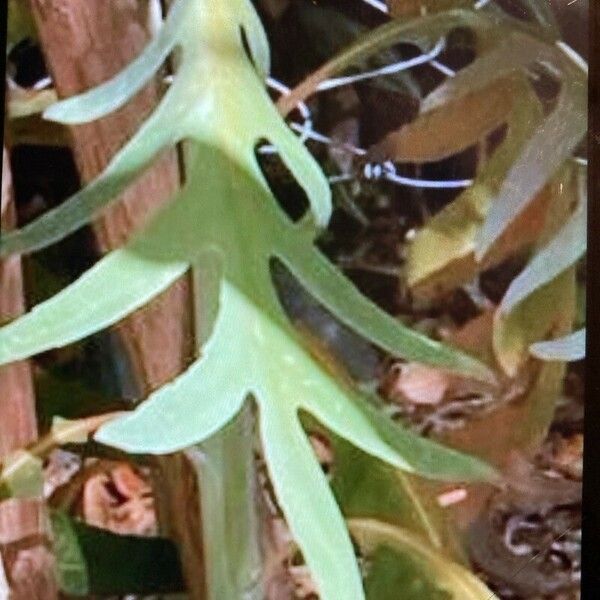
Plant Overview
Known as the "Tree Celandine" or more dramatically as Llorasangre (Blood-weeper), Bocconia arborea is a bold, architectural masterpiece that looks like it stepped straight out of a prehistoric jungle. Native to the mountain forests of Mexico and Central America, it is prized by enthusiasts for its giant, sculptural foliage and its mysterious, colorful "blood" that leaks from the stems when pruned.
🔍 How to Identify
- 🍃 Lobed Foliage: The leaves are massive, often reaching over 18 inches in length. They are deeply lobed, resembling a giant, exaggerated oak leaf with a thick, leathery texture.
- 🎨 Two-Tone Color: The upper side of the leaf is a rich, forest green, while the underside features a striking, glaucous silvery-gray coating that shimmers in the wind.
- 🩸 The "Blood" Sap: If a leaf or stem is broken, the plant immediately exudes a thick, opaque latex that ranges from bright yellow to a deep, rusty orange-red.
- ☁️ Cloud-like Blooms: In place of traditional petals, it produces large, drooping plumes of tiny, brownish-green flowers that look like feathery clouds hanging from the branch tips.
🏡 In Your Garden
- 🚀 Rapid Expansion: This is a "pioneer species," meaning it is programmed to grow fast and take over empty spaces. It can quickly reach the size of a small tree, so give it plenty of room to breathe.
- 🌬️ Wind Protection: Because the leaves are so large and heavy, they can act like sails. Plant your Bocconia in a spot sheltered from high winds to prevent the beautiful foliage from shredding or the brittle branches from snapping.
- 🏜️ Tough Transitions: While it loves the humidity of its native cloud forests, it is surprisingly drought-tolerant once established. It prefers well-draining soil and can even thrive in rocky or poor-quality earth where other plants struggle.
⚠️ Safety & Toxicity
- 🚫 Toxic Sap: The bright orange latex contains potent alkaloids. It is highly irritating to the skin and eyes and should never be ingested.
- 🐾 Pets & Children: Keep this plant away from curious pets and toddlers. Ingestion can cause severe stomach upset, and the sap can cause contact dermatitis (rashes) upon touch. Always wear gloves when pruning.
✨ Fun Fact
The common name "Llorasangre" isn't just a nickname; the plant’s orange sap was historically used by indigenous cultures in Central America as a permanent dye for textiles and even as a traditional (though risky) treatment for skin conditions and toothaches!

Detailed Care Instructions
Growing Bocconia arborea, also known as Plume Poppy or Tree Celandine, can be a rewarding experience if you follow some basic guidelines. Here are some steps to help you grow this ornamental plant successfully:
1. Selecting the Site
- Sunlight: Bocconia arborea thrives in full sun to partial shade. Choose a location that receives at least 4-6 hours of sunlight per day.
- Soil: This plant prefers well-drained soil. It can tolerate a wide range of soil types, but it does best in moderately fertile, slightly acidic to neutral soil.
2. Planting
- Timing: The best time to plant Bocconia arborea is in the spring or early fall, when temperatures are mild.
- Spacing: Since Bocconia arborea can grow quite large, typically up to 10-15 feet tall and 6-10 feet wide, space the plants accordingly to allow for growth.
3. Planting Steps
- Dig a Hole: Dig a hole that is twice the width and the same depth as the root ball of your plant.
- Prepare Soil: Mix some compost or well-rotted manure into the soil you removed. This will enhance the soil's fertility and drainage.
- Plant the Root Ball: Place the root ball in the hole at the same depth it was growing in its container. Backfill the hole with the amended soil.
- Water: Water thoroughly after planting to settle the soil around the roots.
4. Watering
- Keep the soil consistently moist, especially during the first growing season to establish a strong root system.
- Once established, Bocconia arborea is somewhat drought tolerant but will perform best with regular watering during dry periods.
5. Mulching
- Apply a 2-4 inch layer of mulch around the base of the plant to help retain soil moisture and suppress weeds. Keep the mulch away from the trunk to prevent rot.
6. Fertilizing
- Bocconia arborea generally does not require much fertilizer. However, a balanced, slow-release fertilizer in the spring can promote healthy growth.
7. Pruning
- Pruning is not essential but can help control the plant's shape and size. Remove any dead or damaged branches in early spring. Light pruning throughout the growing season can also help maintain a desired shape.
8. Pest and Disease Control
- Bocconia arborea is relatively pest and disease-free. However, it’s good practice to keep an eye out for any signs of trouble such as leaf spots or insect infestations. Treat any issues promptly with appropriate organic or chemical controls.
9. Propagation
- You can propagate Bocconia arborea through seeds or cuttings. Softwood cuttings taken in early summer generally root well. Seeds can be collected from mature fruits and sown immediately or stored and sown in the spring.
10. Winter Care
- In colder climates, protect the plant during the winter months. Apply a thick layer of mulch around the base to insulate the roots. In areas with severe winters, you may need to wrap the plant in burlap or horticultural fleece.
With these steps, you should be able to successfully grow and enjoy Bocconia arborea in your garden. Happy gardening!

Place in a bright room that is sun drenched almost all day. Or directly in a south-facing window.

Bocconia arborea, a tropical shrub, has specific watering needs to thrive. Here's a detailed guide on how to water it properly:
1. Soil Moisture: Ensure the soil is well-draining and rich in organic matter. This type of soil will retain the right amount of moisture without becoming waterlogged.
2. Watering Frequency:
- Established Plants: Once the plant is established, typically water it once a week, but this can vary based on the climate and season. In hot, dry weather, you may need to water more frequently.
- Young Plants: Newly planted Bocconia arborea will require more frequent watering. Check the soil moisture regularly and water when the top inch of soil feels dry.
3. Watering Method:
- Deep Watering: Water thoroughly to ensure deep penetration into the soil. This encourages the roots to grow deeper, making the plant more drought-resistant.
- Avoid Overhead Watering: Watering at the base of the plant prevents water from sitting on the leaves, which can cause disease.
4. Morning or Evening: Watering early in the morning or late in the evening helps to minimize evaporation and allows the plant to absorb moisture effectively.
5. Monitoring Needs:
- Visual Inspection: Regularly check the plant for signs of water stress, such as wilting or yellowing leaves.
- Finger Test: Insert your finger into the soil up to a couple of inches to check moisture levels. If it feels dry at that depth, it’s time to water.
6. Mulching: Apply a layer of mulch around the base of the plant. Mulch helps retain soil moisture, regulate soil temperature, and reduce weed competition.
7. Seasonal Adjustments: Modify your watering schedule according to the season:
- Spring and Summer: These are the growing seasons when the plant needs more water.
- Fall and Winter: Reduce watering frequency as the plant's growth slows down.
By following these guidelines, you'll ensure that Bocconia arborea gets the right amount of water to stay healthy and vibrant.
Here are the fertilizing instructions for Bocconia arborea:
- Type of Fertilizer: Use a balanced, slow-release, or general-purpose fertilizer with an N-P-K ratio such as 10-10-10 or 14-14-14.
- Timing: Fertilize in early spring, just as new growth begins, and again in mid-summer. Avoid fertilizing in late fall as this can encourage new growth susceptible to frost damage.
- Application Rate: Follow the manufacturer's instructions on the fertilizer packaging for the specific application rate. Typically, you would apply around 1 to 2 pounds of fertilizer per 1,000 square feet.
- Method: Sprinkle the fertilizer evenly around the base of the plant, avoiding direct contact with the stem. Rake lightly into the soil if possible. Water thoroughly after application to help the nutrients penetrate the soil and reach the roots.
- Organic Options: If you prefer organic fertilizers, compost, well-rotted manure, or a balanced organic fertilizer can also be used. Apply these in the same time frames as mentioned above.
- Mulching: Consider adding a layer of mulch around the base of the plant to help retain moisture and provide additional nutrients as it decomposes.
- Frequency: Fertilizing twice a year is usually sufficient, but you can monitor the plant for signs of nutrient deficiencies (like yellowing leaves) and adjust the frequency if needed.
By following these guidelines, you should ensure that your Bocconia arborea remains healthy and vigorous.
Bocconia arborea, known for its lush, tropical foliage, thrives best in well-draining soil that maintains a balance between moisture retention and aeration. This plant prefers a moderately fertile, loamy soil, which is a mix of sand, silt, and a smaller amount of clay. Here are some details on the ideal soil composition and preparation for this species:
- Texture: The soil should be loamy, ensuring good drainage while retaining enough moisture for the roots. A mix of garden soil, compost, and sand often works well.
- pH Level: Aim for a slightly acidic to neutral pH, around 6.0 to 7.0. This range promotes nutrient availability and healthy root development.
- Organic Matter: High organic content is beneficial. Incorporate compost or well-rotted manure to enrich the soil, enhance fertility, and improve moisture retention.
- Drainage: Ensuring excellent drainage is crucial to prevent root rot. If the soil tends to be heavy or clayey, consider amending it with coarse sand or small pebbles to improve drainage.
- Moisture: While the soil should retain some moisture, it should not be waterlogged. Consistent watering to keep the soil evenly moist is ideal, with less frequent watering in cooler months.
- Mulching: Applying a layer of mulch can help retain soil moisture, suppress weeds, and regulate soil temperature.
- Nutrient Supply: Although not overly demanding, regular feeding with a balanced, all-purpose fertilizer during the growing season can support robust growth.
By focusing on these soil requirements, you can provide an optimal growing environment for Bocconia arborea, ensuring it remains healthy and vibrant.
Propagating Bocconia arborea, a tropical to subtropical plant, can be accomplished through both seeds and cuttings. Here’s a detailed guide on how to achieve successful propagation:
Propagation by Seeds:
- Seed Collection:
- Collect the seeds from mature plants. The seeds are typically found in the fruit capsules that split open when ripe.
- Collect the seeds from mature plants. The seeds are typically found in the fruit capsules that split open when ripe.
- Seed Treatment:
- Clean the seeds to remove any pulp or debris.
- Some growers recommend scarification (lightly sanding or nicking the seed coat) to improve germination rates.
- Soak the seeds in water for 24 hours before planting to soften the seed coat and encourage faster germination.
- Clean the seeds to remove any pulp or debris.
- Sowing:
- Prepare a well-draining seed-starting mix, such as a combination of peat moss and perlite or sand.
- Sow the seeds on the surface of the soil and press them lightly to ensure good contact with the soil, but do not bury them deeply as they require light to germinate.
- Prepare a well-draining seed-starting mix, such as a combination of peat moss and perlite or sand.
- Germination Environment:
- Place the seeded trays in a location with bright, indirect light.
- Maintain a warm temperature, ideally between 70°F to 85°F (21°C to 29°C).
- Keep the soil consistently moist but not waterlogged, using a gentle misting method to avoid displacing the seeds.
- Place the seeded trays in a location with bright, indirect light.
- Care Post-Germination:
- Once the seedlings have developed a few sets of true leaves, they can be carefully transplanted into individual pots.
- Continue to provide bright, indirect light and maintain moderate moisture levels.
- Gradually acclimate the young plants to outdoor conditions before planting them in their final location.
Propagation by Cuttings:
- Once the seedlings have developed a few sets of true leaves, they can be carefully transplanted into individual pots.
- Selecting Cuttings:
- Choose healthy, disease-free plants. Select semi-hardwood cuttings from current season growth, ideally about 4-6 inches long.
- Choose healthy, disease-free plants. Select semi-hardwood cuttings from current season growth, ideally about 4-6 inches long.
- Preparing Cuttings:
- Use a clean, sharp knife or pruning shears to take the cuttings.
- Remove the lower leaves, leaving a few on the upper part to maintain photosynthesis.
- Optionally, dip the cut end in rooting hormone to enhance rooting success.
- Use a clean, sharp knife or pruning shears to take the cuttings.
- Planting Cuttings:
- Prepare a pot with a well-draining propagation mix, such as a combination of perlite and peat moss.
- Insert the cut end of each cutting into the soil, ensuring at least one or two nodes are buried below the surface.
- Prepare a pot with a well-draining propagation mix, such as a combination of perlite and peat moss.
- Rooting Environment:
- Place the pot in a location with bright, indirect light.
- Maintain high humidity around the cuttings to prevent dehydration, which can be achieved by covering the pot with a plastic bag or using a humidity dome. Ensure there is some ventilation to prevent mold growth.
- Keep the medium consistently moist but not waterlogged.
- Place the pot in a location with bright, indirect light.
- Transplanting:
- After several weeks, check for the development of roots. Gentle tugging on the cuttings can indicate if they have developed roots.
- Once roots are established, gradually acclimate the cuttings to lower humidity conditions.
- Transplant the rooted cuttings to individual pots and continue caring for them until they are robust enough to be planted outdoors.
By following these steps, you can successfully propagate Bocconia arborea through seeds or cuttings, leading to healthy, thriving plants.
- After several weeks, check for the development of roots. Gentle tugging on the cuttings can indicate if they have developed roots.







