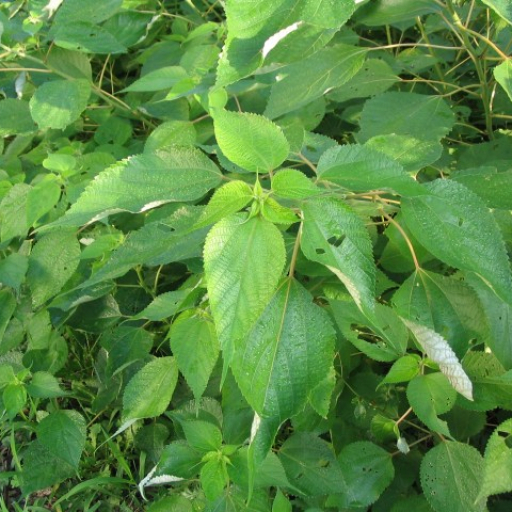
Plant Overview
Known for over 6,000 years as one of the "oldest fibers in the world," Boehmeria nivea, or Ramie, is a powerhouse of the textile industry. Often called "China Grass," this hardy perennial looks like a giant, non-stinging nettle and has been used to dress everyone from ancient Chinese royalty to Egyptian mummies. Its lustrous, silk-like fibers are stronger than cotton and resist rotting, making it a favorite for eco-friendly fashion lovers today.
🔍 How to Identify
- 🍃 Heart-Shaped Leaves: The broad, ovate leaves feature sharply serrated edges and can grow quite large, giving the plant a lush, bushy appearance.
- ❄️ The "Nivea" Underside: The most striking feature is the underside of the leaf, which is covered in dense, tiny white hairs, giving it a shimmering, silvery-snowy look when the wind blows.
- 🎋 Herbaceous Canes: It grows in tall, upright stalks that can reach up to 8 feet in height, resembling a dense thicket or a leafy bamboo.
🏡 In Your Garden
- 💧 Moisture Consistency: While Ramie is incredibly tough, it produces the best quality foliage and fibers when kept consistently moist; it wilts quickly during a drought but bounces back just as fast once watered.
- 🌱 Spreading Nature: This plant spreads via rhizomes (underground stems), which means it can eventually form a large colony. In a garden setting, it’s best to give it plenty of space or use it as a dramatic, tall backdrop against a fence.
⚠️ Safety & Toxicity
- ✅ Generally Safe: Unlike its cousins in the Urticaceae family, Boehmeria nivea does not possess stinging hairs. It is safe to touch and handle without gloves.
- 🐾 Pet Safety: It is generally considered non-toxic to cats and dogs, though its high fiber content might cause a mild stomach upset if a curious pet decides to munch on a large amount of the foliage.
✨ Fun Fact
Ramie fibers are so durable that they were found intact on Egyptian mummy wrappings! Because the fiber is naturally resistant to bacteria, mildew, and rotting, it was the "high-tech" fabric of the ancient world.

Detailed Care Instructions
| Lighting | Full Sun |
| Hardiness Zones | 7B - 11 |
To successfully grow Boehmeria nivea (also known as Ramie plant), you can follow these steps:
- Climate and temperature: Ramie plants prefer a warm, subtropical climate with temperatures ranging from 25-32°C (77-90°F). Ensure that it receives full to partial sun exposure.
- Soil requirements: Ramie plants prefer well-draining soil that is rich in organic matter. Prepare the soil by adding compost or well-rotted manure to improve fertility and moisture retention.
- Planting: You can start growing Boehmeria nivea from seeds, cuttings, or divisions. If starting from seeds, sow them indoors during the spring and transplant them outdoors when the soil warms up. If using cuttings or divisions, ensure they have a significant portion of root attached and plant them directly in the garden or in containers.
- Watering: Water the plants regularly, ensuring that the soil remains moist but not waterlogged. Ramie plants require consistent watering, especially during dry periods. Be cautious not to overwater, as excessive moisture can lead to root rot.
- Fertilization: Apply a balanced organic fertilizer every 4-6 weeks during the growing season to promote healthy growth. Consult a local plant nursery or gardening expert to determine the appropriate fertilizer composition for your specific soil conditions.
- Mulching: Mulching around the plants with organic matter, such as straw or shredded leaves, helps to retain moisture, suppress weed growth, and enhance the overall health and vigor of the plants.
- Pruning: Periodic pruning can help maintain the shape and size of the plants. Trim back any dead or damaged stems to encourage new growth.
- Disease and pest control: Ramie plants are generally resistant to pests and diseases. However, keep an eye out for common issues like aphids, mites, or fungal diseases. In case of an infestation, treat the plants with appropriate organic insecticides or fungicides.
- Harvesting: Ramie fibers are harvested from mature plants that are at least six months old. Once the plant reaches maturity, harvest the stems by cutting them close to the ground. Soak the stems in water for a few days to soften the outer layer and separate the fibers from the rest of the plant material.
By following these steps, you can successfully grow Boehmeria nivea and enjoy its lush foliage and fiber-producing capabilities.

Place in a window with dappled sun or a spot in the middle of a room. Or directly in a window facing west or east.

Boehmeria Nivea is a plant that requires a regularly moist soil to thrive. When watering this plant, it's important to avoid both overwatering and underwatering as they can both be detrimental to the plant's growth and health.
To water this plant, wait until the top inch of soil is dry to the touch before watering it thoroughly. Use a watering can or hose with a gentle spray attachment to provide water evenly around the soil surface, avoiding the leaves and stems as much as possible to prevent damage.
Ensure that the water drains away properly to prevent waterlogging and root rot, and avoid leaving the plant in standing water. In hot and dry conditions, this plant may require more frequent watering, but always check the soil moisture level before watering.
During colder months, it's advisable to reduce watering frequency as the plant's growth slows down. Ensure that the plant is situated in a well-draining pot with adequate drainage holes to prevent water accumulation at the bottom.
- Choose a well-draining pot with a soilless mix.
- Use a balanced, granular fertilizer.
- Apply the fertilizer during the plant’s active growing season, typically from spring to fall.
- Follow the fertilizer’s instructions for application rates and frequency.
- Water the plant after fertilizing to help the nutrients penetrate the soil.
- Monitor the plant’s health and growth to adjust fertilizing practices as needed.
Boehmeria Nivea plant prefers well-draining soil that is slightly acidic with a pH level ranging from 5.5 to 6.5. The soil should be rich in organic matter and have good water retention capacity. A mix of peat moss, perlite, and vermiculite is an ideal choice for growing Boehmeria Nivea plant. The addition of a slow-release fertilizer to the soil before planting can help provide the necessary nutrients required for healthy growth. Organic compost can also be added to the soil to improve its nutrient content. It is important to make sure that the soil is not too wet or too dry, as both can harm the plant's growth and health. Constant monitoring of soil moisture levels is necessary to ensure optimal growing conditions for Boehmeria Nivea plant.
To propagate this plant, select a healthy and mature specimen from which to harvest cuttings. Cut a 4-6 inch section of stem that has a few leaves attached. Remove the lower set of leaves and dip the cut end in rooting hormone powder. Plant the cutting in a well-draining soil mix and keep it moist by misting it regularly. Place the cutting in a bright, but indirect light and maintain a warm temperature of around 70-75°F. During the rooting process, it is important to keep the cutting out of direct light and to avoid overwatering. After 3-4 weeks, when the cuttings have rooted, they can be transplanted into individual containers and allowed to continue growing until they are ready to be re-potted or planted in the garden.








