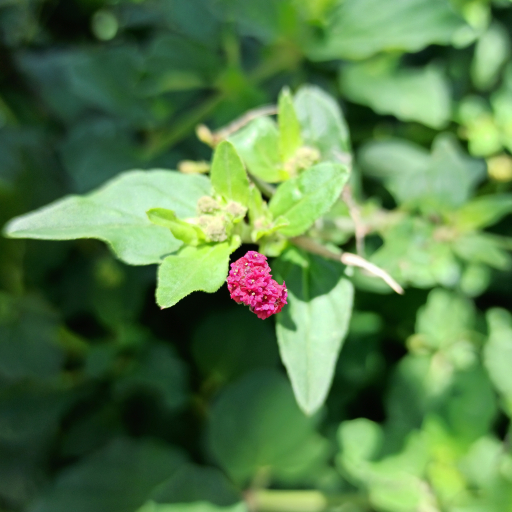
Plant Overview
Often called the Scarlet Spiderling, this resilient crawler is a master of survival in sun-scorched environments across the Americas and beyond. While some gardeners view its sprawling red stems as a wild intruder, it possesses a delicate, untamed beauty and a fascinating "sticky" personality that helps it travel across entire continents.
🔍 How to Identify
- 🌱 The Stems: Look for long, trailing stems that radiate from a central point. They are often tinted a deep burgundy and are covered in tiny, glandular hairs that feel tacky or "sticky" to the touch.
- 🌸 The Blooms: It produces clusters of tiny, bell-shaped flowers in a vibrant scarlet or deep magenta. These blossoms are small (only a few millimeters wide) but stand out against the greenery.
- 🍃 The Foliage: The leaves are generally oval or rounded with noticeably wavy margins. If you flip a leaf over, the underside is usually a much paler, almost silvery-green compared to the top.
🏡 In Your Garden
- 🏜️ A Rugged Survivor: This plant is an "opportunist." It thrives in disturbed, sandy, or compacted soil where other plants struggle. If it pops up in your garden, it’s likely telling you that the soil is quite dry and sun-exposed.
- 🕸️ Sprawling Habit: It gets its "Spiderling" nickname from the way its thin, wiry stems crawl across the ground like the legs of a giant spider. It can cover quite a bit of ground quickly, making it a natural, albeit aggressive, groundcover.
⚠️ Safety & Toxicity
- 🐾 Low Risk: Boerhavia Coccinea is generally not considered toxic to humans or common household pets.
- Sticky Situation:** The main "danger" is physical rather than chemical—the sticky seeds and stems can easily get matted into the fur of long-haired dogs or cats, requiring a bit of a bath and a brush to remove.
✨ Fun Fact
🧳 The Ultimate Hitchhiker: The seeds of the Scarlet Spiderling are coated in a natural "superglue." This allows them to stick to the fur of passing animals, the feathers of birds, or even your hiking boots, ensuring the plant can spread its offspring miles away from its original home.

Detailed Care Instructions
To grow Boerhavia coccinea, also known as red spiderling, follow these steps:
- Obtaining Seeds: Collecting seeds from an existing plant is the most common method to start growing Boerhavia coccinea. Look for mature seeds on the plant; they are small, black, and resemble tiny capsules. Harvest the seeds when they are dry and easily detach from the plant.
- Preparing Soil: Choose a well-draining potting mix with good organic content. If you are growing the plant outdoors, ensure the soil is loose and well-drained.
- Sowing seeds: Fill a small pot or seed tray with the prepared soil mix and sow the seeds directly on the surface. Gently press them down, but don't bury them too deep. Cover the seeds with a thin layer of soil and lightly water. Maintain a distance of at least 1-2 inches between each seed.
- Watering: Boerhavia coccinea prefers moderately moist soil. Water the seeds gently, ensuring the soil remains moist but not waterlogged. Avoid overwatering as it can lead to seed rot or fungal diseases.
- Location: Find a location with full sunlight or partial shade, depending on the climate in your region. Boerhavia coccinea thrives in warm and sunny conditions.
- Transplanting: Once the seedlings have reached a height of 3-4 inches and have acquired multiple leaves, they can be transplanted into larger pots or directly into the garden. Make sure to establish a suitable spacing between plants, usually about 12-18 inches apart.
- Fertilization: You can provide a balanced liquid fertilizer once every two weeks during the growing season to promote healthy growth. However, too much fertilizer can lead to excessive foliage growth with fewer flowers.
- Maintenance: Regularly remove any weeds around the plant to reduce competition for nutrients and water. Prune the plant to control its shape and promote bushier growth. Deadhead the spent flowers to encourage continuous blooming.
- Pests and diseases: Boerhavia coccinea is relatively resistant to pests and diseases. However, keep an eye out for common garden pests like aphids or spider mites, and treat them appropriately if detected.
- Harvesting seeds: Once the plant flowers and seed pods form, allow them to dry on the plant. Once dry, remove the seed pods and collect the seeds for future planting.
Remember to consult local gardening resources or experts for specific advice tailored to your region, as growing conditions and practices might vary.

Place in a bright room that is sun drenched almost all day. Or directly in a south-facing window.

The watering requirements for this plant depend on various factors such as the size of the pot or container, the environment, and the weather conditions.
The best way to determine when to water this plant is to check the soil moisture level. You can do this by sticking your finger about an inch into the soil and feeling for dampness. If the soil feels dry, it's time to water.
When watering, be sure to water thoroughly until water drips out of the bottom of the pot. This ensures that the water reaches deep into the soil, where the roots can access it.
If the plant is in direct sunlight or hot temperatures, it may require more frequent watering than if it were in a cooler, shadier location. It's important to avoid over-watering, as this can lead to root rot and other issues.
In summary, Boerhavia Coccinea plants should be watered based on the soil moisture level, and should be watered thoroughly but not too frequently. Consider the environment and location of the plant when determining its watering needs.
To fertilize this plant, use a balanced fertilizer with equal parts nitrogen, phosphorus, and potassium. Apply the fertilizer every two to three months during the growing season, which typically starts in the spring and ends in autumn. Be sure to follow the package instructions for the amount and frequency of application. Additionally, you can supplement with organic materials such as compost or aged manure. Spread a layer of these materials around the base of the plant and gently work them into the soil. Water well after fertilizing to help incorporate the nutrients into the soil.
For Boerhavia Coccinea plant, it is best to use a well-draining soil that is rich in organic matter and has a slightly acidic pH. A mixture of sand, peat moss, and perlite is ideal for this plant, as it helps to maintain good drainage while also providing sufficient nutrients for healthy growth. Avoid using soil that is too heavy or compact, as this can lead to root rot and other problems. Additionally, make sure to water the plant regularly but not excessively, allowing the soil to dry out slightly between waterings. Proper soil and watering are important factors for the growth and development of Boerhavia Coccinea plant.
Boerhavia Coccinea can be propagated through stem cuttings and seeds. For stem cuttings, select a healthy stem with a mature leaf. Cut a 6-inch section of the stem using a sharp and sterilized blade. Remove the leaves from the lower half of the stem, leaving only a few at the tip. Dip the bottom end of the stem into rooting hormone powder. Plant the stem into moist soil or sand. Keep it in a shaded area and water it regularly until roots start to grow.
For propagating through seeds, collect ripe seeds from the plant. Sow the seeds in a well-draining, sandy soil mixture. Keep the soil consistently moist until germination occurs. Seedlings will emerge in about 2-3 weeks. Transfer the seedlings to individual pots when they are big enough to handle.
Propagation of Boerhavia Coccinea can be done from late spring to mid-summer when the temperature is warm.








