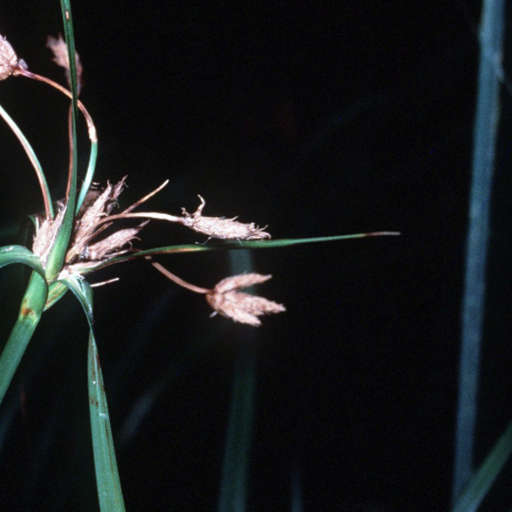
Plant Overview
Often called the River Bulrush, this towering sedge is a cornerstone of North American wetlands. It acts as a natural "architect" of the shoreline, creating dense, swaying walls of green that protect the land from the erosive power of moving water. While it may look like a common tall grass at first glance, its hidden strength lies beneath the mud in a complex system of sturdy, interlocking roots and tubers.
🔍 How to Identify
- 📐 Triangular Stems: True to the old saying "Sedges have edges," the stems are distinctly three-sided. If you roll a stem between your fingers, you will clearly feel the sharp, triangular corners.
- 🍃 Arching Foliage: The leaves are long, flat, and grass-like, often reaching heights of 3 to 5 feet. They have a graceful, arching habit that gives the plant a lush, fountain-like appearance.
- 🌾 Crown-like Seed Clusters: At the top of the stem, you’ll find clusters of brownish, bristly spikelets. These are surrounded by long, leaf-like bracts that look like a messy, pointed crown.
🏡 In Your Garden
- 🌊 The "Wet Feet" Specialist: This plant doesn’t just tolerate water; it craves it. It is an ideal choice for the edges of a backyard pond, a dedicated bog garden, or any low-spot in your yard where water naturally pools and stays muddy.
- 🏗️ Natural Erosion Control: If you have a sloping bank near a stream that is washing away, the River Bulrush is a powerhouse. Its deep rhizomes act like underground rebar, locking the soil in place and preventing further loss of land.
- 🚀 Vigorous Spreader: Because it spreads via underground tubers, it can be quite aggressive in small spaces. If you have a small garden, consider planting it in a large, submerged container to enjoy its beauty without it taking over the entire shoreline.
⚠️ Safety & Toxicity
- ✅ Generally Safe: Bolboschoenus fluviatilis is considered non-toxic to humans, dogs, and cats. It is a natural part of the ecosystem and is even consumed by various wildlife.
- ✂️ Physical Caution: The leaves are stiff and can have slightly sharp edges. When pruning or thinning out the plant, it is wise to wear gardening gloves to avoid minor "leaf cuts" or skin irritation.
✨ Fun Fact
The River Bulrush is essentially a high-energy "power bar" for nature. Its starch-filled tubers and seeds are a primary food source for muskrats and migrating waterfowl, who rely on the plant's calories to survive long winters and grueling migrations!

Detailed Care Instructions
Growing Bolboschoenus fluviatilis, commonly known as river bulrush or marsh bulrush, involves several steps. These perennial wetland plants are often found in marshes, shorelines, and other wet areas. Here are some general guidelines to help you cultivate Bolboschoenus fluviatilis:
1. Site Selection
- Moist and Wet Soil: Choose a location that mimics the natural habitat of the plant—wet, marshy areas are ideal. The soil should be frequently saturated with water.
- Sunlight: Ensure the site receives plenty of sunlight, as Bolboschoenus fluviatilis thrives in full sun to partial shade.
2. Soil Preparation
- Organic Matter: Enrich the soil with organic matter such as compost or humus to improve its fertility and structure.
- Water Retention: If planting in a garden that isn't naturally wet, consider creating an artificial marsh by digging a shallow basin and lining it with plastic to retain water.
3. Planting
- Seeds/Sprouts: You can start Bolboschoenus fluviatilis from seeds or mature plants. Seeds should be sown in the wet soil surface and lightly covered.
- Spacing: Space the plants around 1-2 feet apart to allow them to spread and grow fully.
- Timing: Plant in early spring after the danger of frost has passed. This allows the plant to establish during the growing season.
4. Watering and Maintenance
- Consistent Moisture: Keep the soil consistently moist. If there is a drought or a lack of water, you may need to irrigate the area regularly.
- Weed Control: Weed around the plants to reduce competition for nutrients and light.
- Mulching: Use mulch around the plants to help retain moisture and reduce weed growth.
5. Growth and Care
- Fertilization: Generally, wild plants like Bolboschoenus fluviatilis do not require additional fertilization if planted in rich, organic soil.
- Pruning: No significant pruning is needed, but you can cut back dead stems and leaves to tidy the appearance and promote new growth.
6. Propagation
- Division: Bolboschoenus fluviatilis can also be propagated by dividing the clumps in the spring or fall. Dig up the plants, separate the rhizomes, and replant them in the desired location.
7. Pest and Disease Management
- Natural Resistance: These plants are generally resistant to pests and diseases, especially when grown in their natural habitat.
- Watch for Issues: Keep an eye out for any signs of pests or diseases and address them promptly. Using natural pest control methods is advisable in wetland environments.
By following these steps, you can successfully grow Bolboschoenus fluviatilis and enjoy the benefits of this hardy wetland plant. Remember that these plants play a crucial role in their ecosystems by providing habitat for wildlife and helping to filter water. Happy gardening!

Place in a bright room that is sun drenched almost all day. Or directly in a south-facing window.

Bolboschoenus Fluviatilis plants require regular watering to thrive. It is important to keep the soil consistently moist but not waterlogged. Overwatering can lead to root rot and other diseases.
To water this plant, you can fill a watering can or use a hose with a gentle stream to water the base of the plant. Avoid watering the leaves as this can increase the risk of fungal diseases. Water the plant until water starts to trickle out of the drainage holes at the bottom of the pot or container.
The frequency of watering will depend on the specific growing conditions, such as humidity, temperature, and sunlight. As a general rule, you should check the soil moisture level frequently and water whenever the top inch of soil feels dry to the touch.
During periods of hot weather or if the plant is placed in a warm, dry environment, you may need to water more frequently. Conversely, during cooler months or if the plant is in a cooler, more humid environment, you may need to water less often.
In addition to regular watering, you should also keep an eye on the plant's overall health and adjust watering accordingly. If the leaves start to wilt or turn yellow, this may be a sign of over or under watering, and you should adjust your watering schedule accordingly.
Bolboschoenus fluviatilis is a robust plant often found in wetlands. Here are some fertilizing instructions to help ensure its healthy growth:
- Soil Preparation: Ensure the soil is rich and moist. This species thrives in nutrient-rich environments.
- Type of Fertilizer: Use a balanced, water-soluble fertilizer with an NPK ratio of 10-10-10 or similar. An organic option like compost or well-aged manure can also be beneficial.
- Application Timing: Fertilize during the active growing season, typically in the spring and early summer. Avoid fertilizing during late fall or winter when the plant is dormant.
- Frequency: Apply the fertilizer every 4-6 weeks during the growing season. For organic fertilizers, a single application in the spring might suffice.
- Amount: Follow the manufacturer's instructions for the specific fertilizer you are using. Generally, for water-soluble fertilizers, a diluted solution is recommended. For granular fertilizers, a light sprinkling around the base of the plant is usually enough.
- Watering After Fertilizing: After applying the fertilizer, water the plant thoroughly to ensure that nutrients reach the root zone. This is especially important if you are using granular fertilizer.
- Monitoring Soil and Plant Health: Monitor the plant and soil regularly. If the leaves start to yellow or show signs of nutrient deficiency, you may need to adjust the fertilization schedule or amount.
- Avoid Over-Fertilizing: Too much fertilizer can lead to nutrient runoff and potential harm to wetland ecosystems. Stick to recommended amounts and schedules.
These guidelines should help you provide the nutrients Bolboschoenus fluviatilis needs to thrive in its wetland habitat.
Bolboschoenus Fluviatilis is a marsh plant that requires a specific type of soil for optimal growth. The soil should be moist and rich in nutrients, with a pH range between 5.5-6.5. It should also have a good amount of organic matter, as this plant tends to thrive in soils that are high in humus. Sandy loam soils are ideal for Bolboschoenus Fluviatilis, as they retain moisture well and allow for proper drainage. It is important to avoid soils that are too heavy or compact, as this can lead to waterlogging and rotting of the plant roots. Additionally, the soil should be free of any toxic chemicals or pollutants, as Bolboschoenus Fluviatilis is sensitive to environmental toxins. Overall, a well-draining, nutrient-rich soil with a slightly acidic pH and high organic matter content is best suited for growing Bolboschoenus Fluviatilis.
Propagation of Bolboschoenus fluviatilis, a type of wetland plant, can be achieved through two primary methods: seeds and rhizome division. Here's a detailed guide on each method:
Seed Propagation
- Seed Collection:
- Wait until the seeds are mature, typically in late summer to early fall.
- Collect seeds by gently shaking the plant over a container or by cutting the seed heads and allowing them to dry. Once dry, the seeds can be separated.
- Wait until the seeds are mature, typically in late summer to early fall.
- Seed Preparation:
- Soak seeds in water for 24 hours before planting to enhance germination rates.
- Alternatively, seeds can be cold-stratified by placing them in a moist medium (e.g., sand or peat) and storing them in a refrigerator for 30-60 days to simulate winter conditions.
- Soak seeds in water for 24 hours before planting to enhance germination rates.
- Sowing Seeds:
- Fill seed trays or pots with a suitable wetland soil mix, which is typically rich in organic matter.
- Sow the seeds on the surface of the soil and lightly press them down. Do not cover them deeply; a thin layer of soil or sand is sufficient.
- Fill seed trays or pots with a suitable wetland soil mix, which is typically rich in organic matter.
- Germination Conditions:
- Place the trays in a warm, well-lit area with temperatures between 68-75°F (20-24°C).
- Keep the soil consistently moist, ensuring that it never dries out.
- Place the trays in a warm, well-lit area with temperatures between 68-75°F (20-24°C).
- Transplanting:
- Once seedlings have grown sufficiently and are strong enough to handle, they can be transplanted into their permanent wetland or aquatic environment.
- Space the plants according to their growth requirements, generally about 12-24 inches apart.
Rhizome Division
- Once seedlings have grown sufficiently and are strong enough to handle, they can be transplanted into their permanent wetland or aquatic environment.
- Timing:
- The best time to divide rhizomes is during the plant’s dormant period, usually in early spring or late fall.
- The best time to divide rhizomes is during the plant’s dormant period, usually in early spring or late fall.
- Preparing the Site:
- Select a suitable wetland or aquatic site with nutrient-rich, water-retentive soil.
- Ensure that the site has adequate water levels to keep the soil consistently moist or submerged.
- Select a suitable wetland or aquatic site with nutrient-rich, water-retentive soil.
- Dividing the Rhizomes:
- Carefully dig up the plant, ensuring not to damage the rhizomes.
- Use a sharp knife or spade to cut the rhizomes into sections, each with at least one growing point (shoot).
- Carefully dig up the plant, ensuring not to damage the rhizomes.
- Planting the Rhizomes:
- Replant the rhizome sections at the same depth they were previously growing.
- Space the sections approximately 12-24 inches apart to allow room for growth.
- Replant the rhizome sections at the same depth they were previously growing.
- Watering and Maintenance:
- Keep the newly planted rhizomes well-watered.
- Monitor the site to ensure conditions remain wet enough to support growth.
By following these steps, you can effectively propagate Bolboschoenus fluviatilis and establish a healthy population of plants in suitable wetland or aquatic environments.
- Keep the newly planted rhizomes well-watered.








