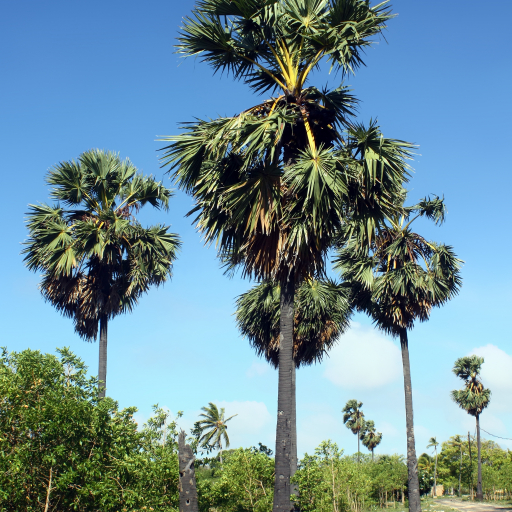
Plant Overview
Known as the "Tree of Life" in many Southeast Asian cultures, the Palmyra Palm is a majestic giant that dominates the rural skylines of India, Thailand, and Cambodia. This palm is legendary for its versatility; every single part of the tree, from the roots to the crown, has a traditional use. Often nicknamed the "Ice Apple Tree," it is beloved for its cooling, jelly-like fruits that are a staple during sweltering tropical summers.
🔍 How to Identify
- 🍃 Fan-Shaped Fronds: The leaves are massive, stiff, and shaped like a giant pleated fan, often spanning up to 3 meters in width with thorny stalks.
- 🌑 Rugged Trunk: Unlike the smooth bark of some palms, this tree has a thick, dark grey-to-black cylindrical trunk that grows incredibly straight and tall.
- 🥥 Distinct Fruit: It produces heavy clusters of large, round, purple-black fruits. Inside, you’ll find three translucent, pale-fleshy seeds that look and feel like ice cubes.
🏡 In Your Garden
- 🌱 The Taproot Rule: This palm is famous for its deep, aggressive taproot. It hates being moved or kept in a pot for too long. If you plan to grow one, it is best to plant the seed directly in its "forever home" to avoid transplant shock.
- ☀️ Patience is Key: It is an exceptionally slow grower in its youth. While it requires very little maintenance and is highly drought-tolerant once established, it may take 15 to 20 years before it begins to flower or produce fruit.
⚠️ Safety & Toxicity
- ✅ Safe & Nutritious: The fruit, sap (toddy), and even the young germinated shoots are completely safe and highly valued for their nutritional content.
- 🐕 Pet Safety: This plant is non-toxic to dogs, cats, and horses.
- 🚧 Physical Hazard: Because the tree can reach heights of 30 meters, the primary safety concern is the weight of falling fronds or heavy fruit clusters, which can be dangerous in high winds.
✨ Fun Fact
📜 The Original Notebook: Long before the widespread use of paper in Asia, the leaves of the Borassus flabellifer were used as "palm-leaf manuscripts." Ancient scholars would scratch text into the dried leaves and rub them with ink to preserve sacred scriptures and medicinal recipes for centuries.

Detailed Care Instructions
To grow a Borassus flabellifer plant, also known as the palm tree or toddy palm, you can follow these steps:
- Climate and Soil: Ensure that the climate in your area is suitable for palm tree growth. They thrive in tropical and subtropical regions. The soil should be well-draining and sandy.
- Seed Selection: Obtain fresh seeds from a reputable source. It's recommended to buy them online or from a trusted nursery. Look for plump, fully-ripe seeds without any signs of damage or discoloration.
- Seed Preparation: Soak the seeds in warm water for a day to soften the husk, making it easier to remove. Change the water daily. You can also scarify the seeds with sandpaper or a file to enhance germination.
- Germination: Fill a large pot or seed tray with a well-draining potting mix or sandy soil. Plant the soaked seeds horizontally into the soil, about 1-2 inches deep. Keep the soil consistently moist.
- Optimal Conditions: Place the pot in a warm, sunny location that receives at least 6-8 hours of direct sunlight each day. Protect the seedlings from strong winds and extreme temperatures.
- Watering: Keep the soil evenly moist but not waterlogged. Avoid overwatering as it can lead to root rot. Watering once or twice a week should be sufficient, adjusting according to the weather conditions and soil moisture.
- Fertilization: Apply a slow-release palm fertilizer or a balanced granular fertilizer during the growing season. Follow the instructions on the product for the correct dosage and frequency.
- Transplanting: After several months, when the seedlings have grown a few inches tall and developed a few sets of leaves, they can be transplanted to a larger pot or outdoors. Choose a sunny location with well-draining soil.
- Outdoor Planting: If you plan to plant the palm tree outdoors, make sure the soil is suitable and the climate is appropriate. Choose a spacious area where the tree has enough room to grow and spread its wide crown.
- Maintenance: Regularly monitor the plant's growth and health. Remove any dead or yellowing leaves and trim damaged fronds. Mulching around the base of the tree can help retain moisture and regulate soil temperature.
Growing a Borassus flabellifer plant requires patience, as they are slow growers. With proper care and maintenance, they can reach impressive heights and provide a tropical touch to your garden.

Place in a bright room that is sun drenched almost all day. Or directly in a south-facing window.

The best way to water this particular plant is by ensuring that the soil is moist in the top couple of inches. It is important not to overwater the plant as this can lead to root rot and other diseases. It is advisable to water the plant deeply and infrequently, rather than providing small amounts of water frequently. When watering, it is best to avoid getting water on the plant's leaves as this can lead to fungal growth. The amount and frequency of watering may vary depending on factors like climate, soil type, and humidity. It is always advisable to check the soil's moisture level before watering to avoid over or underwatering.
To fertilize this plant, use a balanced fertilizer with equal amounts of nitrogen, phosphorus, and potassium. Apply the fertilizer in the early spring, just before the growing season begins. Spread the fertilizer evenly around the base of the plant, avoiding direct contact with the stems or leaves. Water the plant well after fertilizing to ensure the nutrients penetrate the soil and reach the roots. Repeat this process every 4-6 weeks during the growing season to maintain optimal growth and health. Avoid over-fertilizing as this can harm the plant.
The ideal soil for this plant is well-draining and loamy, with a pH level of 5.5 to 7.5. It should be rich in organic matter and should not compact easily. The soil should retain moisture but also allow for good airflow around the roots. A mixture of sand, perlite, and peat moss can be used to create a suitable growing medium for this plant. Additionally, the soil should not be too acidic or alkaline as it may harm the plant. Regular fertilization with a balanced fertilizer is also recommended.
Borassus Flabellifer is a palm species that can be propagated through germinating its seeds. To successfully propagate this plant, collect fresh seeds from a mature plant. Soak the seeds in water for a day or two to soften the outer coating. Plant the seeds in well-draining soil that has been amended with organic matter. Cover the seeds with a layer of soil, about two inches in depth. Keep the soil moist but not waterlogged. Provide the seedlings with bright, indirect light and maintain a warm and humid environment. Germination can take several weeks to a few months. Once the seedlings have grown two to three leaves, they can be repotted into larger containers or planted directly into the ground.








