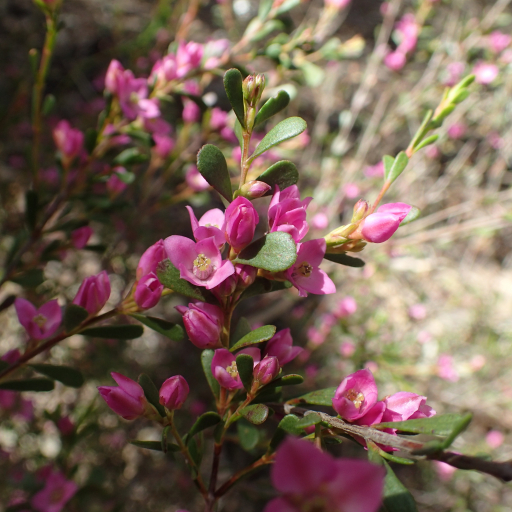
Plant Overview
Often called the Aniseed Boronia, this Australian native is a sensory delight for any garden. Its dainty, pink flowers look like tiny fallen stars nestled among dense, bright green foliage. Originating from the sandy heaths of Western Australia, it has earned a reputation as a "perfume plant" because of the spicy, sweet scent its leaves release when brushed.
🔍 How to Identify
- 🌸 Star-Shaped Blooms: The flowers are small, four-petaled, and cup-shaped, usually appearing in shades of soft pink to deep rose-magenta.
- 🍃 Scalloped Foliage: The species name crenulata refers to its "crenulate" or finely scalloped leaf edges, which give the small, oval leaves a textured appearance.
- 👃 The Sniff Test: One of its most defining traits is the scent; when you gently crush the leaves, they release a clear aroma of licorice or aniseed.
🏡 In Your Garden
- 🧤 Root Sensitivity: Boronias are famous for being "fussy" about their roots. They have a delicate root system that hates being disturbed, so avoid transplanting them once they are settled in the ground.
- 💧 The Drainage Dance: This plant is a bit of a Goldilocks—it needs consistent moisture but will die quickly in soggy soil. It thrives best in sandy or gritty pots where water can move freely.
- 🧊 Cool Feet, Warm Head: To keep it happy, place it in a sunny spot but cover the soil with a thick layer of mulch or a flat rock to keep the root zone cool and moist.
⚠️ Safety & Toxicity
- ✅ Safe Profile: Boronia crenulata is generally considered non-toxic to humans, cats, and dogs. It is a popular choice for sensory gardens.
- 🧤 Mild Irritation: While not poisonous, the potent essential oils in the foliage can occasionally cause mild skin redness or a tingle in people with highly sensitive skin if handled excessively.
✨ Fun Fact
The genus Boronia was named in honor of Francesco Borone, an 18th-century Italian botanical assistant who was so dedicated to plant hunting that he tragically died at the age of 25 while on a botanical expedition in Greece.

Detailed Care Instructions
| Humidity | Normal |
| Lighting | Full Sun |
| Difficulty | Medium |
| Hibernation | Cold Period |
| Temperature | 21°C - 24°C |
| Hardiness Zones | Max 10B |
To grow Boronia crenulata, also known as the Pink Boronia, you can follow these steps:
- Climate and Soil: Boronia crenulata is native to southern Australia and requires a Mediterranean or temperate climate to thrive. It prefers well-draining sandy or loamy soil that is slightly acidic.
- Propagation: Boronia crenulata can be propagated from seeds or cuttings. If using seeds, scarify them by lightly scraping the seed coat with sandpaper before sowing. This helps with germination. Sow the seeds in a seed tray filled with a well-draining potting mix. Keep the soil moist and place the tray in a warm and brightly lit area. Once the seedlings are large enough to handle, you can transplant them into individual pots.
- Watering: Boronia crenulata prefers slightly moist soil. Water the plant regularly during its active growing season, which is generally spring and summer. Avoid overwatering, as this can lead to root rot and other issues. During winter, reduce the frequency of watering.
- Sunlight: Boronia crenulata loves full sun to partial shade. Make sure to provide it with at least six hours of direct sunlight per day.
- Fertilizer: Apply a slow-release, balanced fertilizer in spring to promote healthy growth. Follow the package instructions for application rates. Avoid excessive fertilization as it can harm the plant.
- Pruning: Prune Boronia crenulata after flowering to promote bushier growth and maintain its shape. Remove any dead, damaged, or crowded branches. Make clean cuts just above a leaf node.
- Mulching: Mulch around the base of the plant with organic material, like bark chips or compost, to retain moisture and suppress weeds. Maintain a layer of mulch around 2-3 inches thick, but make sure it doesn't touch the stem.
- Pests and Diseases: Watch out for common pests such as aphids, caterpillars, or spider mites. Treat infestations with appropriate organic pesticides or insecticidal soaps. Proper air circulation and avoiding overwatering can help prevent fungal diseases like root rot.
- Protection: If you live in an area with strong winds or frost, consider providing protection, such as a windbreak or frost cloth, to shield the plant from potential damage.
By following these guidelines, you should be able to successfully grow and enjoy the beautiful blooms of Boronia crenulata.

Place in a window with dappled sun or a spot in the middle of a room. Or directly in a window facing west or east.

Boronia crenulata plant requires regular watering to thrive, especially during the warmer months. The soil should be kept moist, but not waterlogged. It is best to water early in the morning or late in the afternoon, to avoid evaporation during the heat of the day. Avoid watering the leaves, as this can lead to fungal diseases. It is important to provide adequate drainage to prevent water from sitting in the soil, causing root rot.
To fertilize this plant, use a balanced fertilizer with equal parts nitrogen, phosphorus, and potassium. Apply the fertilizer to the soil around the base of the plant every four to six weeks during the growing season. Be sure to follow the manufacturer's instructions and do not over-fertilize, as this can damage the plant. In addition, it is recommended to lightly water the plant before and after fertilizing to prevent dry fertilizer from burning the roots.
Boronia Crenulata thrives in well-draining soil that is rich in organic matter. It prefers a slightly acidic soil with a pH range of 5.5 to 6.5. A mixture of peat moss, perlite, and sand can be added to the soil to improve drainage. The soil should be kept consistently moist, but not waterlogged, as Boronia Crenulata is sensitive to overwatering. A layer of mulch can be added to help retain moisture and regulate soil temperature. The plant should be grown in a location with partial shade to full sun exposure.
To propagate this plant, take semi-hardwood cuttings in late summer or early fall, selecting healthy and strong stems. Cut the stems just below a node and remove any leaves from the bottom half of the stem.
Optionally, you can dip the cut end of the stem in a rooting hormone powder to encourage root growth. Plant the stem cuttings into a well-draining potting mix and water thoroughly.
Place the pot in a location with bright, indirect sunlight and keep the soil evenly moist. Mist the leaves daily to increase humidity around the cuttings.
It may take several weeks for the stem cuttings to develop roots, at which point you can transplant them into larger pots or directly into the garden.
Common pests of the aniseed boronia include Mealybugs, spider mites, aphids. Make a habit of checking your aniseed boronia frequently for pests so that any infestations can be caught and managed early.








