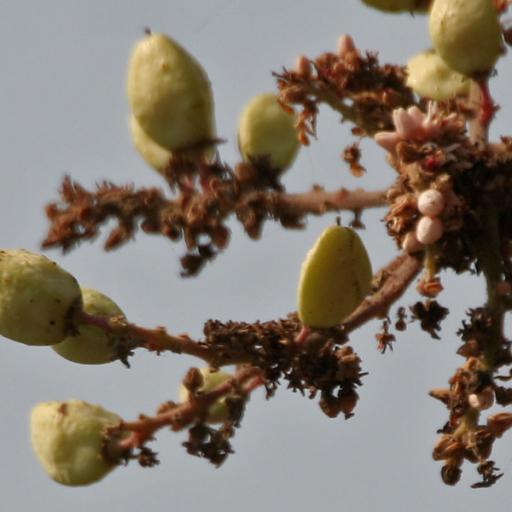
Plant Overview
Known as the "Indian Frankincense" or "Salai Guggul," this ancient tree has been a cornerstone of Ayurvedic medicine and spiritual rituals for millennia. It thrives in the dry, mountainous regions of India and Northern Africa, where it is prized for the golden resin that "bleeds" from its bark when cut. Whether used as fragrant incense to purify the air or as a natural remedy for joint health, this hardy survivor is as much a cultural icon as it is a botanical wonder.
🔍 How to Identify
- 📜 The Bark: The most striking feature is its papery, peeling bark that sheds in thin, translucent flakes, often revealing a greenish-ash underlayer.
- 🌿 The Foliage: It sports "pinnate" leaves, meaning the leaflets grow in pairs along a central stem, giving the tree a light, airy, and feathery appearance.
- 🌸 The Blooms: During the dry season, the tree produces small, star-shaped flowers that range from creamy white to pale yellow, gathered in elegant clusters at the ends of branches.
🏡 In Your Garden
- 🏜️ Heat-Seeker: This is a true sun-worshipper that thrives in rocky, poor soil where other plants might wither; it actually prefers "struggling" a bit to produce its fragrant resin.
- 💧 Drought Specialist: Because it has a deep taproot designed to find water deep underground, it hates being overwatered or sitting in soggy soil, which can quickly lead to root rot.
- 🧤 Transplant Sensitive: If you are growing one in a container, avoid frequent repotting, as the sensitive root system dislikes being disturbed once it has established its footing.
⚠️ Safety & Toxicity
- ✅ Generally Safe: The Boswellia serrata is not considered toxic to humans, and its resin is widely used in supplements and essential oils.
- 🐾 Pet Caution: While there are no widespread reports of toxicity to dogs or cats, the sticky resin can cause mild digestive upset if a curious pet decides to chew on the bark.
- 🧴 Sap Irritation: Some individuals with sensitive skin may experience mild contact dermatitis if they come into direct contact with the fresh, sticky sap or "tears" of the tree.
✨ Fun Fact
To harvest the famous frankincense resin, farmers make small incisions in the trunk, allowing the "tears" of sap to seep out and harden over several weeks—a sustainable process that hasn't changed much in over 5,000 years!

Detailed Care Instructions
To grow Boswellia Serrata (also known as Indian frankincense), you can follow these steps:
- Obtaining seeds or young plants: You can purchase Boswellia Serrata seeds or small plants from local nurseries, online plant shops, or botanical gardens. Make sure to choose reputable sources.
- Choosing the right location: Boswellia Serrata requires a warm climate with temperatures ranging from 68°F to 86°F (20°C to 30°C). It prefers well-drained soil with a pH level between 6 and 7. Select a sunny spot in your garden or consider growing it in a pot indoors if your climate is not suitable.
- Planting in the ground: If you're planting in the ground, prepare the soil by loosening it and removing any weeds or rocks. Dig a hole that is slightly larger than the size of the plant's root ball. Place the plant in the hole, backfill it with soil, and gently press the soil around the base of the plant. Avoid burying the stem too deep.
- Using a container: If you choose to grow Boswellia Serrata in a pot, select a container with good drainage holes, filled with well-draining potting soil. Place the plant in the center of the pot and fill it with soil, leaving about 1 inch (2.5 cm) of space at the top. Water the plant thoroughly after planting.
- Watering: Boswellia Serrata requires regular watering but avoid overwatering, as it can cause root rot. Water the plant when the top inch of soil feels dry. During the summer, when the plant is actively growing, you may need to water it more often.
- Fertilizing: Apply a balanced organic fertilizer once or twice a year in the spring and summer to provide essential nutrients. Follow the package instructions for the proper dosage.
- Pruning: Prune your Boswellia Serrata plant in late winter or early spring to remove any dead or damaged branches. This will promote healthy growth and maintain its shape.
- Protecting from cold weather: If you live in a cold climate, provide protection for the plant during winter. Move potted plants indoors or cover the outdoor plants with mulch or a frost cloth to shield them from freezing temperatures.
- Harvesting resin: Boswellia Serrata produces a gum resin known as frankincense. Once the plant is around 8-10 years old, you can carefully harvest the resin by making small incisions on the bark. Allow the resin to dry and harden, and then it can be used for various purposes.
Remember to research additional care requirements specific to your location and climate for optimal growth of Boswellia Serrata.
To water this particular plant, it is important to check the soil moisture level prior to watering. The top inch of the soil should be dry to the touch before providing water. It is recommended to water thoroughly, allowing water to soak through the soil and out of the drainage holes at the bottom of the pot. It is important not to let the plant sit in standing water as this can lead to root rot. Watering frequency may vary depending on the environment and season, but once a week during the growing season is typically sufficient.
- Begin fertilizing Boswellia Serrata in the early spring before new growth emerges.
- Use a balanced fertilizer with equal amounts of nitrogen, phosphorus, and potassium.
- Apply the fertilizer according to the package instructions, being careful not to over-fertilize.
- Water the plant before and after fertilizing to ensure the fertilizer is well-distributed in the soil.
- Fertilize every two to three months during the growing season.
- Stop fertilizing in the fall when the plant enters dormancy.
- Monitor the plant for signs of nutrient deficiencies or excesses, such as yellowing or wilting leaves, and adjust the fertilizing regimen accordingly.
When planting Boswellia Serrata, it is important to choose a well-draining soil that has a pH level between 6.5 and 7.5. The soil should also be nutrient-rich and have a good mixture of organic matter. You can mix compost, peat, or manure into the soil to improve its fertility. Additionally, avoid using heavy soils such as clay or soil with a high salt content, as this may cause damage to the plant. A sandy loam or loamy soil is usually the best type of soil for planting Boswellia Serrata.
To propagate the plant referred to as Boswellia Serrata, you will need to collect viable seeds from a mature plant. Once you have gathered the seeds, soak them in water for 24 hours to help improve their germination rate. Plant the seeds in a well-draining potting mix and cover them lightly with soil. Place the container in a warm and brightly lit location, but avoid direct sunlight. Keep the soil moist but not wet, and within a few weeks, the seeds should begin to germinate. As the seedlings grow, gradually expose them to more direct sunlight and reduce watering frequency. Once the plant has outgrown its original pot, it can be transplanted into a larger container or into the ground in a suitable location.








