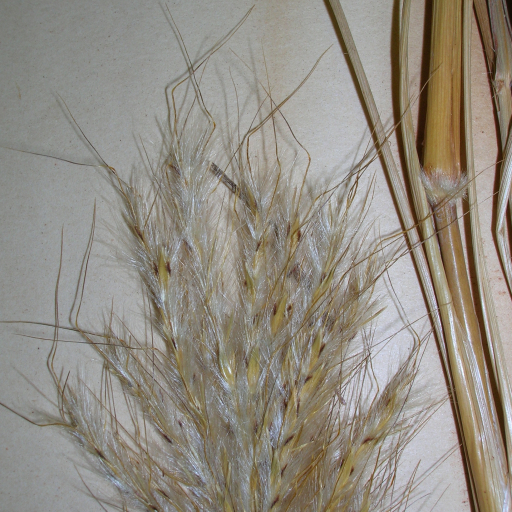
Plant Overview
Known as Cane Bluestem or Cane Beardgrass, this resilient perennial grass is a shimmering staple of the American Southwest and arid grasslands. It is best known for its elegant, silvery seed heads that catch the sunlight like silk ribbons dancing in the breeze. Beyond its beauty, it is a rugged survivor, often found anchoring the soil in dry, rocky regions where other plants might struggle to find a foothold.
🔍 How to Identify
- 🧔 The "Bearded" Nodes: Look closely at the stem joints (nodes); you will see distinct rings of fuzzy white hairs that look like a tiny beard, which is exactly what its Latin name barbinodis refers to.
- ☁️ Silvery Plumes: The seed heads are fluffy, fan-shaped clusters that transition from a pale green to a brilliant, silky white as they mature in late summer.
- 🎨 Autumn Blush: While the long, narrow blades are a cool blue-green during the summer, they often transform into striking shades of copper, red, or purple as the weather cools.
🏡 In Your Garden
- 🏜️ Drought Warrior: This grass is a champion of "xeriscaping" because it thrives on neglect. Its deep root system allows it to stay green during heatwaves that would brown a standard lawn, making it perfect for low-water landscapes.
- 🦋 Butterfly Nursery: It serves as a vital host plant for several species of Skipper butterflies. By planting it, you aren't just adding texture to your garden; you're providing a home for the next generation of pollinators.
⚠️ Safety & Toxicity
- ✅ Safe Status: Cane Bluestem is generally considered non-toxic to humans, dogs, cats, and livestock.
- 🌾 Mechanical Irritation: While not poisonous, the dried seed heads have tiny, hair-like "awns" that can sometimes become tangled in long pet fur or cause mild skin irritation if you are walking through a dense patch in shorts.
✨ Fun Fact
The "bluestem" group of grasses is famous for having a waxy, bluish coating on their lower stems. This isn't just for color—it's a natural form of "sunscreen" that reflects intense UV rays and helps the plant retain moisture in scorching environments!

Detailed Care Instructions
To grow Bothriochloa barbinodis, also known as silver bluestem or silver beard grass, follow these steps:
- Choose the right location: Bothriochloa barbinodis prefers full sun, so select a spot in your garden that receives at least six hours of direct sunlight a day. The soil should be well-draining and sandy or loamy for optimal growth.
- Prepare the soil: Before planting, prepare the soil by removing any weeds, rocks, or debris. Loosen the soil with a garden fork or tiller to a depth of 6-8 inches.
- Sow the seeds: Bothriochloa barbinodis can be propagated from seeds. Sprinkle the seeds over the prepared soil. If the seeds are very small, mix them with sand to ensure even distribution. Rake the soil lightly to cover the seeds with a thin layer (around 1/4 inch) of soil.
- Watering: After sowing the seeds, gently water the area, ensuring the soil is adequately moist but not waterlogged. Continue to water regularly, keeping the soil consistently moist until the grass becomes established, usually within 2-3 weeks.
- Fertilization: Bothriochloa barbinodis typically doesn't require much fertilization. However, you can apply a balanced slow-release fertilizer during the growing season to promote healthy growth. Follow the instructions on the fertilizer package for proper application rates.
- Maintenance: Once the grass starts growing, it requires minimal care. Water the plant when the top inch of soil becomes dry. Avoid overwatering, as it can cause root rot. Trim or mow the grass to maintain a height of 6-12 inches, depending on your preference.
- Fall maintenance: In colder regions, Bothriochloa barbinodis may lose its leaves in winter and go dormant. In this case, cut the grass back to around 6 inches in late fall. It will regrow in spring, and you can remove any remaining dead material before new growth appears.
Note: Bothriochloa barbinodis is native to the central United States, so check its adaptability to your specific region before growing it. Additionally, always refer to local guidelines and regulations regarding the planting of non-native or invasive species.

Place in a bright room that is sun drenched almost all day. Or directly in a south-facing window.

To properly water this plant, it is important to consider its natural habitat and the conditions it grows in. This plant is typically found in arid or semi-arid regions and can tolerate periods of drought.
When watering, it is important to allow the soil to dry out completely between waterings. Overwatering can lead to root rot and other diseases, so it is better to err on the side of underwatering.
To water, thoroughly soak the soil around the plant and then allow the excess water to drain away. Avoid getting water on the leaves or stem, as this can lead to fungal growth. Watering should be more frequent during periods of active growth or high temperatures, but avoid watering during periods of dormancy.
To fertilize this plant, apply a balanced fertilizer with a ratio of 10-10-10 or 20-20-20. Use approximately 1 pound of fertilizer for every 100 square feet of soil surface. Spread the fertilizer evenly over the soil surface and water thoroughly after application. Avoid fertilizing during periods of drought or extreme heat. Fertilize every 4-6 weeks during the growing season, which typically runs from late spring to early fall.
The soil that is most suitable for the growth of this plant should have good drainage and high fertility. It should be slightly acidic to neutral in pH (between 6.0 and 7.5) and have a good amount of organic matter present in it. The soil should also be able to retain moisture without becoming waterlogged, which can cause root rot. Additionally, this plant prefers soils that are well-drained and sandy to loamy in texture. It is also important to ensure that the soil is not compacted or heavy, as this can limit root development and ultimately stunt the growth of the plant. Ideally, a soil mix that is customized for the needs of this plant, including sand, loam, and organic matter, will provide the best growth results.
To propagate this plant, you can either collect its seeds or divide its roots.
If you choose to collect seeds, wait until the plant produces seed heads that have turned golden brown. Use your fingers to gently rub the seeds off the seed head into a container. Then, plant the seeds in well-draining soil and keep them moist until they germinate.
Alternatively, you can propagate the plant by dividing its roots. Carefully dig up the plant and brush off any excess soil from the roots. Use a sharp tool such as a shovel or knife to separate the plant into several smaller portions, making sure each portion has a healthy root system. Replant the smaller portions in well-draining soil and water thoroughly.
Regardless of the propagation method you choose, make sure to keep the newly propagated plants moist until they become established.








