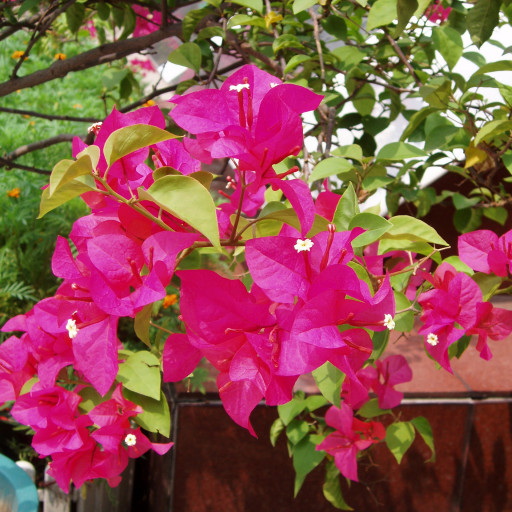
Plant Overview
Often called the "Paper Flower" due to its delicate, parchment-like bracts, Bougainvillea glabra is the quintessential plant of sunny Mediterranean coasts and tropical escapes. While it looks like a soft, flowering vine, it is actually a rugged, woody climber that uses its hidden thorns to scramble over fences and walls. In many cultures, it symbolizes passion and a warm welcome, making it a favorite for entryways and garden gates.
🔍 How to Identify
- 🌸 The Bracts: The vibrant "petals" are actually modified leaves called bracts. While magenta is most common for glabra, they can also be found in shades of purple and white.
- 🌼 The True Flowers: Look closely inside the colorful bracts to find small, tubular, creamy-white flowers. These are the plant's actual reproductive organs.
- 🌿 Foliage and Thorns: The leaves are dark green, glossy, and shaped like little eggs (ovate). Hidden among the leaves are sharp, slightly curved thorns that the plant uses for climbing.
🏡 In Your Garden
- ☀️ The Sun Worshiper: To get that iconic explosion of color, this plant requires at least 6 hours of direct, blazing sunlight. In the shade, it will grow plenty of green leaves but refuse to produce its colorful bracts.
- 🪴 Root Sensitivity: This species is notoriously "fussy" about its roots. It has a delicate, brittle root system and hates being transplanted. Once you choose a spot or a pot, try to leave it there for life to avoid "transplant shock."
- ✂️ Pruning for Bloom: Since it blooms on new growth, regular pruning after a flowering cycle encourages a bushier shape and more frequent color displays.
⚠️ Safety & Toxicity
- 🌵 Physical Hazard: The thorns are very sharp and can easily pierce skin or garden gloves. Avoid planting it right next to narrow walkways where children or pets play.
- 🐾 Pet Safety: It is classified as mildly toxic to dogs and cats. If ingested, it may cause gastrointestinal upset like vomiting or diarrhea.
- 🧴 Skin Irritation: The sap of the Bougainvillea can cause a mild skin rash (dermatitis) in sensitive individuals, similar to poison ivy but much milder.
✨ Fun Fact
The plant was named after Louis Antoine de Bougainville, a French Navy admiral and explorer who "discovered" it in Brazil during his circumnavigation of the globe in the 1760s—though it was actually his expedition’s botanist, Philibert Commerçon, who first identified it!

Detailed Care Instructions
| Soil Ph | Acidic |
| Lighting | Full Sun |
| Toxicity | Toxic |
| Soil Type | Moist But Well-Drained |
| Bloom Time | Spring, Summer, Fall |
| Plant Type | Perennial Shrub |
| Mature Size | 15–40 Ft. Tall, 15–40 Ft. Wide (Outdoors); 2–6 Ft. Tall, 1–3 Ft. Wide (Indoors) |
| Native Area | South America |
| Sun Exposure | Full Sun |
| Hardiness Zones | 9–11 |
To grow a Bougainvillea Glabra plant successfully, follow these steps:
- Climate: Bougainvillea Glabra thrives in warm temperatures and full sun. Ensure that your climate is suitable for growing this plant.
- Soil: Bougainvillea Glabra prefers well-draining soil. Mix equal parts of compost, sand, and regular garden soil to create a suitable soil mix for planting.
- Planting: Choose a location that receives at least 6-8 hours of direct sunlight. Dig a hole twice the size of the plant's root ball and place the plant in the hole, ensuring that the top of the root ball is level with the soil surface. Backfill the hole with the soil mix, patting it down gently to remove air pockets.
- Watering: Water the plant thoroughly after planting and keep the soil moist but not waterlogged. Once established, water the plant deeply once a week, allowing the top inch of soil to dry out between waterings.
- Fertilization: Use a balanced, slow-release fertilizer during the growing season (spring through fall) to promote healthy growth and abundant blooming. Follow the recommended dosage on the fertilizer packaging.
- Pruning: Bougainvillea Glabra can be pruned to control its size and shape. Pruning is usually done in late winter or early spring before new growth appears. Trim back any overgrown or dead branches, and pinch off spent flowers to encourage new growth and blooming.
- Trellis or Support: If growing the Bougainvillea Glabra as a climber, provide a trellis or support structure for it to climb on. Secure the vines to the support to help guide its growth.
- Protection: Bougainvillea Glabra is susceptible to frost damage. If you live in a region with frost or cold winters, consider planting it in a container and moving it indoors or to a sheltered area during the colder months.
- Pest and Disease Control: Monitor the plant regularly for pests like aphids, scale insects, or mealybugs. Treat any infestations with appropriate insecticides or organic pest control methods. Also, keep an eye out for fungal diseases like powdery mildew, which can be treated with a fungicide if necessary.
- Maintenance: Regularly maintain and care for your Bougainvillea Glabra plant by removing weeds, watering consistently, and providing proper sunlight, fertilization, and pruning. This will ensure healthy growth and a profusion of blooms.
With proper care and attention, your Bougainvillea Glabra plant should thrive and provide beautiful, vibrant flowers.

Place in a bright room that is sun drenched almost all day. Or directly in a south-facing window.

To water this particular plant, it is important to keep the soil moist but not waterlogged. It is recommended to water it deeply once a week or every 10 days, depending on the temperature and humidity levels in the environment. The soil should be allowed to dry out between waterings to prevent root rot. When watering, it is best to avoid getting the leaves wet as this can lead to fungal diseases. Instead, water the soil around the base of the plant, allowing the water to soak in before watering again. It is important to monitor the moisture levels regularly and adjust the watering schedule as needed to ensure the plant is getting adequate hydration without being overwatered.
To fertilize this plant, first, make sure it is planted in well-draining soil. Apply a balanced, slow-release fertilizer with a ratio of 10-10-10 in the spring and summer months. Avoid fertilizing in the fall and winter months, as this may encourage new growth that can be damaged by colder temperatures. Water the plant well before and after applying the fertilizer to prevent burning the roots. Repeat the fertilizer application every 6-8 weeks during the growing season, depending on the manufacturer's recommendations, and adjust the amount used according to the size of the plant.
Bougainvillea Glabra prefers a well-drained soil that is rich in organic matter. The soil should be slightly acidic, with a pH range between 5.5 and 6.5. It is recommended to use a soil mix that incorporates peat moss, perlite, and coarse sand, which provides excellent drainage and aeration while holding moisture and nutrients for the plant. The soil mix should be loose and light, as Bougainvillea Glabra does not tolerate heavy soil that can retain water. A good soil mix should also be free of any pests or diseases that may affect the plant's growth. It is recommended to fertilize the plant with a balanced fertilizer every six weeks to provide adequate nutrients for healthy growth and flowering. Additionally, proper watering is critical for the plant's health, and it is recommended to water only when the top layer of soil is dry.
To propagate this type of plant, you will need to take a cutting from an existing parent plant. Choose a stem that is healthy and at least six inches long. Using a sharp, clean pair of scissors, make a clean cut at a 45-degree angle.
Remove the leaves from the bottom half of the stem, leaving only a few leaves near the top. Dip the cut end in rooting hormone to encourage faster root growth. It's recommended to wait for the cut end to dry out for a few hours before planting it.
Prepare a potting mix of two parts sand and one part peat moss and fill a small container. Use a pencil or your finger to create a hole in the soil for the cutting. Insert the cutting into the soil, firming the soil around it, and water it thoroughly.
Place the container in a warm, bright location, but avoiding direct sunlight. Keep the soil moist and check regularly for new growth, which should appear in about four to six weeks. After the cutting has established roots, repot it into a larger container or transfer it to a garden bed.
Common pests of the bougainvillea include Scale insect, mealybugs, spider mites, aphids, whiteflies. Make a habit of checking your bougainvillea frequently for pests so that any infestations can be caught and managed early.








