Plant Overview
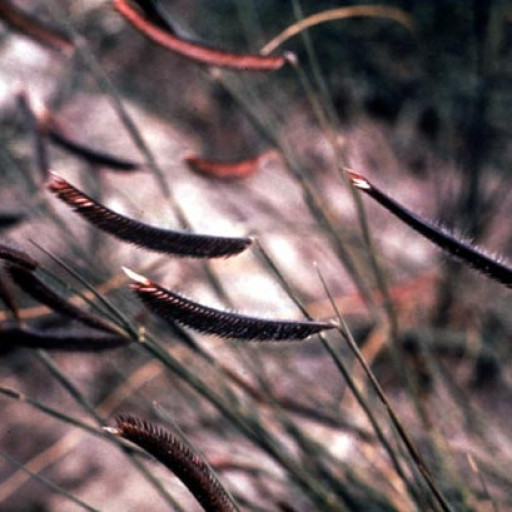
Known affectionately as "Eyelash Grass" for its whimsical, horizontal seed heads, Blue Grama is a resilient backbone of the North American shortgrass prairie. This charismatic perennial is the state grass of both Colorado and New Mexico, celebrated for its ability to dance in the wind while anchoring the soil against the harshest plains' winters. It is the perfect choice for gardeners looking to embrace "xeriscaping" or create a low-maintenance, meadow-like aesthetic.
🔍 How to Identify
- 👁️ The "Eyelash" Blooms: The most striking feature is its flowering spikes, which sit horizontally atop thin stems, resembling a row of tiny, dark eyelashes or even miniature flags.
- 🌿 Fine Foliage: The leaves are narrow, hair-like, and grayish-green, forming dense, tufted clumps that stay relatively low to the ground.
- 🎨 Winter Color: While it thrives in the heat of summer, the plant turns a lovely straw-gold or reddish-purple hue as the weather cools, providing visual interest throughout the winter months.
🏡 In Your Garden
- ☀️ Drought Warrior: Because it evolved in the dry prairies, Blue Grama has an incredibly deep root system. It thrives in "neglect," preferring sandy or rocky soil where other plants might wither, making it an excellent alternative to thirsty turf grass.
- 🚜 The "No-Mow" Option: If you are tired of mowing, this plant is your best friend. It can be left to grow its natural "eyelash" stalks, or mowed just once or twice a year to maintain a tidy, meadow-like carpet.
- 🦋 Wildlife Magnet: While it looks delicate, it provides essential cover for ground-nesting birds and serves as a larval host for several species of skipper butterflies.
⚠️ Safety & Toxicity
- ✅ Pet & Human Safe: Blue Grama is non-toxic to dogs, cats, and horses. It is a forage-friendly grass often grazed by livestock and wildlife.
- 🌾 Pollen Note: Like most grasses, it produces pollen during its blooming phase in mid-to-late summer, which may trigger mild hay fever in sensitive individuals.
✨ Fun Fact
Blue Grama is so tough that it was one of the primary grasses that survived the "Dust Bowl" of the 1930s. Its ability to go dormant during extreme drought and wake back up when the rains return helped save the topsoil of the American Great Plains from blowing away entirely!

Detailed Care Instructions
To grow Bouteloua Gracilis, also known as Blue Grama grass, follow these steps:
- Find a suitable location: Blue Grama grass thrives in full sun or partial shade. Ensure that the area has well-drained soil.
- Prepare the soil: Loosen the soil to a depth of 6-8 inches and remove any rocks, weeds, or debris. Incorporate some organic matter into the soil to improve its fertility and drainage.
- Planting: Blue Grama grass can be planted from seeds or sod. If using seeds, sow them in the prepared soil during the spring or early summer when the soil temperature is consistently above 60°F (15°C). Gently rake the seeds into the soil, but avoid burying them too deep. Water the area lightly after planting.
- Watering: Provide good moisture to the newly planted seeds or sod as they establish. Water regularly until the grass becomes well established. After that, Blue Grama grass is quite drought-tolerant and water requirements reduce significantly.
- Maintenance: Blue Grama grass requires minimal maintenance. Mow the grass to a height of around 3-4 inches in late winter or early spring before new growth begins. Avoid overwatering, as too much water can weaken the grass and make it susceptible to disease.
- Fertilizing: Blue Grama grass is adapted to low-fertility soils and typically does not require frequent fertilization. However, you can apply a slow-release, low-nitrogen fertilizer in the spring if desired.
- Weed control: Keep the planting area free from weeds, especially during the establishment period. Hand-pull or use an appropriate herbicide to control weeds without harming the grass.
- Winter care: Blue Grama grass is a warm-season grass that goes dormant during the winter. It will turn brown but will regain its green color in the spring.
By following these steps and providing appropriate care, you can successfully grow Bouteloua Gracilis plants.

Place in a bright room that is sun drenched almost all day. Or directly in a south-facing window.

The best way to water this plant is to ensure that the soil in which it is planted is moist but not waterlogged. It is important to avoid overwatering, as this can lead to root rot and other problems. The frequency of watering will depend on a number of factors, including the climate, soil type, and amount of sunlight the plant receives. In general, it is a good idea to water the plant deeply and infrequently, rather than giving it small amounts of water on a daily basis. To determine when to water, insert your finger into the soil about an inch (2.5 cm) deep; if the soil is dry at this depth, it's time to water. When watering, try to avoid getting the foliage wet, as this can lead to fungal diseases. Instead, direct the water at the base of the plant. During periods of drought, it may be necessary to water more frequently to keep the plant healthy.
To fertilize this plant, apply a balanced slow-release fertilizer in the early spring. Apply the fertilizer evenly around the root zone and water well after application. Avoid over-fertilizing as it can cause excessive growth and reduce the plant's drought tolerance. Consider using a fertilizer with a lower nitrogen content to prevent excessive growth and encourage flowering. Repeat fertilization once a year during the plant's growing season if necessary.
Bouteloua Gracilis is a warm-season perennial grass that is best grown in well-draining soil. It prefers a soil pH between 6.0-8.0 and can tolerate varying soil textures, including sandy, loamy, and clay soils. It also prefers a soil that is not too nutrient-rich and can tolerate moderate drought. When planting, it is recommended to incorporate compost or other organic matter to help improve soil structure and provide some additional nutrients. Overall, Bouteloua Gracilis prefers a soil that is well-draining, not too fertile, and has a slightly alkaline pH.
To propagate this plant, you can take stem cuttings. Choose healthy stems that are free from disease and pests. Cut a few inches of the stem from the main plant using sharp and sterile scissors or pruning shears.
Remove the leaves from the lower part of the stem, leaving only the top leaves and a few on the middle part of the stem. Dip the cut end of the stem in rooting hormone to encourage root growth.
Prepare a potting mixture of perlite and peat moss in equal parts. Moisten the mixture with water until it is evenly damp.
Stick the cut end of the stem into the potting mixture, burying it deep enough that it can stand upright. Place the pot in a bright, sunny spot and keep it moist by misting it with water.
In a few weeks, the stem should develop roots and new growth. Once there is sufficient growth, transplant it into a larger pot or to the desired outdoor location.








