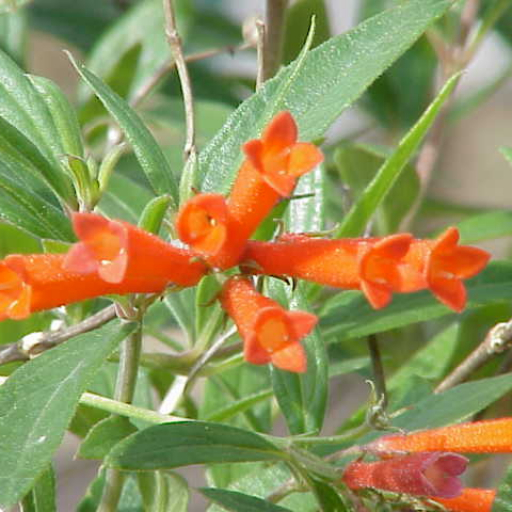
Plant Overview
Often called the "Firecracker Bush" or "Scarlet Trompetilla," this vibrant Mexican native is a showstopper for anyone looking to add a splash of heat to their landscape. Known for its brilliant, trumpet-shaped blooms, it carries a sense of desert energy and is famous for its almost magnetic pull on hummingbirds. It is the perfect choice for a "wilder" looking garden that still needs a pop of structured color.
🔍 How to Identify
- 🌿 Whorled Foliage: The dark green, lance-shaped leaves are uniquely arranged in "whorls," meaning three or four leaves circle the stem at the same point, rather than growing in pairs.
- 🎺 Trumpet Blooms: Clusters of slender, tubular flowers appear at the branch tips. Each flower is typically a fiery scarlet-red and opens into four distinct, star-like lobes at the end.
- 🪵 Growth Habit: It grows as a woody perennial shrub, often reaching 2 to 4 feet in height, with a somewhat airy and upright structure that can look slightly "leggy" if left unmanaged.
🏡 In Your Garden
- 🐦 Pollinator Magnet: Because of the deep tubular shape and brilliant red color of the flowers, this plant is an essential buffet for long-tongued pollinators. It is widely considered one of the best plants for attracting hummingbirds.
- ☀️ Sun & Drainage: Native to rocky canyons and scrublands of the Southwest and Mexico, it thrives in full sun. It is particularly sensitive to "wet feet," so ensure your soil allows water to pass through quickly to avoid root rot.
- ✂️ Pruning Nuance: To prevent the plant from becoming too sparse, it benefits from a "pinch back" or a light prune in early spring. This encourages a fuller, bushier appearance and results in more flower clusters.
⚠️ Safety & Toxicity
- ✅ Safe Status: Bouvardia ternifolia is generally considered non-toxic to humans, dogs, and cats, making it a safe choice for family-friendly yards.
- 👐 Skin Sensitivity: While not poisonous, the fine hairs on the leaves or the sap can occasionally cause mild irritation for those with very sensitive skin. Wearing gloves during heavy pruning is recommended.
✨ Fun Fact
In traditional Mexican folk medicine, the roots of the Firecracker Bush were historically used to treat scorpion stings and snakebites, though today its most common "healing" power is the joy it brings to gardeners and birds alike!

Detailed Care Instructions
To grow Bouvardia ternifolia, also known as scarlet bouvardia or firecracker bush, follow these steps:
- Choose the right location: Bouvardia ternifolia prefers full sun to partial shade. Select a spot in your garden that receives at least six hours of direct sunlight each day.
- Prepare the soil: Ensure that the soil is well-draining and fertile. If the soil in your garden is heavy or clayey, amend it with organic matter like compost or well-rotted manure to improve drainage and fertility.
- Planting: Dig a hole slightly larger than the size of the plant's root ball. Place the plant in the hole at the same depth it was growing in the nursery container. Gently backfill the hole with soil and firm it around the base of the plant.
- Watering: Bouvardia ternifolia prefers a consistently moist but not waterlogged soil. Water the plant thoroughly after planting and then continue to water regularly, especially during dry periods. However, avoid overwatering, as it can lead to root rot.
- Mulching: Apply a layer of organic mulch around the base of the plant. Mulching helps retain moisture, suppresses weeds, and regulates soil temperature.
- Fertilization: Bouvardia ternifolia benefits from regular feeding. Apply a balanced, organic fertilizer once a month during the growing season. Follow the instructions on the fertilizer package for proper dosage.
- Pruning: Prune the plant lightly after blooming to remove spent flowers and encourage further blooming. Additionally, prune any dead or damaged branches to maintain plant health and shape.
- Pests and Diseases: Bouvardia ternifolia is generally not prone to severe pest or disease issues. However, keep an eye out for common garden pests like aphids or spider mites. If necessary, use organic insecticidal soap or neem oil to control the pests.
- Winter care: In regions with frost or freezing temperatures, bouvardia is typically grown as an annual or moved indoors during the winter. If you live in a mild climate where frost is not a concern, the plant can be left in the ground with some protection, like a layer of mulch or a frost cloth, if needed.
By following these guidelines, you should be able to successfully grow Bouvardia ternifolia and enjoy its vibrant and fragrant flowers.

Place in a bright room that is sun drenched almost all day. Or directly in a south-facing window.

Water requirements for this specific plant vary depending on the level of humidity and the temperature of the environment. It is important to ensure that the soil remains consistently moist, but not waterlogged. To achieve this, water the plant deeply and allow the top few inches of soil to dry out slightly before watering again. It is also important to avoid getting water on the leaves of the plant to prevent fungal growth. Consider using a tray or saucer under the plant to collect excess water and ensure adequate drainage. Adjust watering frequency as needed based on weather conditions and plant growth.
To fertilize this plant, use a well-balanced fertilizer that has equal amounts of nitrogen, phosphorus, and potassium. Apply the fertilizer once every two weeks during the growing season. Be careful not to over-fertilize, as this can cause damage to the plant. Always follow the instructions on the fertilizer package and adjust the amount applied based on the size and age of the plant.
Bouvardia Ternifolia is a plant that thrives in well-draining soil. It is suggested to use a potting mix that contains equal parts of peat moss, perlite, and vermiculite for potted plants. The soil should have a pH level between 6.0 to 7.0, which is slightly acidic or neutral. The plant should be grown in soil that has good aeration and drainage to prevent waterlogging, which may cause root rot. Using a soil mix with organic matter and proper nutrients can help ensure the plant's healthy growth and development.
Bouvardia Ternifolia is a perennial flowering plant that is commonly propagated through stem cutting. To propagate this plant, select healthy stems from the parent plant, preferably ones that have not yet flowered. Use a clean and sharp pair of scissors or pruning shears to cut a stem that is at least four inches long. Remove any leaves that are within two inches of the bottom of the stem.
Next, prepare a pot with a well-draining soil mix. Dip the end of the stem into rooting hormone powder, then gently insert it into the soil at a depth of two inches. Firmly press the soil around the stem to ensure it is properly secured. Water the soil until it is moist but not waterlogged.
Cover the pot with a clear plastic bag or plastic wrap to create a mini greenhouse. This will help to keep the soil moist and create a humid environment conducive to root growth. Place the pot in a warm, bright location, but not direct sunlight.
Check the soil regularly and water as needed to keep it moist. After a few weeks, gently tug on the stem to check for root growth. Once roots have formed, remove the plastic cover and gradually acclimate the plant to the surrounding environment by increasing exposure to light and air.
When the plant has outgrown its pot and the roots are well-established, transplant it to a larger container or to an outdoor garden bed. With proper care, the Bouvardia Ternifolia plant will continue to thrive and provide beautiful blooms year after year.








