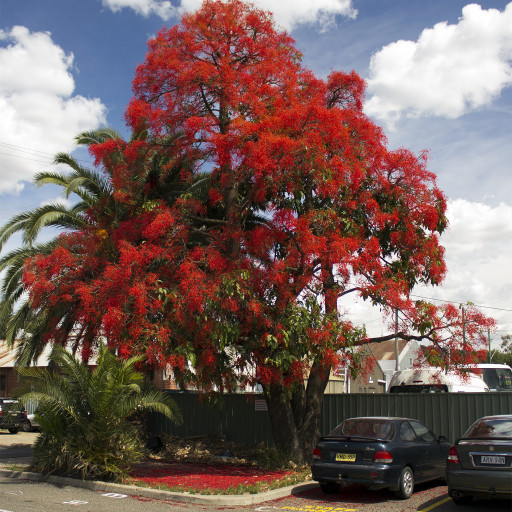
Plant Overview
Known as the "Illawarra Flame Tree," this Australian icon is often called the most spectacular flowering tree in the world. In its native habitat, it is a true showstopper that turns entire hillsides a fiery crimson during the heat of summer. It has a curious, dramatic habit of dropping every single leaf just before blooming, ensuring that its vibrant red flowers take center stage without any green distractions.
🔍 How to Identify
- 🍁 Leaf Shape: The glossy green leaves are deeply lobed and resemble a maple leaf (which is where the name acerifolius comes from), though younger trees may have more oval-shaped foliage.
- 🔔 Flower Texture: It produces dense clusters of small, waxy, bright scarlet bell-shaped flowers that completely drape the bare branches.
- 🪵 Trunk & Bark: The trunk is sturdy and slightly swollen at the base, featuring a greyish bark that often develops a unique "lacy" or fissured texture as the tree matures.
🏡 In Your Garden
- ☀️ Sunlight & Flowering: While it can survive in partial shade, it requires full, baking sun to trigger the "flame" bloom. In cooler or coastal climates, the tree may only flower on one side or skip years entirely.
- 💧 The Taproot Factor: This tree develops a very deep taproot, making it exceptionally drought-tolerant once established. However, this means it hates being transplanted; you should choose its "forever home" carefully to avoid root shock.
- 🍂 Seasonal Bareness: Do not be alarmed if the tree looks like it is dying in late spring. This deciduous phase is a strategic move to conserve water so it can put all its energy into its magnificent floral display.
⚠️ Safety & Toxicity
- ✅ General Status: The tree is generally considered non-toxic to humans, cats, and dogs, making it a safe choice for family backyards.
- 🧤 Seed Irritation: Use caution when handling the woody, boat-shaped seed pods. They contain fine, yellow, needle-like hairs that can cause severe skin and eye irritation. It is best to wear gloves if you plan on harvesting the seeds.
✨ Fun Fact
Indigenous Australians traditionally used the inner bark of the Illawarra Flame Tree to weave incredibly strong fishing nets and twine. Additionally, the seeds inside the pods are edible once the irritating hairs are thoroughly singed off by fire, tasting much like a roasted peanut.

Detailed Care Instructions
| Lighting | Full Sun |
| Hardiness Zones | 10A - 12 |
To grow a Brachychiton acerifolius plant, also known as the Illawarra Flame Tree or Royal Poinciana, follow these steps:
- Choosing the right location: Brachychiton acerifolius plants require a spot with full sun exposure. Ensure that the location you choose has well-draining soil.
- Planting: Dig a hole twice the size of the plant's root ball. Remove the plant from its container and gently loosen the roots. Place the plant into the hole and fill it with soil, compacting it gently around the roots. Water thoroughly after planting.
- Watering: Provide the plant with regular watering, especially during the first year to establish a strong root system. Brachychiton acerifolius plants can tolerate short periods of drought once they are mature.
- Fertilization: Feed the plant with a balanced fertilizer in spring and summer to promote healthy growth. Follow the instructions on the fertilizer packaging for the appropriate dosage.
- Pruning: Prune the plant during winter to shape it and remove any dead or damaged branches. Be careful not to over-prune, as the Brachychiton acerifolius has a beautiful natural shape.
- Mulching: Apply a layer of organic mulch around the base of the plant to help retain moisture and deter weeds. Keep the mulch a few inches away from the trunk to prevent rot.
- Pests and diseases: Monitor the plant for pests such as aphids or scale insects. If possible, identify the pest and use an appropriate insecticide or seek advice from a local gardening expert. Brachychiton acerifolius plants are generally resistant to most diseases.
- Propagation: Brachychiton acerifolius can be propagated from seeds or by taking semi-hardwood cuttings in late summer. However, note that growing from seeds requires scarification (scratching the seed coat) or soaking in hot water before planting to improve germination.
Remember that Brachychiton acerifolius is a large tree that can reach heights of up to 60 feet (18 meters). Consider the available space and plan accordingly when choosing this plant for your garden.

Place in a window with dappled sun or a spot in the middle of a room. Or directly in a window facing west or east.

To water this particular plant, it is important to use a watering can or hose with a gentle stream to avoid causing damage to the leaves or stem. The frequency and amount of water needed will vary depending on the environment and climate. However, it is generally recommended to water deeply and thoroughly, allowing the water to penetrate the soil to the root zone. Before watering, it is important to check the soil moisture level by touching the soil surface, and only water if the soil feels dry to the touch. Overwatering can lead to root rot and other issues, so it is important to monitor the soil and adjust watering accordingly. Additionally, it is important to avoid watering the foliage, as this can increase the risk of fungal diseases and leaf damage.
To fertilize this plant, ensure that the soil is moist before applying a slow-release fertilizer. Apply the fertilizer evenly around the base of the plant without getting it on the leaves. Water the plant thoroughly after fertilizing. Avoid over-fertilizing and follow the manufacturer's instructions for dosage and frequency.
The soil that is ideal for Brachychiton Acerifolius plant is a well-draining soil that is rich in organic matter. It should have a pH level of around 6.0-7.0 and should be slightly acidic to neutral. The soil should have good moisture retention capacity, but not be too waterlogged as this can lead to root rot. It is important to ensure that the soil is free from any harmful chemicals or toxins that could damage the plant. Adding compost or organic matter to the soil can improve its fertility and nutrient content. Additionally, the soil should be kept moist but not overly wet during the growing season, as the plant is sensitive to drought and needs regular watering. It is also important to provide the plant with regular fertilization to ensure healthy growth and development. Overall, the appropriate soil type for Brachychiton Acerifolius should provide adequate drainage, moisture retention, and nutrient availability for optimal growth and health.
To propagate this plant, first obtain a mature specimen that is healthy and free from disease and pest damage. Take a cutting from the stem of the plant, ensuring that it is at least 10cm long and that there are no flowers or buds present.
Remove the lower leaves from the stem so that there are only a few leaves remaining near the top. It is important to use clean and sharp pruning shears to make a clean cut to reduce damage to the parent plant.
Dip the cut end of the stem into rooting hormone powder. This will help to encourage the formation of roots on the stem when placed in soil. Gently tap off any excess powder.
Prepare a small pot or container with a well-draining potting mix. Make a hole in the soil with a pencil or finger, and gently place the stem into the soil. Firm the soil around the stem to ensure that it is secure.
Water the soil thoroughly and place the pot in a warm and bright location indoors. Ensure that the soil remains moist but not waterlogged. After a few weeks, new growth should be visible from the stem above the soil, which is a sign that root formation has occurred.
Once the stem is well established, it can be transplanted into a larger pot or planted directly into the ground if the appropriate conditions exist. With proper care, the newly propagated plant will thrive in its new environment.
Common pests of the illawarra flame tree include Scale insect, mealybugs, spider mites. Make a habit of checking your illawarra flame tree frequently for pests so that any infestations can be caught and managed early.








