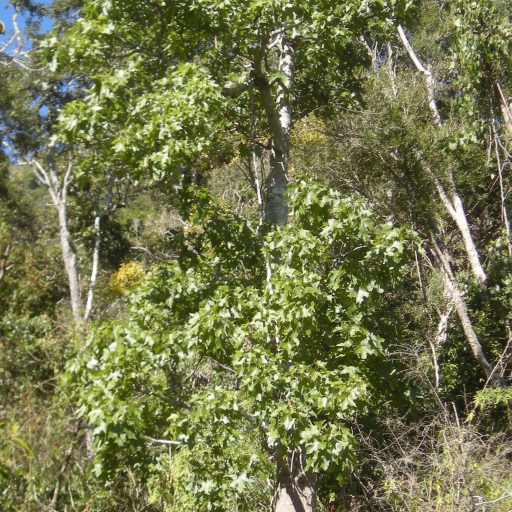
Plant Overview
Known as the Broad-leaved Bottle Tree, this Australian icon is a true survivor of the dry scrublands. Its most striking feature is its thick, bulbous trunk, which acts as a living canteen, storing water to help the tree endure long periods of drought. In its native habitat, it’s a master of drama, shedding every single leaf before erupting into a spectacular display of creamy-white flowers.
🔍 How to Identify
- 🐘 The Trunk: Mature specimens develop a distinct "bottle" shape with a swollen base and thick, grey, fissured bark that looks almost like elephant skin.
- 🍃 The Foliage: Unlike its narrow-leaved cousins, this variety has large, glossy green leaves that are deeply divided into five to seven pointed lobes, resembling a star or a hand.
- 🔔 The Flowers: It produces clusters of waxy, bell-shaped flowers that are creamy-white or pale yellow, often appearing on bare branches during the dry season.
🏡 In Your Garden
- ☀️ Space to Breathe: While it grows slowly, the Broad-leaved Bottle Tree eventually becomes a massive structural element. It develops a deep taproot, meaning it hates being moved once established, so choose its "forever home" carefully.
- 💧 Drought Strategy: Don't be alarmed if it suddenly drops all its leaves in late spring or summer; this is the tree’s way of preparing for its flowering cycle and conserving moisture. It thrives in well-draining soil and can easily rot if the ground stays "wet-toes" for too long.
⚠️ Safety & Toxicity
- ✅ Low Risk: The Brachychiton australis is generally considered non-toxic to humans and common household pets.
- 🧤 Irritating Pods: Exercise caution with the woody seed pods. They contain fine, stiff hairs that can cause significant skin irritation and itchiness or even respiratory discomfort if handled without gloves.
✨ Fun Fact
The seeds of the Bottle Tree were a traditional food source for Indigenous Australians. Once the irritating hairs are thoroughly removed by roasting, the seeds are high in protein and have a nutty flavor similar to peanuts!

Detailed Care Instructions
To grow Brachychiton Australis (also known as the Queensland bottle tree or Kurrajong tree), follow these steps:
- Planting location: Choose a sunny location with well-draining soil. The plant prefers a warm climate and is drought-tolerant once established.
- Soil preparation: Prepare the soil by loosening it and removing any weeds or grass. Mix in some organic matter, such as compost or well-rotted manure, to improve fertility and drainage.
- Planting: Dig a hole slightly wider and deeper than the plant's root ball. Place the plant in the hole, making sure the top of the root ball is level with or slightly above the soil surface.
- Watering: Water the newly planted tree thoroughly, ensuring the soil is evenly moist. Afterward, water deeply and infrequently rather than frequent shallow watering. This encourages the roots to grow deep and helps the plant to establish.
- Mulching: Apply a layer of organic mulch, such as wood chips or bark, around the base of the tree to conserve moisture, suppress weeds, and regulate soil temperature.
- Pruning: Prune any damaged or dead branches as needed to maintain a healthy shape. Brachychiton Australis doesn't require heavy pruning but may need occasional shaping.
- Fertilizing: Apply a slow-release fertilizer formulated for trees in early spring. Follow the instructions on the fertilizer package for proper application.
- Protection: Young Brachychiton Australis trees may need protection from extreme cold temperatures. Consider covering them with a frost blanket or providing a temporary shelter during freezing weather.
- Regular maintenance: Monitor the tree regularly for pests, diseases, or signs of stress. Water during periods of drought and remove any weeds that may compete for resources.
- Patience: Brachychiton Australis is a slow-growing tree, so be patient as it establishes and starts to grow. It may take several years for it to reach its full potential height.
Remember, different regions may have specific climatic conditions, so adapt these steps accordingly to suit your location.

Place in a window with dappled sun or a spot in the middle of a room. Or directly in a window facing west or east.

To water this plant, you should ensure that you only water it when the topsoil feels dry to the touch. Overwatering can cause root rot and damage to the plant. It's best to water deeply, allowing the water to fully soak into the soil. You can monitor the soil moisture by inserting your finger about an inch into the soil. If it feels wet, hold off on watering until it dries out. Additionally, it's important to avoid getting the leaves of the plant wet while watering, as this can also cause damage.
To fertilize this plant, use a balanced fertilizer with an N-P-K ratio of 10-10-10 or 8-8-8. Apply it in early spring, late summer, and early fall. Water the plant thoroughly before applying the fertilizer to prevent burning the roots. Follow the manufacturer's instructions for application rate and frequency, and avoid over-fertilizing as this can cause excessive growth at the expense of flowering. After applying the fertilizer, water the plant well to distribute the nutrients evenly.
The ideal soil for this plant is well-draining with some capacity to retain moisture. It should have a slightly acidic to neutral pH, ideally between 6.0 to 7.5. The soil should be rich in organic matter and nutrients, including nitrogen, phosphorus, and potassium. A mix of sand, loam, and compost is recommended to provide optimal drainage, nutrient availability, and moisture retention. It is important to avoid heavy, clay-rich soils that can hold too much water and cause root rot. In addition, the soil must be sufficiently deep to accommodate the plant's extensive root system.
Propagation of this plant can be done through both seeds and cuttings. To start with, collect the seeds from the parent plant and soak them in water for a day or two. Next, plant the seeds in a seedling tray filled with a well-draining mix of soil and compost. Ensure that the soil is moist and place the tray in a warm spot with indirect sunlight. Regularly water the seedlings to keep the soil moist and watch for the emergence of seedlings.
On the other hand, the plant can also be propagated from cuttings. To do so, select a healthy, mature branch from the parent plant that is at least 20 cm long and has no signs of disease or damage. Trim off all the leaves except for the top few and dip the cut end into a rooting hormone powder. Plant the cutting in a pot or directly into the soil in a warm, protected spot with indirect sunlight. Keep the soil moist regularly and over time, roots will begin to form, and eventually, the plant will flourish.
It is important to note that propagation from cuttings may not always work, as this plant can be relatively difficult to propagate. However, with patience and persistence, it's possible to successfully propagate and grow new plants from seed or cuttings.
Common pests of the broadleaf bottletree include Scale insect, mealybugs, spider mites. Make a habit of checking your broadleaf bottletree frequently for pests so that any infestations can be caught and managed early.








