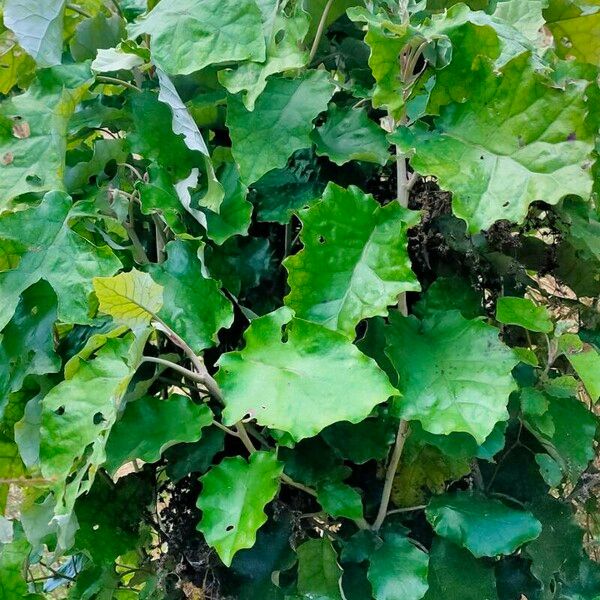
Plant Overview
Known throughout its native New Zealand as "Bushman’s Toilet Paper," the Rangiora is a fast-growing shrub that commands attention with its oversized, leathery leaves. While its soft, velvet-textured underside has earned it a reputation as a wilderness survival essential, this plant is much more than a utilitarian tool. In a garden, it acts as a dramatic, silvery-green backdrop that brings a touch of the prehistoric to modern landscapes.
🔍 How to Identify
- 🍃 Large, Wavy Leaves: The foliage is unmistakable, reaching up to 25cm in length. The leaves are broad and leathery with distinctly lobed or "wavy" margins that look like they’ve been crimped.
- ☁️ Silvery Underside: Flip a leaf over to find a dense, creamy-white felt. This soft "tomentum" protects the plant from salt spray and moisture loss.
- 🌼 Cloud-like Blooms: In spring, the plant produces massive, branched clusters (panicles) of tiny, creamy-white flowers. They are sweetly scented but can be quite messy when they eventually fall.
🏡 In Your Garden
- 🌊 Coastal Specialist: Thanks to those tough, felted leaves, Rangiora is incredibly salt-tolerant. It’s an excellent choice for coastal windbreaks where other plants might wither under the sea spray.
- 🌱 Space Requirements: Be mindful of its "scruffy" charm. It grows rapidly and can become leggy if not pruned. It prefers a spot where it can spread its wide branches without crowding more delicate perennials.
- ❄️ Frost Sensitivity: While it loves the sun, young plants are vulnerable to heavy frost. If you live in a cooler climate, plant it near a north-facing wall to trap daytime heat.
⚠️ Safety & Toxicity
- 🚫 Toxic Status: High Toxicity. Despite its soft texture, all parts of the plant contain pyrrolizidine alkaloids, which are poisonous if ingested.
- 🐎 Livestock Warning: It is famously dangerous to horses and cattle, causing a condition known as "Rangiora staggers" which leads to liver damage and loss of coordination.
- 🐾 Pets & Kids: Keep this plant away from curious chewers. While skin contact is generally safe (the leaves were historically used as bandages), ingestion can lead to serious illness.
✨ Fun Fact
The Rangiora is often called the "Bushman's Postcard." Māori and early European settlers would scratch messages into the dark green upper surface of the leaf; the green skin peels away easily to reveal the bright white underside, creating a natural, biodegradable letter that remains legible for weeks.

Detailed Care Instructions

Place in a bright room that is sun drenched almost all day. Or directly in a south-facing window.

When the top few inches of soil dry out, water your plants. If the top few inches of soil are still moist, do not water your plant. Wait a few days, then poke your finger into the soil to see if anything has changed. Overwatering poses a disease risk, such as the development of fungal diseases in the roots. These plants have adaptations in there leaves that allow them to survive in low water supply.







