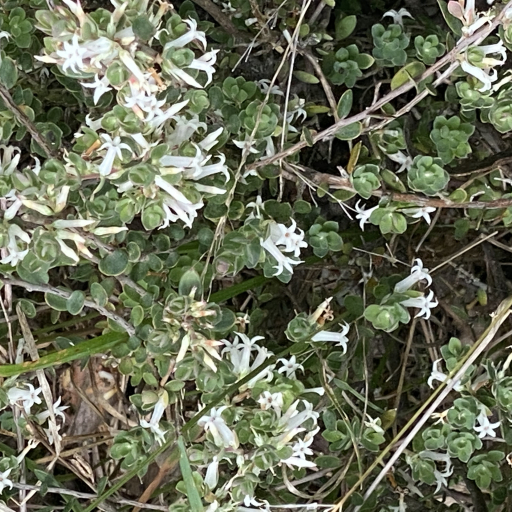
Plant Overview
Known affectionately as the Daphne Heath, this hardy Australian native brings a touch of wild elegance to both coastal heaths and inland woodlands. It earned its name from its striking resemblance to the traditional garden Daphne, but don't let its delicate, honey-scented blooms fool you—it is a rugged survivor designed for the harsh, sandy soils of Eastern Australia. In the wild, it often acts as a fragrant beacon for native bees and butterflies.
🔍 How to Identify
- 🍃 Leaf Structure: The leaves are small, stiff, and lance-shaped with sharp tips, often appearing in a dusty bluish-green hue that mimics the classic Daphne shrub.
- 🔔 Tubular Blooms: It produces clusters of tiny, creamy-white or pale yellow bell-shaped flowers that emerge from the leaf axils.
- 🪶 Fringed Petals: If you look closely at the mouth of the flower, you’ll see tiny, delicate hairs (fringes) lining the inside of the petals, a key trait of the Brachyloma genus.
🏡 In Your Garden
- 🏜️ Drainage is King: This plant has evolved to thrive in sandy, nutrient-poor soils. In a garden setting, it will struggle in heavy clay; it prefers a raised bed or a rockery where water can move away from the roots quickly.
- 🦋 Wildlife Magnet: Because it produces high amounts of nectar, it is an excellent choice for "habitat gardening." It serves as a vital pit stop for native honeyeaters and small insect pollinators during the flowering season.
- ✂️ Pruning Nuance: Unlike some hardier shrubs, the Daphne Heath prefers a light "haircut" rather than a hard prune. Trimming it back slightly after flowering helps maintain a dense, bushy shape.
⚠️ Safety & Toxicity
- 🟢 Non-Toxic Status: There are no records of Brachyloma daphnoides being toxic to humans or common household pets like dogs and cats.
- 🌵 Mechanical Irritation: While not chemically toxic, the leaves can be quite stiff and prickly at the tips. It is best planted away from narrow walkways where the foliage might scratch passing skin or snag on delicate clothing.
✨ Fun Fact
The specific epithet daphnoides literally translates to "Daphne-like." However, unlike the exotic Daphne which can be quite finicky, this Australian native is far more drought-tolerant once established, earning it the nickname "the survivor's daphne."

Detailed Care Instructions

Some plants require more regular watering than others, which should be done every few days. It's critical to maintain the soil moist all of the time. The water requirements of the same plant placed in pots with varying sizes will differ. Because the water in the smaller pot evaporates faster than the water in the larger pot, it will require more watering. Regardless of pot size, the surface should constantly be maintained moist.








