Plant Overview
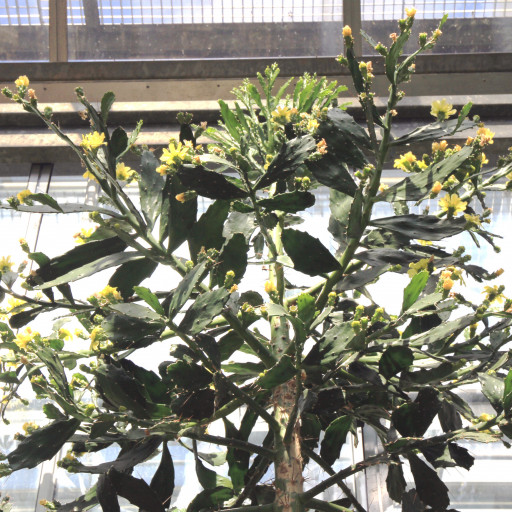
Often called the Brazilian Prickly Pear, Brasiliopuntia brasiliensis is a true standout in the cactus world because it mimics the growth of a traditional tree. While most of its cousins crawl along the ground or form low shrubs, this species develops a sturdy, woody central trunk that can reach impressive heights. Hailing from the humid forests of South America, it brings a lush, tropical "jungle cactus" vibe to any collection.
🔍 How to Identify
- 🌳 Tree-like Trunk: It features a distinct, upright, and cylindrical central stem that eventually turns brown and "corky" like real tree bark.
- 🍃 Dimorphic Pads: It grows two types of pads: thick, rounded ones near the base and very thin, bright green, leaf-like pads (cladodes) at the ends of the branches.
- 🌼 Sunny Blooms: It produces small, delicate yellow flowers that emerge from the edges of the pads, followed by round, colorful fruits that range from yellow to red.
🏡 In Your Garden
- 💧 Tropical Roots: Unlike desert cacti that crave drought, this plant prefers a bit more humidity and consistent moisture during the growing season; it doesn't like to stay bone-dry for months.
- 🌤️ Light Nuance: It thrives in bright, dappled sunlight. Because its pads are quite thin compared to other prickly pears, they can actually scorch if moved too suddenly from a shady spot into intense, direct afternoon sun.
- 🌡️ Warmth Lover: This is a tropical species, meaning it has zero tolerance for frost. If you live in a cooler climate, it must be brought indoors as soon as the nighttime temperatures begin to dip.
⚠️ Safety & Toxicity
- 🌵 Mechanical Irritant: While not chemically poisonous, it is covered in "glochids"—microscopic, barbed hairs that are arguably more annoying than large spines. They lodge easily in the skin and are very difficult to see or remove.
- 🐾 Pets & Kids: Keep this plant out of reach. While it won't cause internal poisoning if a small piece is nibbled, the spines and glochids can cause severe irritation to the mouth, tongue, and paws.
✨ Fun Fact
- Brasiliopuntia is what scientists call a "monotypic" genus. This means that Brasiliopuntia brasiliensis is the one and only species in its entire genus—a true individual in the vast family of Cactaceae!

Detailed Care Instructions
| Lighting | Full Sun |
To grow Brasiliopuntia brasiliensis, also known as the golden prickly pear cactus or Brazilian prickly pear, follow these steps:
- Obtain a cutting or seed: You can purchase a cutting or seeds from a reputable nursery or obtain them through online sources.
- Choose a suitable planting location: Brasiliopuntia brasiliensis prefers well-draining soil and full sun exposure. Select a location that receives at least six hours of direct sunlight each day.
- Prepare the planting site: Clear the area of weeds and debris. If you are planting in a container, make sure it has proper drainage holes.
- Planting in the ground: Dig a hole slightly larger than the roots of the cutting or seedling. Gently place the cutting or seedling into the hole, making sure the soil level matches that of the parent plant. Backfill the hole with well-draining soil and gently tamp it down around the plant.
- Planting in a container: Fill the container with well-draining cactus potting mix or a blend of potting soil and sand. Place the cutting or seedling in the center of the container, making sure it is vertically upright. Add more soil mixture around the plant, leaving a small space between the top of the soil and the rim of the container.
- Watering: Water the plant thoroughly after planting to settle the soil around the roots. Then, follow a regular watering schedule. Allow the soil to dry out slightly between watering to avoid overwatering, as this cactus species is drought-tolerant.
- Care: The Brasiliopuntia brasiliensis plant does not require much attention once established. However, you can fertilize it with a balanced cactus fertilizer during the growing season to promote healthy growth.
- Protection: As this cactus species has spines, handle it with care to avoid injury. You may also want to protect it from extreme cold temperatures if you live in a colder region.
- Propagation: If you want to propagate more plants, you can take stem cuttings or collect seeds from mature plants.
Remember, each plant is unique, and individual care requirements may vary slightly. Monitor your Brasiliopuntia brasiliensis regularly and adjust care as needed.

Place in a bright room that is sun drenched almost all day. Or directly in a south-facing window.

To water this type of plant, it's important to first understand its watering needs. The plant likes to dry out between watering, so it shouldn't be watered too frequently. When it's time to water, thoroughly soak the soil until the water drains out of the bottom of the pot. Allow the soil to dry out before watering again. It's important not to overwater, as this can lead to root rot. Additionally, it's important to water the plant at the base and not overhead to avoid causing damage to the plant's delicate needles.
To fertilize this plant, use a balanced fertilizer with equal amounts of nitrogen, phosphorus, and potassium. Apply the fertilizer once every month during the growing season (spring-summer). Mix the fertilizer with water according to package instructions and water the base of the plant, avoiding the leaves and stems. Do not fertilize during the dormant season (fall-winter).
Brasiliopuntia Brasiliensis plant should be planted in well-draining soil that has adequate moisture retention capacity. The soil should have a pH between 5.5 to 7.5. It is recommended to use a mix of sandy loam or loam soil with organic matter like coconut coir or peat moss to improve soil structure and increase water-holding capacity. The plant requires good drainage to prevent waterlogging, which may lead to root rot. Therefore, it is recommended to avoid heavy clay soil or soils that have poor drainage. Overall, a soil mixture that contains moderate amounts of nutrients and moderately acidic to neutral pH is ideal for growing Brasiliopuntia Brasiliensis plants.
One way to propagate this plant is by using stem cuttings. The cutting should be taken from a healthy, mature stem, and at a length of about 4-6 inches. The cutting should be allowed to dry for a few days before planting in well-draining soil.
Another method of propagation is through seed germination. The seeds of this plant can be collected from mature fruits and planted in potting soil. The soil should be kept moist, but not overly wet, and the seedlings should be kept in a warm and light area until they are mature enough to be transplanted.
It is also possible to propagate this plant through offsets, which are new plants that grow from the base of the parent plant. These offsets can be carefully removed from the parent plant and planted in their own containers with well-draining soil.
Regardless of the propagation method used, it is important to ensure that the plant is kept in a warm and well-lit area, and that the soil is kept moist but not overly wet. With proper care, this plant can be easily propagated and grown in a variety of settings.
Common pests of the brazilian pricklypear include Scale insect, mealybugs, spider mites. Make a habit of checking your brazilian pricklypear frequently for pests so that any infestations can be caught and managed early.








