Plant Overview
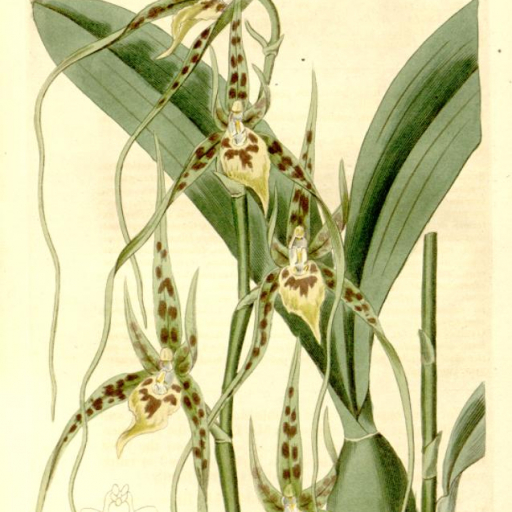
Known as the "Spider Orchid," Brassia caudata is a dramatic masterpiece of the orchid world. Its long, spindly petals resemble the legs of a giant arachnid, earning it a reputation as one of nature's most convincing mimics. Native to the tropical hammocks of Florida, Mexico, and the Caribbean, this plant brings a touch of wild, exotic mystery to any indoor collection.
🔍 How to Identify
- 🕷️ The "Spider" Petals: It features exceptionally long, ribbon-like sepals and petals that can reach several inches in length, creating a spindly, leggy silhouette.
- 🎨 Color Palette: The blooms are typically a pale greenish-yellow, heavily mottled with bold reddish-brown or dark chocolate spots, specifically concentrated near the center of the flower.
- 🌿 Growth Habit: The plant grows from compressed, oblong pseudobulbs that produce two thick, leathery, strap-shaped leaves from the top.
🏡 In Your Garden
- 🌬️ Air Circulation is Key: As an epiphyte (a plant that grows on trees), it thrives on "moving" air. It hates stagnant corners; a small fan or a breezy windowsill helps prevent crown rot and keeps the roots healthy.
- 💧 The "Wet-Dry" Cycle: This orchid prefers its potting medium to dry out slightly between waterings. It has a sensitive root system that will protest if left in soggy, heavy soil.
- ☀️ Light Nuance: It craves bright, filtered light—think of the dappled sunshine under a tropical canopy. If the leaves turn a very dark green, it’s a sign the plant isn't getting enough light to trigger a bloom.
⚠️ Safety & Toxicity
- 🐾 Pet Friendly: Brassia caudata is generally considered non-toxic to cats, dogs, and horses, making it a fantastic choice for pet owners who want exotic flair without the risk.
- 👶 General Caution: While safe, the fibrous leaves and pseudobulbs are not digestible. Keep it out of reach of curious toddlers to avoid any potential choking hazards or mild tummy aches.
✨ Fun Fact
- 🐝 The Great Deception: This orchid uses a "wasp-mimicry" strategy for pollination. It mimics the appearance of a spider so perfectly that spider-hunting wasps (genus Pepsis) are tricked into attacking the flower. As the wasp tries to sting its "prey," it accidentally picks up pollen on its head to carry to the next bloom!

Detailed Care Instructions
To grow a Brassia Caudata plant, also known as the dancing lady orchid, you can follow these steps:
- Light: Provide your Brassia Caudata plant with bright indirect light. It thrives in bright conditions, but direct sunlight can damage the leaves.
- Temperature and Humidity: Maintain a temperature range between 65-80°F (18-27°C). Avoid drastic temperature fluctuations. In terms of humidity, aim for a relative humidity of around 50-70%. You can increase humidity levels by using a humidifier, placing a tray filled with water near the plant, or misting the leaves regularly.
- Watering: These orchids prefer a slightly moist growing medium. Water the plant thoroughly when the top inch of soil feels dry. Avoid overwatering, as it can lead to root rot. Drain excess water from the saucer or pot to prevent waterlogging.
- Potting Medium: Use a well-draining orchid potting mix, such as a combination of bark chips, sphagnum moss, and perlite. Avoid using regular potting soil, as it retains too much moisture, which can be detrimental to the roots.
- Fertilization: Fertilize the plant every two weeks during the growing season (spring and summer) with a balanced orchid fertilizer. Dilute the fertilizer to half the recommended strength. Reduce or cease fertilization during the dormant period (fall and winter).
- Repotting: Repot your Brassia Caudata orchid every 1-2 years or when it outgrows the current pot. Use a slightly larger pot and fresh orchid potting mix. Do this just before the active growing season.
- Air circulation: Ensure good air circulation around the plant to prevent fungal diseases and promote healthy growth. Avoid placing the plant in a drafty location.
- Dormancy: Brassia Caudata orchids typically go through a dormancy period during the fall and winter. During this time, reduce watering and fertilization. Some leaf loss or yellowing may occur, but it is normal.
- Pests and Diseases: Monitor your plant for common orchid pests like spider mites, scale insects, and mealybugs. Treat any infestations promptly and appropriately. Also, watch out for signs of fungal or bacterial infections, such as leaf spots or wilting. Address these issues promptly to prevent their spread.
By following these general care guidelines, you can provide a suitable environment for your Brassia Caudata orchid to grow and flourish. Remember to adjust the care based on the specific needs of your plant and observe any changes or signs of distress to make necessary adjustments.

Place in a window with dappled sun or a spot in the middle of a room. Or directly in a window facing west or east.

To water this plant, you should first check the soil moisture level by sticking your finger about an inch deep into the soil. If the soil feels dry, it's time to water. Fill a watering can or bucket with room temperature water and slowly pour it around the base of the plant until the water begins to drain out of the bottom of the pot. Avoid getting the leaves wet as this can lead to fungal disease. Allow the excess water to drain away completely before placing the pot back in its spot. Watering frequency will vary depending on the temperature, humidity, and light conditions in your home, but as a general rule, this plant prefers to be kept moderately moist. However, make sure not to let it sit in standing water as this can lead to root rot.
- Use a balanced fertilizer with an N-P-K ratio of 20-20-20 or similar.
- Dilute the fertilizer to half strength or follow the instructions on the packaging.
- Apply the fertilizer once a month during the growing season (spring and summer).
- Water the plant thoroughly before applying the fertilizer.
- Avoid getting fertilizer on the leaves to prevent burning.
- Provide good drainage to prevent fertilizer buildup in the soil.
- Monitor the plant for signs of under or over-fertilizing, such as yellowing leaves or burnt tips.
- Adjust fertilizing frequency or strength as needed based on plant response.
Brassia Caudata plant requires a soil that is well-draining and aerated, as it does not tolerate wet soil. It prefers a soil mixture that is rich in organic matter, such as peat moss or coconut coir. The soil should have a pH level between 5.0 to 6.5, which is slightly acidic. It is recommended to use a mixture of bark, sphagnum moss, and perlite to create a suitable potting mix. The bark provides structure and drainage, while the sphagnum moss retains moisture and helps prevent the roots from drying out. Perlite also aids in drainage and adds porosity to the soil. Regular fertilization is also necessary for the plant's growth and development.
To propagate this plant, start by taking stem cuttings from a healthy parent plant. Use a sharp, sterilized cutting tool and cut a section of stem that is around 4-6 inches long. Make sure the stem has a few leaves attached.
Remove the leaves from the bottom half of the stem and dip the cut end in rooting hormone. Plant the stem cutting in a well-draining potting mix and water thoroughly.
Place the cutting in a warm, bright spot but out of direct sunlight. Keep the soil moist but not waterlogged. After a few weeks, roots should start to develop, and new growth should emerge from the top of the stem.
Once the new plant has developed roots and is showing healthy growth, it can be potted up into its own container and cared for in the same way as the parent plant.
Common pests of the brassia caudata include Scale insect, mealybugs, spider mites, thrips. Make a habit of checking your brassia caudata frequently for pests so that any infestations can be caught and managed early.








