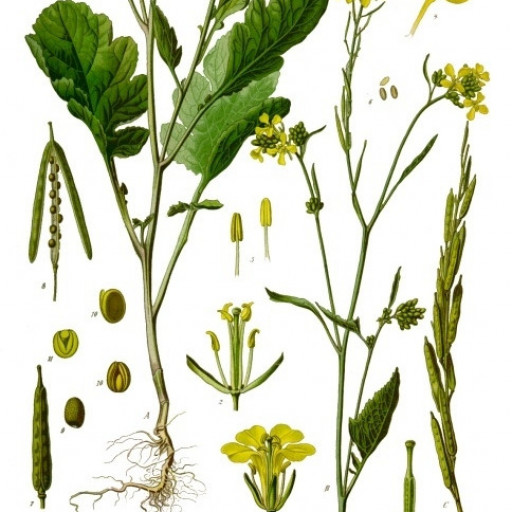
Plant Overview
Meet the bold and spicy Black Mustard, often called the "King of Condiments." Indigenous to the Mediterranean, this ancient herb has traveled the world, earning its place in both culinary history and religious parables. While it might look like a simple roadside wildflower, its tiny seeds pack a fiery punch that has flavored human history for thousands of years.
🔍 How to Identify
- 🌼 Yellow Blooms: It produces clusters of small, bright yellow flowers with four petals arranged in a distinctive cross shape, a hallmark of the cabbage family.
- 🍃 Lobed Foliage: The plant features large, bristly leaves at the base that are deeply lobed, while the leaves higher up the stem are smaller, smoother, and lance-shaped.
- 📏 Upright Pods: Unlike other mustard species whose pods flare outward, the seed pods (siliques) of Black Mustard are held closely and vertically against the main stem.
🏡 In Your Garden
- 🌱 Deep Rooting: This plant develops a strong, persistent taproot that allows it to scavenge for nutrients deep in the soil. Because of this, it hates being moved; once you plant it, it is there to stay for the season.
- 🦋 Pollinator Magnet: If you are looking to support local wildlife, this is a superstar. It is a primary nectar source for honeybees and serves as a host plant for various white and sulfur butterfly larvae.
⚠️ Safety & Toxicity
- 🥗 Edible Status: Generally safe and highly valued for culinary use. The young, tender leaves can be used as spicy greens, and the dark seeds are used to make the most pungent varieties of table mustard.
- 🐾 Skin Irritation: The plant contains sinigrin, which can cause skin irritation or "mustard burns" if crushed seeds or concentrated pastes are left in contact with the skin for too long. It is generally non-toxic to pets, though heavy grazing might cause mild digestive upset.
✨ Fun Fact
The "Mustard Seed" mentioned in famous historical parables is widely believed to be Brassica nigra, chosen specifically because of the dramatic contrast between its microscopic seed and its ability to grow into a massive, branchy shrub that shelters birds.

Detailed Care Instructions
To grow Brassica nigra, also known as black mustard, follow these steps:
- Choose a suitable location: Brassica nigra prefers full sun and well-drained soil. Select an area in your garden that receives at least 6 hours of direct sunlight per day.
- Prepare the soil: Brassica nigra prefers slightly acidic soil with a pH of around 6.0-7.5. Ensure the soil is loose and well-draining. You can amend heavy soil with organic matter, such as compost or well-rotted manure, to improve its texture and drainage.
- Sow the seeds: Brassica nigra is typically grown from seeds. Sow the seeds directly into the prepared soil about half an inch deep, spacing them around 6-12 inches apart.
- Watering: Keep the soil consistently moist during the germination period. Water the plants regularly, providing about 1-2 inches of water per week. Avoid over-watering, as that can lead to root rot.
- Mulching: Apply a layer of mulch around the plants to help conserve moisture, suppress weed growth, and regulate soil temperature.
- Fertilizing: Brassica nigra generally grows well without excessive fertilization. However, you can add a balanced organic fertilizer, such as compost or well-rotted manure, during the planting process to provide essential nutrients.
- Weed control: Regularly remove any weeds that compete with the Brassica nigra plants for nutrients, water, and sunlight. Mulching can also help with weed control.
- Harvesting: It takes about 60-70 days for Brassica nigra to mature. Harvest the plant when the seedpods turn brown and dry. Cut the seed heads and hang them upside down to dry further. Once fully dry, gently beat the seed heads to release the seeds into a container.
- Storing the seeds: Store the collected seeds in a cool, dry place in an airtight container. They should remain viable for several years.
With the right growing conditions and proper care, you can enjoy the growth and harvest of Brassica nigra in your home garden.

Place in a bright room that is sun drenched almost all day. Or directly in a south-facing window.

Brassica nigra is a plant that belongs to the Brassica family. It requires adequate watering to grow and thrive. To water the plant, ensure that the soil is dry to the touch before watering. This can be achieved by inserting a finger into the soil to check for moisture.
Next, use a watering can or hose to water the base of the plant, taking care not to let the water touch the leaves or stem as this can cause diseases. Water the plant evenly to ensure that all parts of the root system receive enough moisture.
During the summer months, water the plant frequently to prevent the soil from drying out completely. However, be careful not to overwater the plant as this can lead to root rot. Reduce watering in the winter months when the plant is dormant.
It is also important to use well-draining soil that allows excess water to drain away from the roots. This prevents waterlogging and root rot. Additionally, adding a layer of mulch around the plant can help retain moisture in the soil.
For best results, fertilize this plant with a balanced fertilizer high in nitrogen. Apply the fertilizer in early spring and again midway through the growing season. Be sure to water thoroughly after fertilizing to ensure that the nutrients reach the roots. Avoid over-fertilizing, as this can result in excessive foliage growth at the expense of flower and seed production.
Brassica Nigra is a member of the Brassica family and requires a well-draining soil that is rich in nutrients. It also prefers a slightly acidic soil with a pH range between 5.5 and 6.5. A loamy soil that is high in organic matter is ideal for the plant's growth and development. The soil should also be able to hold moisture without becoming waterlogged, as this can cause root rot. Addition of compost or well-rotted manure can help in enriching the soil with the required nutrients. It is also important to avoid planting Brassica Nigra in soil that has been used to grow other members of the Brassica family recently, as they can be susceptible to similar pests and diseases.
To propagate this plant, you will need to collect its seeds from mature pods once they have turned brown. After collecting the seeds, store them in a cool, dry place until you are ready to sow them.
To sow the seeds, prepare a potting mix made of equal parts sand, potting soil, and peat moss. Fill small pots with the potting mix and sprinkle the seeds on top. Cover the seeds lightly with additional potting mix and water them in.
Place the pots in a warm, bright location, such as a sunny windowsill or under a grow light. Keep the soil moist but not waterlogged and wait for the seeds to germinate. This usually takes about 7-10 days.
Once the seedlings have emerged, thin them out so that each pot only has one or two strong seedlings. Continue to water and care for the seedlings until they are large enough to be transplanted into larger pots or out into the garden.
When transplanting, choose a sunny location with well-drained soil and space the plants about 6-8 inches apart. Water the plants regularly and fertilize them with a balanced fertilizer once a month. With proper care, your Brassica Nigra plants will grow strong and healthy, producing seeds for future propagation.
Common pests of the black mustard include Aphids, larvae. Make a habit of checking your black mustard frequently for pests so that any infestations can be caught and managed early.








