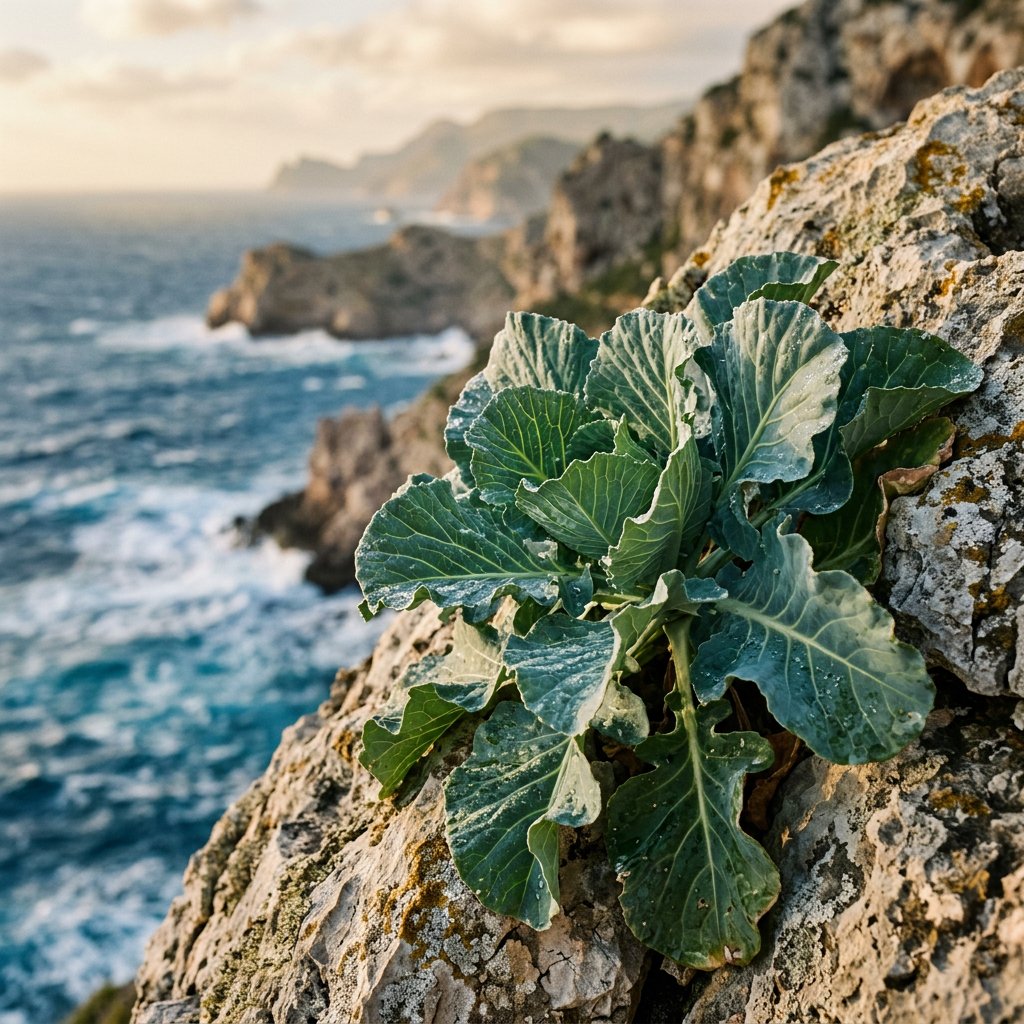
Plant Overview
Known as the "Shapeshifter of the Garden," Brassica oleracea is perhaps the most impressive example of selective breeding in human history. From a single wild coastal weed, humans have cultivated an entire grocery store aisle: Kale, Broccoli, Cauliflower, Cabbage, and Brussels Sprouts are all actually the same species! Whether it's growing wild on a cliffside or tucked into a raised bed, this plant is a powerhouse of nutrition and resilience.
🔍 How to Identify
- 🥬 Glaucous Leaves: Most varieties feature thick, waxy leaves with a distinct blue-green or "frosty" coating that helps the plant shed water.
- 🌼 Cruciform Flowers: When it "bolts" (goes to seed), it produces small, four-petaled yellow flowers that form the shape of a cross—giving the family its "Cruciferous" nickname.
- 🧥 The Wild Form: In its natural state, it looks like a tall, leggy weed with a tough, woody base and a loose rosette of leaves at the top.
🏡 In Your Garden
- ❄️ Cool Weather Lovers: These plants hate the heat. They are best grown in the "shoulder seasons" of spring and autumn; a light frost can actually make the leaves taste sweeter by converting starches into sugars.
- 🍽️ Heavy Feeders: Because they produce so much dense biomass (like heavy cabbage heads), they require nutrient-rich soil and a steady supply of nitrogen to thrive.
- 🦋 The Butterfly Battle: Be prepared to share! The Cabbage White butterfly loves this plant, and its green caterpillars can quickly turn the leaves into lace if not managed.
⚠️ Safety & Toxicity
- ✅ Safe & Nutritious: Entirely non-toxic to humans and generally safe for pets. In fact, it is one of the most nutrient-dense foods on the planet.
- 🐕 Pet Note: While safe, feeding large amounts of raw brassicas to dogs can cause gas or minor tummy upset due to high fiber and natural sulfur compounds.
✨ Fun Fact
If you lived 2,000 years ago, you would only recognize the "Kale" version of this plant. It took centuries of farmers picking specific traits—like bigger flower buds or fatter stems—to "create" Broccoli and Kohlrabi from the original wild cabbage.

Detailed Care Instructions
Brussels sprouts aren't overly complicated to grow, as long as you can meet their environmental needs—namely enough sunlight and even moisture.
How long does it take to grow Brussels sprouts?
Brussels sprouts have a fairly long growing season of around 80 to 100 days on average from planting to harvesting. Some varieties have been bred to have slightly shorter growing seasons.
Do Brussels sprouts come back every year?
Brussels sprouts are biennials, meaning they complete their life cycle in two growing seasons. However, most gardeners treat them as annuals and start with a fresh plant each year.
| Color | Green, Purple, White |
| Soil Ph | Above 6.8 |
| Humidity | Normal |
| Invasive | Weed |
| Lighting | Part Sun |
| Toxicity | Non-Toxic |
| Soil Type | Loamy |
| Bloom Time | Non-Flowering |
| Difficulty | Medium |
| Plant Type | Biennial |
| Mature Size | 12-18 Inches Tall |
| Native Area | Europe |
| Temperature | 7°C - 25°C |
| Sun Exposure | Full Sun |
| Hardiness Zones | 1-11 |
To grow Brassica Oleracea, commonly known as cabbage, follow these steps:
- Choose the right variety: There are several types of Brassica Oleracea, including green cabbage, red cabbage, savoy cabbage, kale, broccoli, and cauliflower. Select the type of cabbage you want to grow based on your preferences and growing conditions.
- Start seeds indoors (optional): Cabbage can be grown from seeds directly sown in the garden or started indoors for an earlier harvest. If starting indoors, sow the seeds in seed trays or small pots filled with seed-starting mix about 6-8 weeks before the last frost date. Keep the soil evenly moist and provide sufficient light.
- Prepare the soil: Cabbage prefers well-drained, fertile soil. Before planting, enrich the soil with organic matter like compost or well-rotted manure. Remove any weeds and loosen the soil to a depth of about 8-10 inches.
- Planting: Transplant seedlings outdoors when they are 4-6 weeks old and have developed 4-5 true leaves. Space the seedlings about 12-18 inches apart in rows with 18-24 inches between rows. If sowing seeds directly in the garden, plant them ¼ inch deep and thin them to the desired spacing when they are 2-3 inches tall.
- Provide sunlight: Cabbage needs at least 6 hours of direct sunlight each day. Choose a sunny spot in your garden to maximize its growth.
- Watering: Cabbage requires consistent moisture to develop properly. Water the plants regularly, keeping the soil evenly moist, but not waterlogged. Consider mulching around the plants to retain soil moisture and prevent weed growth.
- Fertilization: Fertilize the cabbage plants about 3-4 weeks after transplanting. Use a balanced fertilizer or compost for adequate nutrition. Follow the recommended dosage instructions on the fertilizer packaging.
- Pest and disease control: Protect the cabbage plants from common pests like cabbage worms, aphids, and cabbage loopers. Consider using organic pest control methods like hand-picking pests, applying insecticidal soap or neem oil, or using row covers to prevent infestations. Monitor the plants regularly for any signs of disease like clubroot or cabbage yellows, and take appropriate measures to control them.
- Harvesting: Cabbage is usually ready for harvest 70-90 days after planting, depending on the variety. Harvest the cabbage heads when they have reached the desired size and firmness. Cut the heads just above the first set of leaves using a sharp knife. Leave the roots in the ground to decompose and enrich the soil for the next crop.
By following these steps, you can successfully grow Brassica Oleracea plants, such as cabbage, in your garden.

Place in a window with dappled sun or a spot in the middle of a room. Or directly in a window facing west or east.

To properly water this plant, it is essential to thoroughly wet the soil in the plant's pot or garden bed. It is recommended to use room temperature water to avoid shocking the plant's roots. A good rule of thumb is to water the plant deeply once or twice a week, depending on the outdoor weather conditions, which are based on factors such as humidity levels and amount of rainfall. It is important to avoid overwatering the plant, which can lead to root rot and other diseases that can harm the plant. One way to check if the plant needs water is to stick your finger about an inch into the soil. If it feels dry, it is time to water the plant. If the soil feels moist, it can wait a day or two before watering. When watering, it is best to avoid getting water on the plant's leaves as it can lead to fungal diseases. Finally, it's important to note that different varieties of this plant have different watering needs so it's always important to research the specific type of plant to ensure utmost care.
To fertilize this plant, use a balanced fertilizer that contains equal parts of nitrogen, phosphorus, and potassium. Apply the fertilizer at least once every three weeks during the growing season, taking care to avoid getting the fertilizer on the plant leaves. Water the plant thoroughly after fertilizing to help the nutrients penetrate the soil. Additionally, if the soil is deficient in any specific micronutrients, such as magnesium or iron, consider adding a fertilizer that specifically addresses these deficiencies. Monitor the plant carefully for signs of over-fertilization, such as yellowing leaves or stunted growth, and adjust your fertilization schedule accordingly.
The soil for Brassica Oleracea should be well-draining and loose. It should be nutrient-rich, with a pH level between 6.0 and 7.5. Amendments such as compost or manure can be added to improve soil quality. Adequate moisture is important, but the soil should not be waterlogged. It is recommended to avoid salty or alkaline soils, as they can inhibit growth and cause nutrient deficiencies.
To propagate this plant, you will need to start by collecting seeds from the mature plant. Once you have harvested the seeds, you should start by preparing a potting mixture that is a combination of peat moss and perlite. You can then fill small pots with this mixture and sow a couple of seeds in each pot.
You should then cover the pots with plastic wrap or a clear plastic bag and place them in a warm and bright location. The seeds will germinate within a couple of weeks, and once the seedlings have grown to around 2 inches, you can start transplanting them to their permanent location.
To transplant, you should dig a hole in the ground that is slightly larger than the size of the seedling's root ball. Gently remove the seedling from its pot, making sure to keep the root ball intact. Place the seedling into the hole and fill it with soil, patting it down gently.
You should then water the newly-transplanted seedling thoroughly and keep the soil moist until the plant establishes itself. After this, you can continue to care for the Brassica Oleracea plant as you would any other, making sure to water it regularly and fertilize it as needed.
Common pests of the cabbage include Aphids, larvae. Make a habit of checking your cabbage frequently for pests so that any infestations can be caught and managed early.








