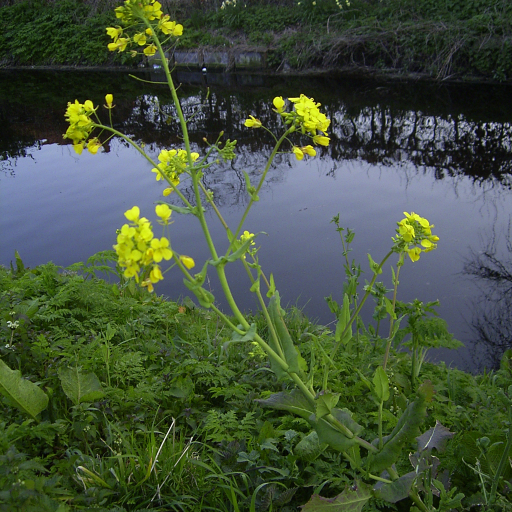
Plant Overview
Often called "the chameleons of the vegetable patch," the Brassica genus includes some of the world’s most famous greens—from kale and broccoli to cabbage and mustard. These plants have been cultivated for thousands of years, evolving from a single wild maritime weed into a diverse family of "cruciferous" superstars. Whether you are growing them for their nutritious leaves or their peppery flowers, they are the backbone of the cool-season garden.
🔍 How to Identify
- 🌼 The "Crucifer" Flower: All Brassica plants produce flowers with four petals arranged in the shape of a cross (hence the name "cruciferous"). They are most commonly bright yellow or white.
- 🥬 Waxy Foliage: Most species have "glaucous" leaves, meaning they are coated in a fine, bluish-gray wax. This coating helps the plant shed water and protects it from drying winds.
- 👃 The Signature Scent: If you bruise a leaf or stem, you will notice a distinct, slightly pungent sulfurous aroma. This is the plant's natural defense system against hungry insects.
🏡 In Your Garden
- ❄️ The Chill Factor: Brassicas are famous for their love of cool weather. In fact, many varieties—like kale and Brussels sprouts—actually taste sweeter after a light frost, as the plant converts starches into sugars to act as a natural antifreeze.
- 🐛 The Cabbage White Rivalry: If you see small white butterflies fluttering around your plants, be on guard! They lay eggs that hatch into "cabbage worms," which can turn your leaves into Swiss cheese overnight. Many gardeners use row covers to keep these visitors away.
- 🍴 Heavy Feeders: Because they produce so much dense foliage or heavy heads (like cauliflower), they require nutrient-rich soil. They appreciate a "side-dressing" of compost halfway through their growing season to keep their energy up.
⚠️ Safety & Toxicity
- 🥦 Safe for Humans: They are highly nutritious "superfoods" for humans, packed with Vitamin K and C. However, eating them raw in massive quantities can occasionally interfere with thyroid function in sensitive individuals.
- 🐾 Pet Precaution: While small amounts of cooked broccoli or kale are generally fine for dogs, Brassicas contain isothiocyanates which can cause gastric irritation. In very large amounts, they can be toxic to livestock like horses or cattle, leading to digestive upset or anemia.
✨ Fun Fact
Believe it or not, broccoli, kale, cabbage, cauliflower, kohlrabi, and Brussels sprouts are all actually the exact same species (Brassica oleracea). They simply look different because humans have spent centuries selectively breeding them to emphasize different parts of the plant, such as the buds, the leaves, or the stems!

Detailed Care Instructions
| Humidity | Normal |
| Lighting | Part Sun |
| Difficulty | Easy |
| Temperature | 14°C - 25°C |
| Hardiness Zones | 3 - 12 |

Place in a bright room that is sun drenched almost all day. Or directly in a south-facing window.

When watering this plant, it is important to avoid getting water on the leaves, as this can lead to the development of fungal diseases. Instead, aim to water the soil around the base of the plant.
Watering should be done deeply and infrequently, rather than frequently and lightly. This means giving the plant a good soaking when you water, and then allowing the soil to dry out somewhat before watering again.
The exact frequency of watering will depend on a variety of factors, including the size of the plant, the temperature and humidity in the environment, and the type of soil it is planted in. The best way to determine when to water is to stick your finger into the soil around the plant; if it feels dry to a depth of about an inch, it's time to water.
Finally, it's important to pay attention to the moisture needs of your plant as it grows and develops. As it gets bigger, it will likely require more water than it did when it was smaller. Additionally, if the plant begins to show signs of nutrient deficiencies or other problems, it may be an indication that it needs more or less water.
The soil that is ideal for growing Brassica plants should be well-draining and rich in nutrients. It should have a slightly acidic pH level, around 6.0 to 6.5, and have good organic matter content to ensure proper aeration and water retention. The soil should be fertile with adequate amounts of nitrogen, phosphorus, and potassium to encourage healthy growth and development of the plant. It should also be free of pathogens such as clubroot, which can cause stunted growth and delay the plant's life cycle. Additionally, the soil should be kept moist but not waterlogged to avoid fungal diseases and root rot.







