Plant Overview
Known as the "Hairy Bredia" or simply Bredia, this charming East Asian native is a hidden gem for shade gardeners. Hailing from the cool, damp woodland floors of Taiwan and Japan, it acts as a lush, flowering groundcover that brings a pop of delicate color to the darkest corners of a garden. Its species name, hirsuta, perfectly describes its personality, referring to the fine, soft hairs that cover its stems and leaves.
🔍 How to Identify
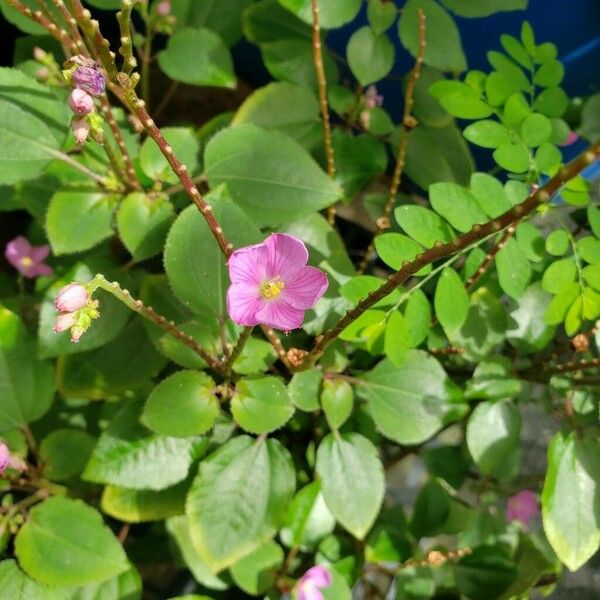
- 🌸 The Flowers: Small, four-petaled blossoms in shades of bright pink to lavender, accented by prominent, curved yellow stamens that look like tiny eyelashes.
- 🍃 The Foliage: Heart-shaped or ovate leaves with finely serrated (toothed) edges. The leaves are deep green on top, sometimes showing a subtle reddish tint underneath.
- 🧶 The Texture: Both the stems and the leaf surfaces are covered in soft, fine hairs (trichomes), giving the plant a velvety appearance and a slightly fuzzy feel.
🏡 In Your Garden
- ☁️ Woodland Preferences: Because it evolved under forest canopies, Bredia hirsuta is highly sensitive to direct afternoon sun, which can scorch its delicate hairy leaves. It thrives in dappled light or full shade.
- 💧 Humidity Lover: This plant is a fantastic choice for "wet feet" spots or near garden water features. It dislikes drying out completely and prefers consistently moist, slightly acidic soil rich in organic matter.
- 🌱 Low Profile: It maintains a low, spreading habit, making it an excellent "filler" plant that weaves between taller shrubs or spills gracefully over the edges of shaded containers.
⚠️ Safety & Toxicity
- ✅ Safe Status: Bredia hirsuta is generally considered non-toxic to humans and common household pets.
- 🐾 Pet Note: While it lacks the dangerous alkaloids found in many garden plants, sensitive pets might experience mild stomach upset if they ingest large amounts of the fuzzy foliage. As always, it is best to discourage chewing.
✨ Fun Fact
Bredia belongs to the Melastomataceae family, the same family as the famous "Princess Flower." Like its cousins, it uses "buzz pollination"—the flowers only release their pollen when a bee vibrates its wing muscles at a specific frequency!

Detailed Care Instructions

Place in a window with dappled sun or a spot in the middle of a room. Or directly in a window facing west or east.

Some plants require more regular watering than others, which should be done every few days. It's critical to maintain the soil moist all of the time. The water requirements of the same plant placed in pots with varying sizes will differ. Because the water in the smaller pot evaporates faster than the water in the larger pot, it will require more watering. Regardless of pot size, the surface should constantly be maintained moist.








