Plant Overview
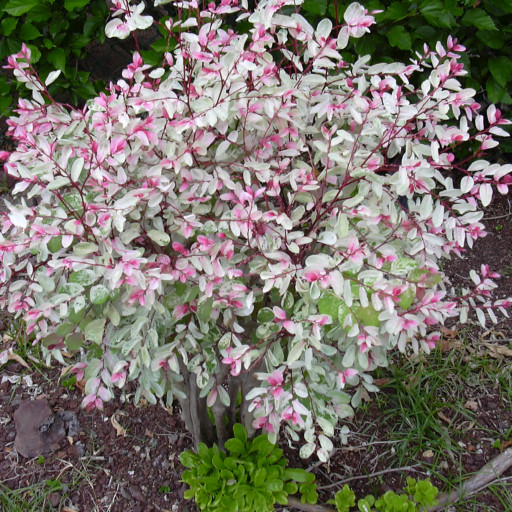
Often called the "Snow-on-the-Bush" or "Hawaiian Snow Bush," this tropical shrub from the Pacific Islands looks like a winter wonderland in the middle of summer. Its delicate foliage transitions from deep green to snowy white and even soft pink at the tips, creating a permanent frosted effect. It is a favorite for gardeners wanting a "flowering" look without having to wait for actual blooms to appear.
🔍 How to Identify
- 🌿 Variegated Foliage: The most striking feature is the color; new growth at the branch tips is almost pure white or speckled with pink, while older leaves at the base remain green.
- 📉 Zigzag Stems: If you look closely at the branches, they grow in a distinct, slightly angular zigzag pattern rather than in perfectly straight lines.
- 🍃 Leaf Shape: The leaves are small, thin, and elliptical or rounded, arranged alternately along the stems, giving the entire bush a soft, airy, and cloud-like texture.
🏡 In Your Garden
- 💧 The "Thirsty" Shrub: This plant is famously dramatic; it will wilt visibly the moment its soil dries out. It prefers consistently moist (but not soggy) soil and high humidity to prevent the leaf tips from turning brown and crispy.
- ☀️ Light for Color: To maintain that "snowy" white and pink variegation, it needs plenty of bright, indirect light. If kept in too much shade, the plant will "revert," meaning the new leaves will turn solid green to try and soak up more energy.
⚠️ Safety & Toxicity
- 🚫 Status: Low to Moderate Toxicity.
- 🐾 Details: The plant contains chemical compounds that can cause vomiting or diarrhea if ingested. It is best to keep this beauty out of reach of curious cats, dogs, or toddlers who might be tempted by its colorful leaves.
✨ Fun Fact
Despite its name and "blooming" appearance, the "flowers" of the Breynia disticha are actually tiny, green, and hidden underneath the leaves. What most people mistake for petals are actually just highly specialized, colorful foliage!

Detailed Care Instructions
| Lighting | Full Sun |
| Hardiness Zones | 9B - 11 |
To grow a Breynia Disticha plant, also known as the Snowbush Plant or Dwarf Ixora, you can follow these steps:
- Select a suitable location: Breynia Disticha prefers bright, indirect sunlight. Choose a spot with partial shade or filtered sunlight. If growing indoors, place it near a window that receives indirect sunlight.
- Prepare the soil: Use a well-draining soil mix that is rich in organic matter. Breynia Disticha prefers slightly acidic to neutral soil with a pH range of 5.5 to 7.
- Watering: Keep the soil consistently moist but not waterlogged. Water the plant whenever the top inch of soil feels dry. Avoid letting the soil dry out completely or sitting in water.
- Temperature and humidity: The ideal temperature range for Breynia Disticha is between 60-75°F (15-24°C). It prefers a moderate to high humidity environment, so misting the leaves occasionally can help to increase humidity.
- Fertilization: Apply a balanced liquid fertilizer diluted to half strength every two weeks during the growing season (spring and summer). Reduce fertilization during fall and winter.
- Pruning: Prune the plant to maintain its shape and control its size. Regular pruning can also encourage bushier growth and prevent it from becoming leggy.
- Pests and diseases: Monitor for common plant pests such as aphids, spider mites, and mealybugs. If infestations occur, treat them with insecticidal soap or neem oil. Ensure good air circulation to prevent fungal diseases.
- Propagation: Breynia Disticha can be propagated through stem cuttings. Take 4-6 inch (10-15 cm) long cuttings from healthy stems, remove the lower leaves, and place them in a moist propagation mix. Keep them in a warm, humid environment until roots develop.
By following these guidelines and providing proper care, your Breynia Disticha plant should thrive and grow well.

Place in a window with dappled sun or a spot in the middle of a room. Or directly in a window facing west or east.

Breynia Disticha is a plant that requires adequate watering for its healthy growth and development. To properly water the plant, one needs to follow a few basic steps.
Firstly, place the plant in a container that has good drainage holes. This ensures that excess water is drained out seamlessly and prevents the plant from getting water-logged. Secondly, water the plant when the soil feels dry to the touch. Avoid overwatering as it can lead to root rot and other diseases.
One way to check if the plant needs watering is to stick a finger into the soil up to an inch deep and see if it feels dry. Alternatively, one can use a moisture meter to measure the moisture level of the soil. If the reading is low, it’s time to water the plant.
While watering, ensure that the water is distributed evenly on the soil surface, so that it can penetrate deep into the roots. It’s best to water the plant in the early morning or late evening when the temperature is cooler. This prevents the water from evaporating quickly and helps the plant absorb the water better.
Avoid sprinkling water on the leaves as it can lead to water spots and fungal infections. Lastly, continue to monitor the plant’s watering needs as the weather and seasons change. With proper watering, the Breynia Disticha plant can thrive and become a beautiful addition to any indoor or outdoor garden.
To fertilize the Breynia Disticha plant, you should first select a balanced fertilizer that contains equal amounts of nitrogen, phosphorus, and potassium. During the growing season, feed the plant with this fertilizer every 2-3 weeks. Be sure to dilute the fertilizer according to the instructions on the package to avoid over-fertilizing and burning the plant's roots. Additionally, apply a layer of organic mulch around the base of the plant to help retain moisture and nutrients in the soil. Finally, water the plant regularly and avoid letting the soil dry out completely between waterings.
Breynia Disticha is a plant that prefers to grow in a well-draining soil mix that is composed of a mixture of different organic matter and inorganic matter. The soil mix should contain a balanced mixture of soil, sand, peat moss or compost, and perlite or pumice to ensure that the plant receives enough nutrients and water while also allowing for proper drainage. It is important to avoid using heavy clay soils or soils that retain too much moisture, as this can lead to root rot and other fungal diseases in the plant. Additionally, it is recommended to fertilize the soil with a balanced fertilizer regularly throughout the growing season to ensure that the plant receives all of the necessary nutrients needed for healthy growth.
To propagate this plant, take stem cuttings with two to three leaves at the tip. Cut the stems with a sharp and clean pair of pruning shears and remove any leaves from the bottom inch of the stem. Dip the cut end in rooting hormone powder and plant it in a pot filled with well-draining soil. Place the pot in a warm and humid spot with bright, indirect sunlight. Keep the soil moist but not waterlogged. After several weeks, the cutting should develop roots and new growth. Once the roots have developed, transplant the young Breynia Disticha plant into a larger pot or directly into the garden.
Common pests of the snowbush include Mealybugs, spider mites, aphids, larvae. Make a habit of checking your snowbush frequently for pests so that any infestations can be caught and managed early.








