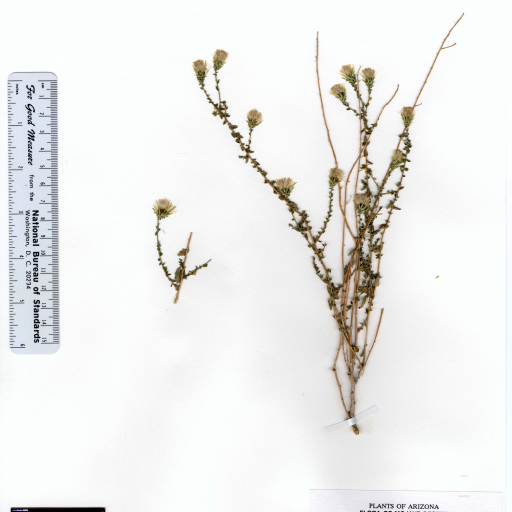
Plant Overview
Known as the Shrubby Brickellbush, this desert native is a master of survival in the arid landscapes of the American Southwest. It is often found clinging to rocky slopes or tucked away in dry canyons, where its subtle, creamy flowers provide a vital nectar source for late-season pollinators. While it may not have the flashy colors of a garden rose, its architectural, twiggy form adds a unique "wild desert" aesthetic to any xeriscape.
🔍 How to Identify
- 🌼 The Flowers: Unlike many of its cousins in the Aster family, it lacks "petals" (ray florets). Instead, look for small, tassel-like clusters of creamy-white or pale yellow tubular flowers at the ends of the branches.
- 🍃 The Foliage: The leaves are small, somewhat oval, and feel slightly leathery or resinous to the touch. They often have a subtle grey-green hue to help reflect the harsh desert sun.
- 🎋 The Structure: It grows as a low, rounded shrub with many stiff, brittle branches that become increasingly woody at the base as the plant matures.
🏡 In Your Garden
- 🏜️ Drainage is King: This plant has evolved to thrive in rocky, poor soil. If you plant it in heavy clay or over-water it, the roots will likely rot; it prefers a "high and dry" position with excellent drainage.
- 🦋 Pollinator Magnet: While humans might overlook the small blooms, butterflies and moths find them irresistible. It is an excellent choice for a habitat garden aimed at supporting native southwestern insects.
- ✂️ Pruning Needs: It is naturally "scrappy." To keep it looking tidy in a home garden, a light pruning after the flowering season can help encourage a denser, more rounded shape.
⚠️ Safety & Toxicity
- 🟢 Non-Toxic: Brickellia frutescens is generally considered non-toxic to humans and common household pets like dogs and cats.
- 🌿 Skin Sensitivity: Because the leaves can be resinous (sticky), people with very sensitive skin might experience mild irritation if handling the plant extensively without gloves.
- 🚫 Not for Consumption: While not "poisonous," it is not an edible plant for humans and should not be ingested.
✨ Fun Fact
The genus name Brickellia honors Dr. John Brickell, an 18th-century physician and naturalist. The "Shrubby Brickellbush" is specifically adapted to survive temperatures that would wither most garden plants, using its resinous leaf coating to seal in moisture during the peak of summer.

Detailed Care Instructions

Water-loving plants flourish in wet or sloppy soil and near ponds. The extensive root system enables these plants to absorb plenty of water. The surface of the soil should be kept moist at all times. Place your pot in a container filled with water to guarantee that plants get enough water. If the ground becomes dry, it is recommended that you water it well. Plants in smaller pots will need to be watered more frequently. Water the soil in which the plant is standing thoroughly using a watering can.








