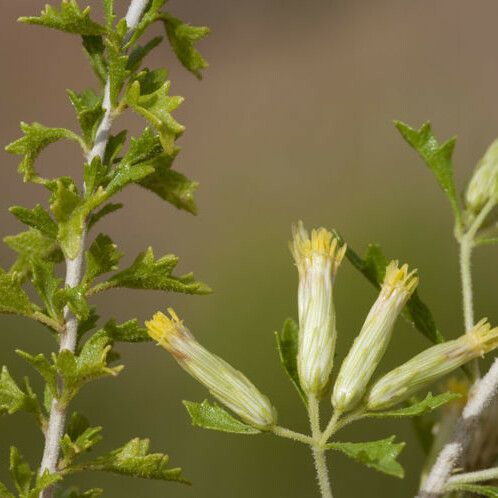
Plant Overview
The Splitleaf Brickellbush is a resilient desert native that thrives where other plants might wither under the sun. Found clinging to the rocky slopes of Texas, New Mexico, and Northern Mexico, it acts as a tough, textured backbone for xeric (water-wise) landscapes. Its intricate, "laciniate" foliage gives it a delicate, lacy appearance that belies its rugged survival skills.
🔍 How to Identify
- 🍃 Lacy Foliage: The leaves are the star of the show—small, deeply lobed, and almost "ragged" looking, which gives the plant a distinctively feathery texture.
- 🌼 Subtle Blooms: Instead of showy petals, it produces clusters of small, creamy-white or greenish-yellow flower heads that consist entirely of disc florets, appearing in late summer.
- 🪵 Shrubby Habit: It grows as a woody, multi-branched shrub that typically stays under four feet tall, often maintaining a wild, airy, and rounded shape.
🏡 In Your Garden
- 🏜️ The Ultimate Survivor: Because it hails from the Chihuahuan Desert, it is exceptionally drought-tolerant. It thrives in "neglected" spots with rocky, limestone-heavy soil where drainage is extremely fast.
- 🦋 Pollinator Magnet: While the flowers are modest to the human eye, they are a vital late-season food source. It acts as a bustling "gas station" for butterflies and bees during the heat of late summer.
⚠️ Safety & Toxicity
- ✅ Non-Toxic Status: Brickellia laciniata is generally considered non-toxic to humans and common household pets like dogs and cats.
- 🧤 Skin Sensitivity: Like many members of the Aster family, some individuals may experience mild skin irritation or "contact dermatitis" if they handle the crushed leaves frequently without gloves.
✨ Fun Fact
The genus was named in honor of Dr. John Brickell, an 18th-century physician and naturalist. Though he was a medical doctor, he became famous for his early botanical expeditions, helping to map the unique flora of the American wilderness.

Detailed Care Instructions
To grow Brickellia Laciniata, also known as Cutleaf Brickellbush or Wild Snowberry, you can follow these steps:
- Choose the right location: Brickellia Laciniata prefers full sun to partial shade. Make sure the selected spot receives at least 6 hours of direct sunlight per day.
- Prepare the soil: The plant thrives in well-draining soil. Prepare the planting area by removing any weeds, rocks, or debris. If the soil is heavy or clayey, consider adding organic matter such as compost or well-rotted manure to improve drainage.
- Sow or transplant: You can grow Brickellia Laciniata from seeds, divisions, or transplants. If starting from seeds, sow them indoors about 6-8 weeks before the last frost date. Once the seedlings develop a few sets of true leaves, you can transplant them outdoors. If using divisions or transplants, plant them directly in the prepared soil.
- Watering: Water the plant regularly, especially during the establishment period. Keep the soil moist but not waterlogged. Once the plant is established, it can tolerate short periods of drought.
- Mulching and weeding: Apply a layer of mulch around the base of the plant to conserve moisture, suppress weed growth, and regulate soil temperature. Regularly remove any weeds that may compete with the Brickellia Laciniata for nutrients and water.
- Pruning: Brickellia Laciniata benefits from periodic pruning to maintain a compact and bushy shape. Prune back any dead, damaged, or overgrown branches in early spring before new growth begins.
- Fertilization: Since Brickellia Laciniata is a native plant, it usually doesn't require much fertilization. However, you can opt for a balanced slow-release fertilizer in early spring if necessary, following the package instructions.
- Pests and diseases: Brickellia Laciniata is relatively resistant to pests and diseases. However, it may occasionally be affected by aphids, spider mites, or powdery mildew. Keep an eye out for any signs of infestation or disease and address them promptly using organic pest control methods if necessary.
By following these steps, you should be able to successfully grow Brickellia Laciniata and enjoy its attractive foliage and delicate flowers.

To adequately water this plant, first assess the moisture level of the soil by sticking your finger a few inches into the dirt. If the soil is dry, water the plant at the base, being careful not to get water on the foliage. Use a watering can or a hose with a gentle stream to ensure the roots are receiving enough water. Be sure not to overwater, as this can lead to root rot. It is best to water deeply and less frequently rather than shallowly and frequently. Consider using a saucer or tray underneath the plant to catch any excess water and prevent it from soaking back up into the soil.
To fertilize this plant, apply a balanced, slow-release fertilizer in early spring and then again in mid-summer. Be sure to follow the instructions on the fertilizer packaging for specific application rates. Water the plant thoroughly after fertilizing to help the nutrients reach the roots. Avoid over-fertilizing, as it can lead to excessive growth and decreased health of the plant.
Brickellia Laciniata plant prefers well-draining soil that is rich in organic matter and has a slightly acidic to neutral pH. The soil should have good moisture retention capacity and allow the roots to breathe. Avoid heavy or clay soils and those that remain waterlogged for prolonged periods as they can lead to root rot. A mixture of sand, peat moss, and perlite can be added to the soil to improve drainage and texture, but it should not be too sandy as it dries out quickly. Adding compost or aged manure to the soil can provide the necessary nutrients for healthy growth. Regularly testing the soil's pH level and adjusting it as necessary can prevent nutrient deficiencies and other problems.
To propagate this plant, you can take stem cuttings from mature plants. Select a healthy stem with at least two leaf nodes. Use a clean, sharp knife to make a diagonal cut just below a leaf node. Remove the lower leaves from the stem, leaving only a few at the top. Dip the cut end in rooting hormone powder to encourage root growth. Plant the cutting in a well-draining potting mix and keep it moist but not waterlogged. Place the pot in a warm, bright location but out of direct sunlight. With proper care, roots should start to form within a few weeks. Once the cutting has rooted and established, it can be transplanted into a larger pot or outdoor garden.








