Plant Overview
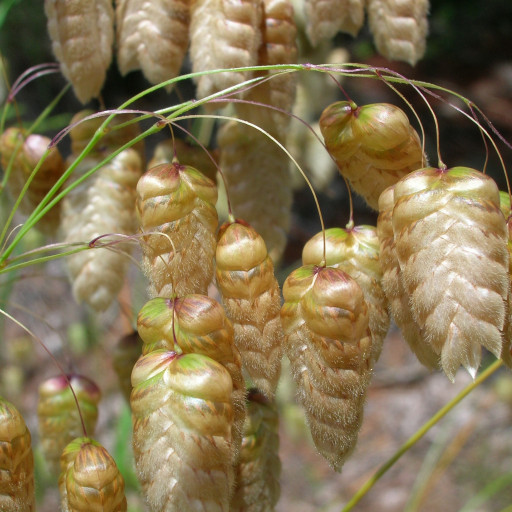
Known fondly as "Greater Quaking Grass" or "Rattlesnake Grass," this Mediterranean native is a master of movement. It earns its name from the delicate, lantern-like seed heads that dangle from wiry stems, trembling and "quaking" at the slightest hint of a breeze. It’s a whimsical addition to any landscape, often looking like a collection of tiny, papery bells suspended in mid-air.
🔍 How to Identify
- 🌾 Seed Heads: Large, heart-shaped spikelets that hang in clusters. They begin as a pale lime green and mature into a shimmering, papery golden-bronze.
- 🌿 Stems & Foliage: Slender, upright stems that can reach up to 2 feet tall, emerging from a base of narrow, flat green grass blades.
- 🎐 Texture: The seed heads have a distinct "ribbed" or layered appearance, resembling the tail of a rattlesnake or a tiny, striped cocoon.
🏡 In Your Garden
- 🌬️ Movement and Sound: This plant is grown specifically for its kinetic energy. Planting it where it can catch the wind adds a sensory layer to the garden, as the dry seed heads make a soft, rustling "hushing" sound.
- 💐 The Florist’s Favorite: It is highly sought after for both fresh and dried floral arrangements. Because the seed heads are papery and dry naturally on the stem, they keep their shape and charm for years in a vase.
- 🌱 Self-Sowing Nature: While it is an annual grass, it is a prolific self-seeder. If you leave the seed heads through the winter, expect to see "volunteers" popping up in the spring, making it a low-maintenance, permanent resident of the garden.
⚠️ Safety & Toxicity
- ✅ Status: Non-toxic and generally safe.
- 🐾 Details: Briza maxima is not known to be poisonous to cats, dogs, or horses. However, like all ornamental grasses, the dry seed heads can occasionally cause mechanical irritation if stuck in a pet's fur or paws, or if accidentally inhaled by a curious sniffer.
✨ Fun Fact
The genus name Briza comes from the Greek word "brizo," which means "to nod" or "to sleep," perfectly describing the rhythmic, sleepy bowing motion the grass makes as it dances in the wind.

Detailed Care Instructions
| Humidity | Normal |
| Lighting | Part Sun |
| Difficulty | Medium |
| Temperature | Min 20°C |
| Hardiness Zones | 5 - 9 |
To grow Briza Maxima plants, follow these steps:
- Choose the right location: Briza Maxima plants prefer full sun to partial shade, so find a spot in your garden that receives at least six hours of sunlight per day.
- Prepare the soil: Briza Maxima plants prefer well-draining soil with a pH range of 6.0 to 7.5. Amend the soil with organic matter like compost or well-rotted manure to improve drainage and fertility.
- Sow the seeds: Sow the seeds directly into the garden bed in spring after the last frost or start them indoors 6-8 weeks before the last frost date. Spread the seeds evenly on the soil surface and lightly press them into the soil. Keep the soil slightly moist but not waterlogged.
- Thin the seedlings: Once the seedlings emerge and develop 2-3 true leaves, thin them to allow spacing of about 6-8 inches between plants. This will give the Briza Maxima plants enough room to grow and prevent overcrowding.
- Watering: Keep the soil consistently moist but not waterlogged. Water deeply once or twice a week, ensuring the water penetrates the soil to encourage deep root growth.
- Mulching: Apply a layer of organic mulch, such as straw or wood chips, around the plants to help retain moisture, suppress weed growth, and regulate soil temperature.
- Fertilizing: Briza Maxima plants generally do not require much fertilization. However, you can give them a balanced, slow-release fertilizer once or twice during the growing season to encourage healthy growth.
- Maintenance: Remove any weeds that compete with the plants for nutrients and water. Cut back the plants to the ground after the first frost in winter to prepare them for the next growing season.
- Propagation: Briza Maxima plants readily self-seed. Allow some of the plants to go to seed and drop their seeds in the garden bed to encourage natural propagation.
With proper care, your Briza Maxima plants should grow beautifully and produce their delicate, nodding seed heads.

Place in a bright room that is sun drenched almost all day. Or directly in a south-facing window.

To water this plant, you should select a watering container and fill it with water. Next, gently pour the water onto the soil around the base of the plant until the soil is moistened. Be careful not to overwater the plant, as this can lead to root rot. Allow the soil to dry out slightly before watering again, and adjust the frequency of watering based on the needs of the plant. Additionally, make sure the plant is receiving adequate sunlight and nutrients to promote healthy growth.
To fertilize this plant, use a balanced N-P-K fertilizer with equal ratios of the three nutrients. Apply the fertilizer once a month during the growing season, from spring to fall. Be careful not to over-fertilize, as this can lead to burning of the roots and foliage. Water the plant thoroughly before and after fertilizing to ensure the nutrients are absorbed properly.
When growing Briza Maxima plants, it is best to use a well-draining, nutrient-rich soil that is pH-balanced. The soil should also be able to retain moisture while still allowing for proper drainage to prevent overwatering and root rot. It is recommended to use soil that is mixed with organic matter, such as compost or peat moss, to improve soil fertility and water retention. Additionally, adding perlite or sand to the soil can help improve drainage and prevent soil compaction. It is also important to ensure that the soil is free of pests, diseases, or chemical residues that could harm the plant.
To propagate this plant, you will need to obtain a cutting from a healthy adult plant. Use a clean and sharp pair of scissors or pruning shears to make a clean cut on a stem that is at least 4-6 inches long.
Next, remove the leaves from the bottom two-thirds of the stem and dip the cut end into a rooting hormone powder. This will help the stem develop roots more quickly.
Fill a small pot with well-draining soil and create a hole in the center. Insert the stem into the hole and gently pack the soil around the base to secure it in place.
Water the soil until it is moist but not waterlogged and cover the pot with a plastic bag or dome to create a humid environment for the cutting. Place the pot in a bright but indirect light location and keep the soil moist until the stem has developed roots and new growth has appeared.
Once the new plant has grown a few leaves and established root growth, it can be transplanted into a larger pot or planted in the garden outdoors.
Common pests of the great quaking grass include Spider mites, thrips. Make a habit of checking your great quaking grass frequently for pests so that any infestations can be caught and managed early.








