Plant Overview
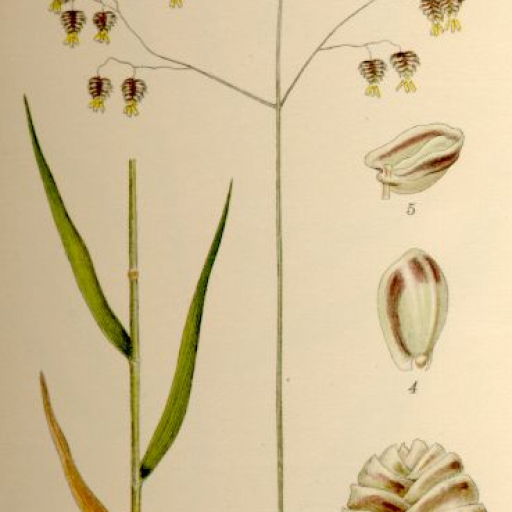
Commonly known as Quaking Grass, Briza media is one of the most charming and rhythmic grasses you can invite into your space. Its nickname comes from the way its delicate, heart-shaped seed heads "quake" and shimmer even in the slightest breeze, sounding like tiny rattles. Historically, it was a Victorian favorite for "everlasting" dried bouquets, symbolizing both movement and grace in the wild meadows of Europe and Asia.
🔍 How to Identify
- 🌾 The "Lockets": Its most famous feature is the dangling, heart-shaped spikelets that look like tiny paper lanterns or lockets hanging from hair-thin stems.
- 🎨 Color Transitions: These seed heads emerge with a distinct purple and green tint in early summer, eventually drying to a beautiful, metallic straw-gold by autumn.
- 🍃 The Foliage: It grows in neat, tufted mounds of narrow, blue-green leaf blades that stay relatively low to the ground, allowing the flower spikes to take center stage.
🏡 In Your Garden
- 🌱 Thrives on Neglect: Unlike many garden stars, Quaking Grass actually prefers "poor" soil. If the soil is too rich or over-fertilized, the plant grows too quickly and the stems become floppy instead of standing tall and shivering.
- 🌬️ Sensory Landscaping: It is a perfect addition to a "sensory garden." Plant it in drifts where the wind can reach it, as the visual movement and soft rustling sound provide a calming, therapeutic effect.
- ✂️ Dried Decor: If you want to keep its beauty indoors, cut the stems just as they turn gold. They hold their shape perfectly for years in dried floral arrangements without needing water.
⚠️ Safety & Toxicity
- ✅ Non-Toxic: Briza media is generally considered safe and non-toxic for humans.
- 🐾 Pet Friendly: It is safe for cats, dogs, and horses. In fact, it is a natural component of many grazing pastures, though it isn't as high in nutrients as some other forage grasses.
✨ Fun Fact
The genus name Briza is derived from the Greek word brizo, which means "to nod" or "to fall asleep," referring to the sleepy, drooping motion of the flower heads as they sway in the wind.

Detailed Care Instructions
| Humidity | Normal |
| Lighting | Full Sun |
| Difficulty | Easy |
| Temperature | 13°C - 20°C |
| Hardiness Zones | 4 - 11 |
To grow Briza Media (also known as Quaking Grass), you can follow these steps:
- Choose the right location: Briza Media prefers full sun to partial shade, so select a spot in your garden that receives at least 6-8 hours of direct sunlight each day. It can tolerate a variety of soil types, including loam, sandy, or clay soils, but it must be well-draining.
- Prepare the soil: Before planting, loosen the soil by removing any weeds or rocks and adding organic matter, such as compost or well-rotted manure. This will improve soil fertility and drainage.
- Sow the seeds: Briza Media seeds can be sown directly outdoors in the spring or fall. Sprinkle the seeds on the soil surface and lightly press them into the soil, ensuring good seed-to-soil contact. The seeds need light to germinate, so do not bury them deep.
- Watering and maintenance: Keep the soil consistently moist (but not waterlogged) until the seeds germinate, which typically takes around 2-3 weeks. Once established, Briza Media is somewhat drought-tolerant and requires less frequent watering. Water deeply when the top inch of soil feels dry and avoid overwatering.
- Thin the seedlings: When the seedlings are 2-3 inches tall, thin them out to give each plant enough space to grow. Space the plants about 10-12 inches apart.
- Fertilize sparingly: Briza Media generally does not require heavy fertilization. You can apply a balanced, slow-release fertilizer in the spring, following the manufacturer's instructions.
- Mulch and weed control: Apply a layer of organic mulch around the plants to help retain soil moisture and suppress weed growth. However, ensure the mulch is not directly touching the plant stems, as it can cause rotting.
- Pruning and deadheading: Prune the plant in early spring before new growth emerges to remove any dead or damaged foliage. Deadheading or removing the faded flowers can also encourage continued blooming and prevent self-seeding if not desired.
- Propagation: Briza Media can self-seed and naturalize in favorable conditions, but if you want to propagate it deliberately, you can collect the seeds when they turn golden brown and plant them in desired locations.
With proper care, Briza Media should thrive and provide beautiful quaking seedheads that sway in the breeze.

Place in a window with dappled sun or a spot in the middle of a room. Or directly in a window facing west or east.

To water this plant, first observe the soil moisture level by touching the soil with your finger or using a soil moisture meter. If the soil feels dry on the top inch, water it deeply until water drains out of the bottom of the container or into the soil. Avoid overwatering as it can cause root rot. Watering frequency may vary depending on the temperature and humidity levels in your environment. During hot and dry weather, it may require more frequent watering, and during the colder months, it may require less water. Always water the plant at the base to avoid wetting the leaves and encourage fungal diseases. Additionally, it is best to use room temperature or lukewarm water for watering this plant to prevent shock to the roots.
To fertilize the Briza Media plant, you can follow these instructions:
- Choose a balanced, slow-release fertilizer with equal ratios of nitrogen, phosphorus, and potassium (NPK) or one specifically formulated for ornamental grasses.
- Apply the fertilizer during the growing season, which is typically from spring to early fall.
- Before applying the fertilizer, make sure the soil is moist but not waterlogged.
- Sprinkle the fertilizer evenly around the base of the plant, keeping it at least 6 inches away from the stem or crowns.
- Gently work the fertilizer into the top inch of soil using a hand tool or rake, being careful not to damage the plant's roots.
- Water the area thoroughly after fertilizing to help distribute the nutrients and prevent any potential burning of the plant's roots.
- Repeat the fertilization process every 4-6 weeks throughout the growing season, following the recommended dosage instructions provided by the fertilizer manufacturer.
- Avoid over-fertilizing, as excessive nutrients can lead to weak growth or increased susceptibility to diseases.
- Monitor the plant's response to the fertilizer, and adjust the frequency or amount if necessary for optimal growth and health.
- Always read and follow the instructions and safety guidelines on the fertilizer packaging.
The ideal soil for growing the plant with the scientific name Briza Media should be well-draining and fertile. It should contain a good mix of organic matter and mineral nutrients to support healthy growth. It is recommended to use a soil with a pH level between 6.0 and 7.5. The soil should be kept moist but not waterlogged, as Briza Media prefer slightly humid environments. Ensure that the soil has good aeration to prevent water-logging and root rot. A mixture of loam, sand, and compost may be ideal for the successful cultivation of Briza Media.
To propagate Briza media plants, follow these steps:
- Select a healthy parent plant: Choose a mature Briza media plant that is in good condition and free from any diseases or pests.
- Timing: The best time to propagate Briza media is in spring or early summer when the plant is actively growing.
- Division: Dig up the parent plant carefully, trying not to damage the roots. Gently separate the clumps into smaller divisions, ensuring that each division has a sufficient number of healthy shoots and roots.
- Planting divisions: Prepare the planting site by loosening the soil and adding compost or organic matter. Dig a hole slightly larger than the division size. Place the division in the hole, ensuring that the crown is at ground level or slightly above. Backfill the hole and firm the soil gently around the division.
- Watering: After planting, water the divisions thoroughly to settle the soil and help the roots establish. Maintain moist soil conditions during the initial few weeks until new growth starts.
- Mulching: Apply a layer of organic mulch around the newly planted divisions to conserve moisture, suppress weed growth, and provide some insulation.
- Care and maintenance: Regularly water the divisions to keep the soil evenly moist, but avoid overwatering as it can lead to root rot. Monitor the plants for pests and diseases, and take appropriate measures if encountered.
- Transplanting seedlings: If you prefer to propagate Briza media from seeds, collect mature seeds from the parent plant in late summer or early autumn. Prepare a seed tray or pots with well-draining soil mix. Sow the seeds on the surface and lightly press them into the soil. Water gently, ensuring the soil is kept evenly moist. Place the tray or pots in a warm and well-lit area, but out of direct sunlight. Germination usually occurs within 2-4 weeks. Once the seedlings have grown to a suitable size, transplant them into individual pots or a prepared garden bed.
By following these steps, you can successfully propagate Briza media and expand your garden with these beautiful plants.








