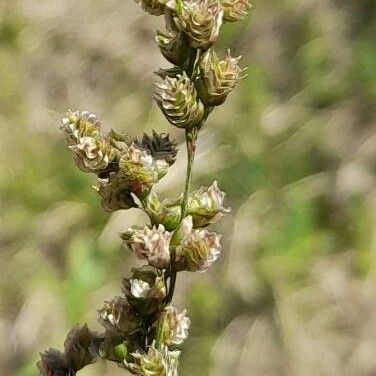
Plant Overview
Often called "Chilean Quaking Grass," this delicate beauty is prized for its shimmering, lantern-like seed heads that dance in the slightest breeze. Native to the grassy plains of South America, it adds a whimsical, airy texture to landscapes, acting like living jewelry for a garden. While it looks fragile, it is a hardy survivor that brings a sense of constant motion to meadows and borders.
🔍 How to Identify
- 🌾 The Spikelets: Look for small, flattened, heart-shaped flower clusters that hang pendulously from incredibly thin, wiry branches.
- 🍃 Leaf Structure: Features narrow, bluish-green blades that form a neat, dense tuft or "hummock" at the base of the plant.
- ✨ Movement: Its most defining trait is the "quake"—the seed heads are attached by such fine stems that they vibrate and shimmer even when the air feels perfectly still.
🏡 In Your Garden
- ☀️ Sun & Soil: This grass thrives in poor to moderately fertile, well-drained soil. In fact, giving it too much "love" (fertilizer) can cause the stems to become floppy and lose their graceful arch.
- ✂️ Low Maintenance: As a cool-season grass, it puts on its best show in spring and early summer. It is drought-tolerant once established and is excellent for "xeriscaping" or low-water rock gardens.
- 💐 Dried Arrangements: The seed heads are a favorite for florists; they retain their shape and unique texture perfectly when dried, lasting for years in a vase.
⚠️ Safety & Toxicity
- ✅ Safe Status: Briza subaristata is generally considered non-toxic to humans, cats, and dogs.
- 🌾 Hay Fever: Like most grasses, it produces pollen during its flowering stage in late spring, which may trigger mild allergies in sensitive individuals.
- 🐾 Mechanical Irritation: While not poisonous, the dried seed heads can occasionally become "hitchhikers" in long-haired pets' fur, so a quick brush-down after a walk through the garden is recommended.
✨ Fun Fact
The genus name Briza comes from the ancient Greek word "brizo," which means "to nod" or "to fall asleep." It was named this because the heavy, dangling seed heads look like they are nodding off in the wind.

Detailed Care Instructions








