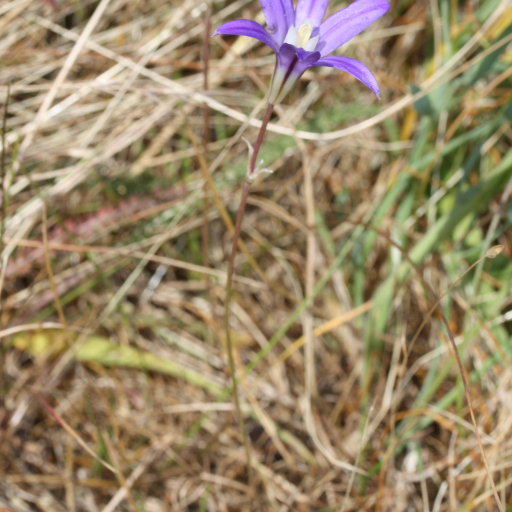
Plant Overview
Known as the Crown Brodiaea or Harvest Brodiaea, this stunning wildflower is a true jewel of the Western North American grasslands. It is famous for its "fashionably late" arrival, often waiting until the surrounding grasses have turned golden and dry before bursting into a sea of violet. In local folklore, these vibrant purple stars are seen as the "crowns" of the meadow, standing resilient against the early summer heat.
🔍 How to Identify
- 🌸 The Bloom: Look for clusters of 3 to 11 trumpet-shaped flowers. Each flower has six vivid violet-to-blue segments that curve elegantly outward at the tips.
- 🍃 The Leaves: The plant features narrow, grass-like leaves at the base. Interestingly, these leaves often wither and turn brown just as the flowers begin to open.
- 📏 The Stem: A slender, leafless stalk (scape) that holds the flower cluster high above the drying summer grass, reaching up to 10 inches in height.
🏡 In Your Garden
- ☀️ The Summer Bake: This plant is perfectly adapted to Mediterranean climates. It thrives in well-drained, even gravelly soil and actually requires a "summer bake"—a period of total dryness—once the flowering cycle is complete.
- 🦋 Pollinator Party: Because it blooms later than many spring wildflowers, it is a vital nectar source for butterflies and long-tongued bees during the lean transition into the hot summer months.
⚠️ Safety & Toxicity
- 🐾 Non-Toxic: Crown Brodiaea is generally considered non-toxic to cats, dogs, and horses. It is a "friendly" addition to a nature-focused garden.
- 🍽️ Historical Use: The small underground corms (bulbs) were traditionally harvested and eaten by Indigenous peoples, often roasted to bring out a sweet, nutty flavor. However, never forage wild bulbs unless you are an expert, as they can easily be confused with the "Death Camas," which is lethal.
✨ Fun Fact
👑 The species name coronaria comes from the Latin word for "crown" or "garland." If you look closely into the center of the flower, the inner appendages form a tiny, white, crown-like structure that protects the reproductive organs.

Detailed Care Instructions
To successfully grow Brodiaea Coronaria (also known as the "queen fabiola" or "tritelia" plant), follow these steps:
- Climate and soil requirements: Brodiaea Coronaria thrives in temperate climates. They prefer well-draining soil rich in organic matter. If your soil is clayey or heavy, consider adding compost or sand to improve drainage.
- Planting time: Plant the bulbs in the fall, around September to October, or in early spring when the ground is not frozen. Make sure to choose healthy, firm bulbs.
- Location: Select a sunny spot in your garden where the plant will receive at least 6-8 hours of direct sunlight a day.
- Planting depth: Dig holes for the bulbs, ensuring they are planted about 3-4 inches deep and 4-6 inches apart. If you are planting multiple bulbs, space them at least 6-8 inches apart.
- Watering: After planting, give the bulbs a thorough watering. During the growing season, water regularly to keep the soil consistently moist but not waterlogged. Avoid overwatering, as it may lead to bulb rot.
- Fertilization: Before planting, you can incorporate well-balanced organic fertilizer or compost into the soil. After the plants emerge, you can apply a slow-release bulb fertilizer according to the manufacturer's instructions.
- Mulching: Apply a layer of organic mulch, such as wood chips or straw, around the bulbs to keep the soil cool, retain moisture, and suppress weed growth.
- Pruning: Once the flowers fade and the foliage turns yellow or brown, you can trim it back. However, allow the foliage to die back naturally, as it will provide nutrients to the bulbs for the following year's growth.
- Overwintering: In areas with cold winters, cover the planting area with a layer of straw or leaf mulch to protect the bulbs from freezing temperatures. Remove the mulch in early spring before new growth begins.
- Division and propagation: After several years, the bulbs may become crowded and produce fewer flowers. In early summer, once the foliage has died back, you can dig up the bulbs and separate the individual ones. Replant the bulbs immediately or store them in a cool, dry place until the next planting season.
By following these steps, you should be able to successfully grow Brodiaea Coronaria and enjoy its beautiful flowers each year.

Place in a bright room that is sun drenched almost all day. Or directly in a south-facing window.

The plant should be watered regularly, keeping the soil moist but not waterlogged. The best way to do this is to water deeply and then let the soil dry out slightly before watering again. It is important to avoid getting the foliage wet while watering as this can lead to disease. During the growing season, the plant may require more frequent watering, especially if it is hot and dry. It is also important to provide good drainage to prevent the roots from sitting in water.
To fertilize this plant, apply a slow-release balanced fertilizer in early spring before new growth appears. Use a fertilizer with equal parts nitrogen, phosphorus, and potassium, at a rate of 1 tablespoon per plant. Spread the fertilizer evenly around the plant, avoiding direct contact with the foliage or stem. Water thoroughly after fertilization to help the nutrients penetrate the soil. Repeat fertilization once more in mid to late summer if desired.
The Brodiaea Coronaria plant prefers well-drained soil and does not tolerate heavy or waterlogged soils. The soil should be rich in organic matter and have a slightly acidic to neutral pH level. Adding compost or peat moss to the soil can increase its nutrient content and improve its texture. It is recommended to plant the bulbs in fall, at a depth of approximately three times the bulb's height. The soil should be kept consistently moist but not waterlogged, especially during the growing season. Avoid planting in areas that are prone to flooding or water accumulation, as this can cause root rot and other fungal diseases.
Propagation of this plant can be done by collecting mature seeds from the flower heads once they have dried out. The seeds can then be sown in a well-draining soil mix and kept moist until they germinate.
Another method of propagation is through bulb offsetting. When the plant has finished flowering and the foliage has died back, gently dig up the bulbs and separate any offsets that have formed. These can be replanted in a new location or in pots filled with fresh soil.
It is important to note that propagation of this plant should not be done while it is in bloom as this can damage the bulb and reduce future flowering. It is also important to ensure that the soil is well-draining to prevent the bulbs from rotting.








